
5 Best Practices for Fire Door Maintenance
Table of Contents
- 1. Conduct Regular Visual Inspections and Document Findings
- 2. Test Self-Closing Mechanisms and Positive Latching
- 3. Maintain Gap Clearance and Seal Integrity
- 4. NFPA 80 Inspection Requirements and Annual Certification
- 5. Repair Rusted Frames with Durable Hinge Side Jamb Patch Installation Guide
- Fire Door Hardware Troubleshooting and Common Issues
- Maintaining Fire-Rated Door Performance for Life Safety
- Frequently Asked Questions
Last Updated: October 4, 2026
1. Conduct Regular Visual Inspections and Document Findings
Fire-rated doors are only as effective as their condition allows. Regular visual inspections catch problems early, before they compromise life safety.
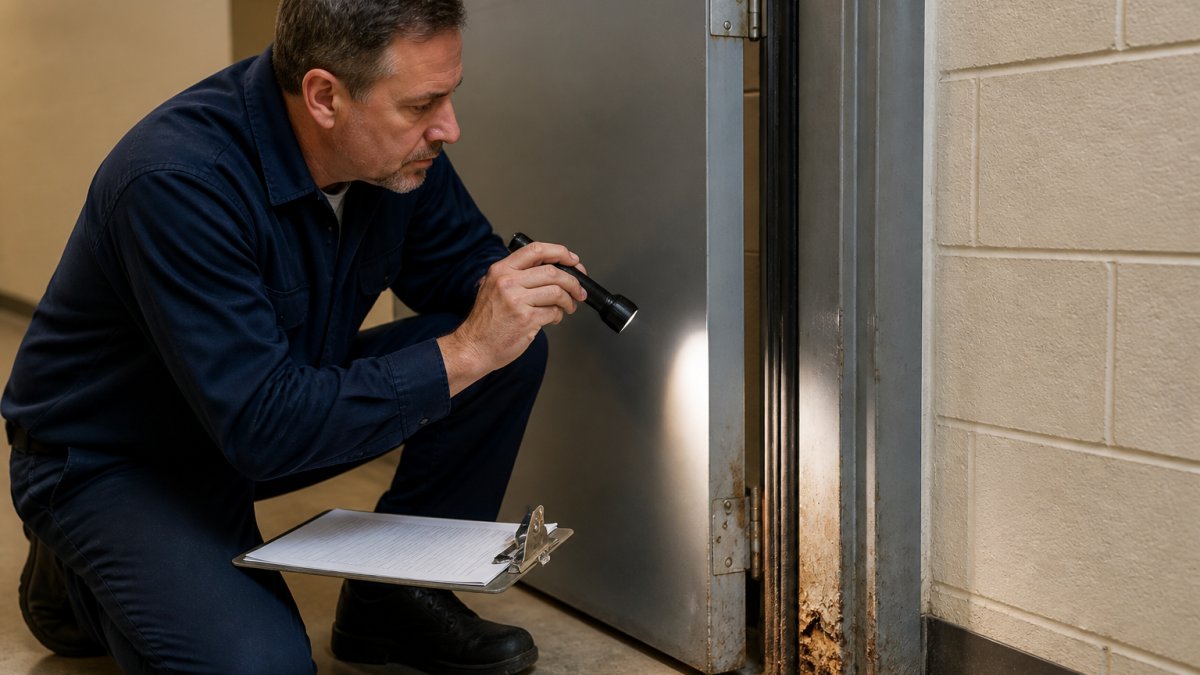
Visual inspections should happen at least quarterly, with documented findings recorded in a maintenance log. This creates the compliance trail that regulators expect to see. NFPA 80 standards require documented evidence of proper maintenance, not just a vague memory that "someone checked it once."
What to Look For During Visual Inspection
Start with the frame. Look for rust, corrosion, or visible damage to the jamb, particularly at the bottom where moisture collects.
Inspect all seals. Intumescent seals and smoke seals should be intact, with no visible cracks, peeling, or gaps.
Test the self-closing mechanism by opening the door fully and releasing it. It should close smoothly without hesitation. Listen for grinding sounds, which indicate hinge lubrication issues.
Examine the strike plate and latch bolt. The strike plate must be securely fastened, and the latch bolt should seat fully in the strike.
Creating a Maintenance Log for Compliance
Document every inspection in writing. Include the date, inspector name, door location, and specific findings. Note any defects, no matter how minor. Record corrective actions taken and dates they were completed.
A digital maintenance log is far more effective than paper records. Cloud-based systems time-stamp entries automatically and flag doors due for re-inspection. They also generate compliance reports for audits.
Your log should track:
- Inspection date and inspector
- Condition of frame, hinges, seals
- Self-closing mechanism performance
- Any rust or corrosion noted
- Repairs or adjustments made
- Next inspection date
This documentation proves to regulators and insurance carriers that your facility takes fire safety seriously. It also protects you legally if an incident occurs, you can demonstrate that proper maintenance was performed.
2. Test Self-Closing Mechanisms and Positive Latching
A fire door that doesn't close automatically is a liability. Self-closing mechanisms are non-negotiable for code compliance. The door must close and latch reliably every single time, with no exceptions.
Door Closer Adjustment and Performance Testing
Door closers are mechanical devices that control closing speed. They wear out over time and need periodic adjustment.
Test the closer by opening the door to 90 degrees and releasing it. It should close smoothly and seal completely. The closing speed should be steady, not jerky.
Adjusters are typically located on the arm of the closer. Most closers have two adjustment screws: one for closing speed and one for latch action.
Performance testing should happen annually. Document the results. If the closer fails the test, replace it immediately. A worn closer compromises the entire fire safety system.
Latch Bolt and Strike Plate Verification
The latch bolt must engage fully in the strike plate. This is called positive latching. Without it, the door can swing open during a fire, defeating the fire rating.
Inspect the strike plate for damage, corrosion, or misalignment. If the plate is bent or rusted, replace it. Verify that mounting bolts are tight and that the plate sits flush against the frame.
Test the latch by pushing on the door with moderate force. It should not budge. If it moves, the latch is not seating properly. Causes include:
- Strike plate misalignment
- Worn or damaged latch bolt
- Frame settlement or warping
- Hinge side jamb damage
Correct the problem immediately. A door that doesn't latch is a code violation and a life safety hazard.

3. Maintain Gap Clearance and Seal Integrity
Gaps around a fire door allow smoke and flames to pass through. Clearance standards are strict because they directly affect fire resistance. NFPA 80 specifies exact tolerances that must be maintained.
Checking Intumescent Seals and Smoke Seals
Intumescent seals are strips that expand when heated, closing gaps and blocking smoke. They're typically made of mineral-based materials and are glued to the door frame or door edge. Smoke seals are similar but designed to block smoke at room temperature.
Inspect these seals quarterly. Look for:
- Cracks or peeling
- Missing sections
- Compression or flattening
- Separation from the frame
Damaged seals must be replaced. Do not attempt to patch them. Replacement is straightforward and inexpensive compared to the cost of a door failure.
Door Sweep and Threshold Clearance Standards
The door sweep is the seal at the bottom of the door. It prevents smoke and air from passing underneath.
Inspect the sweep for wear, cracks, or missing pieces. Replace if damaged. Check that the threshold is in good condition and properly sealed to the frame.
Clearance around the entire door frame should be uniform. Gaps wider than 1/8 inch are violations. If settlement or warping has created gaps, correct it before the next inspection.
4. NFPA 80 Inspection Requirements and Annual Certification
NFPA 80 is the standard that governs fire door assembly inspection, testing, and maintenance. It applies to all fire-rated doors in commercial buildings. Compliance is not optional, it's a code requirement.
Understanding NFPA 80 Compliance Standards
NFPA 80 requires that fire door assemblies be inspected, tested, and maintained in accordance with the standard. This includes the door, frame, hinges, closer, seals, and hardware. Every component must function correctly for the assembly to perform as rated.
The standard specifies what must be inspected, how often, and what documentation is required. It defines acceptable condition and establishes remediation timelines for defects.
Annual inspections are mandatory. These are more thorough than routine visual checks. An NFPA 80 certified inspector evaluates the entire assembly against the standard and issues a report.
Scheduling Annual Inspections and Audits
Work with a qualified inspector to schedule annual inspections. Many jurisdictions require that inspectors be certified in NFPA 80. Verify credentials before hiring.
During the inspection, the inspector will:
Jamb Patch - Jamb Anchor Catalogue →
- Examine the entire door assembly
- Test the self-closing mechanism and positive latching
- Verify gap clearance and seal integrity
- Check hinge lubrication and hardware condition
- Document findings in a detailed report
The report will identify any defects and recommend corrective actions. Address defects promptly. Keep the report on file for audits and insurance purposes.
If defects are found, establish a timeline for repairs. Minor issues might have 30 days. Major defects might require immediate correction. Follow the inspector's recommendations and document all work completed.
5. Repair Rusted Frames with Durable Hinge Side Jamb Patch Installation Guide
Rust is the enemy of fire door frames. It starts at the bottom where moisture collects and spreads upward. Left unchecked, rust compromises frame integrity and eventually makes the door inoperable.
Identifying Rust Damage and Frame Deterioration
Rust appears as orange-brown discoloration, typically starting at the base of the frame. Early rust is surface-level and can be cleaned. Advanced rust creates pitting, flaking, and structural loss.
Assess the extent of rust damage. If rust is visible but less than 2 inches deep at the bottom, early intervention with a repair kit is effective.
Check for rust in other locations: the hinge side, strike side, and top of the frame. Rust at the hinge side is particularly problematic because it affects hinge mounting and door alignment.
Three-Step Installation Process for Frame Repair
Door Innovation's Jamb Patch kits provide a cost-effective alternative to full frame replacement.

Step 1: Prepare the frame. Remove the door and hardware. Clean away loose rust and debris.
Step 2: Position and secure the patch. The Jamb Patch is designed to overlap the damaged area and provide new mounting points for hinges and hardware.
Step 3: Reinstall hardware and test. Once the patch is secured, rehang the door and reinstall all hardware.
The Jamb Patch installation instructions provide detailed step-by-step guidance with illustrations.
For facilities with multiple rusted frames, the Jamb Patch Kit (4") is ideal for early-stage rust repair.
Fire Door Hardware Troubleshooting and Common Issues
Even well-maintained doors develop problems. Knowing how to diagnose and fix common issues keeps your facility compliant and safe.
Addressing Friction Damage and Hinge Lubrication
Hinges wear from constant use. Friction creates grinding sounds and makes the door stiff to operate. Proper lubrication extends hinge life and keeps the door functioning smoothly.
Lubricate hinges quarterly with a light machine oil or silicone spray. Apply oil to the hinge pin and barrel. Wipe away excess to prevent dust accumulation.
If a hinge is severely damaged or corroded, replace it. Hinges are inexpensive and quick to install. A worn hinge that fails during a fire could prevent door closure.
Check hinge bolts for tightness. Loose bolts allow the door to sag, which affects latch engagement and gap clearance.
Preventing Field Modifications That Compromise Safety
Facility staff sometimes make unauthorized modifications to doors.
Educate staff on why modifications are prohibited. A door held open by a wedge will not close in a fire. A removed closer means no automatic closure.
Implement a policy requiring work orders for any door modifications. Only authorized personnel should make changes. Document all work and verify that the door still meets code after modifications.
Regular inspections catch unauthorized changes. If you find evidence of modification, restore the door to its original condition and investigate why the change was made.
Maintaining Fire-Rated Door Performance for Life Safety
Fire door maintenance is not a one-time task. It's an ongoing commitment to life safety.
Create a master maintenance schedule that tracks every fire door in your facility. Assign responsibility to specific staff members.
Budget for annual inspections and repairs. Set aside funds for seal replacement, closer adjustment, and rust repair.
Train your maintenance team on fire door basics. They should know what to look for, how to perform basic adjustments, and when to call a specialist.
Work with Door Innovation and qualified inspectors to develop a maintenance program tailored to your facility.
Fire door maintenance protects lives and keeps your facility compliant with building codes. For facilities with rusted frames, Door Innovation's Jamb Patch kits provide a cost-effective repair solution that restores frame integrity without full replacement.

Frequently Asked Questions
What are the mandatory maintenance requirements for fire-rated doors?
Fire-rated doors require regular visual inspections, testing of self-closing mechanisms, verification of positive latching, and seal integrity checks. NFPA 80 standards mandate annual professional inspections and certification. Facility managers must maintain detailed maintenance logs documenting all inspections, repairs, and compliance audits. Any rust, damaged seals, or misaligned hardware must be repaired immediately to preserve the fire resistance rating and emergency egress function.
How often should fire door inspections be conducted per NFPA 80?
NFPA 80 requires annual inspections by a qualified professional, with documented certification. However, facility staff should conduct visual inspections monthly or quarterly to catch early signs of rust, seal damage, or hardware wear. Many facilities benefit from a digital record-keeping system to track inspection dates, findings, and corrective actions. Early detection prevents costly frame replacements and ensures continuous compliance with building code requirements.
Can you repair a rusted fire door frame, or must it be replaced?
Rusted fire door frames can be repaired cost-effectively using specialized jamb patches instead of full replacement. The Jamb Patch Kit ($130.37) addresses early rust at the first sign of corrosion on steel frames. For frames with more than 2 inches of rust at the bottom, the Strike Side Jamb Patch ($180.91) or hinge side options like the Left Hand or Right Hand Hinge Jamb Patch ($180.91 each) restore structural integrity and maintain fire resistance ratings. These solutions save significant labor and material costs while preserving door frame function.
What are the most common fire door failures found during inspections?
Common failures include non-functional self-closing mechanisms, compromised positive latching, damaged intumescent seals, excessive gap clearance, rust and corrosion on steel frames, misaligned door hardware, and friction damage to hinges. Many failures result from field modifications that weren't documented or approved. Preventative maintenance addressing hinge lubrication, gap and clearance standards, and regular performance testing catches these issues before they affect life safety and emergency egress capability.
What must you never do to a fire door to maintain its rating?
Never modify fire door hardware, hinges, or closing mechanisms without documented approval and professional reinstallation. Do not alter gap clearance or remove/damage intumescent seals, as these directly affect fire resistance. Avoid wedging doors open or disabling self-closing features. Do not paint over inspection labels or fail to maintain required documentation. Never install non-compliant replacement parts or attempt repairs without following manufacturer specifications. Field modifications without professional oversight can void the fire resistance rating and create serious liability.