
6 Ways to Fix Door Gaps for Fire Safety
Table of Contents
- Why Fire Door Gap Requirements Matter for Safety
- Fire Door Gap Requirements: What the Standards Actually Say
- How to Fix a Gap Under a Fire Door
- Fire Door Frame Repair: Fixing Gaps Caused by Rust and Corrosion
-
6 Ways to Fix Door Gaps for Fire Safety
- Fix 1: Adjust or replace hinges (hinge-side and uneven gaps)
- Fix 2: Reset the door closer (strike-side gaps)
- Fix 3: Replace worn smoke seals and intumescent strips (perimeter gaps)
- Fix 4: Install or reset the threshold seal (under-door gaps)
- Fix 5: Repair the corroded or loose jamb (recurring gaps at the bottom)
- Fix 6: Call a qualified fire door professional (everything else)
- Which fix applies to which gap
- Common Unsafe Fixes to Avoid
- Fire Door Inspection Checklist After Repairs
- Conclusion
- Frequently Asked Questions
Last Updated: October 17, 2026
Why Fire Door Gap Requirements Matter for Safety
A fire door only works as a complete assembly: leaf, frame, seals, and hardware must work together.
The gap around a door leaf controls how smoke and hot gases move through an opening.
The gap tolerance is small: roughly 2-4 mm at the perimeter, with a 3 mm rule as the working target and 8 mm as the ceiling in most published guidance, a hair over 1/16 inch up to about 5/16 inch.
Fire Door Gap Requirements: What the Standards Actually Say
Fire door gap requirements come from three places, and they rank in a specific order: the listing of the door assembly, the installation standard the manufacturer publishes, and the local fire code that adopts them. The widely referenced benchmarks are NFPA 80 for fire doors and NFPA 105 for smoke door assemblies, both published by the National Fire Protection Association, and UL 10C for the fire test standard the assembly is listed against.
In practical terms, most inspectors work from these tolerances:
- Perimeter gap: roughly 2-4 mm (about 1/8 inch or less) around the head and jambs
- 3 mm rule: the working target at the head and vertical edges
- 8 mm gap: the outer limit at the bottom of the door in many published guides
Why the numbers vary by jurisdiction
These numbers are benchmarks, not a single national rule. The authority having jurisdiction, local fire marshal, building official, or fire prevention office, adopts a specific edition of NFPA 80 or a local amendment, and that edition is what an inspector enforces. A door that passes under one jurisdiction can fail under another. Before ordering parts, confirm which edition your AHJ has adopted.
How an inspector applies the standard
An inspector does not measure one gap and stop. The sequence: confirm the frame and door labels are legible and match; measure the perimeter gap at the top and bottom of the hinge side, the strike side, and the head; check under-door clearance across the full width; operate the door from fully open and confirm it closes and latches using only its closer; and verify smoke seals and intumescent strips are intact, seated, and part of the listed assembly.

What the standard does not cover
NFPA 80 and NFPA 105 set requirements for the assembly, not the wall opening or surrounding construction. If the opening has moved, the frame is out of square, or the anchors have pulled out, the gap is a symptom of a construction problem the standard does not address.
How to Fix a Gap Under a Fire Door
The fix for an under-door gap is almost always a threshold seal or automatic door bottom, not a thicker sweep screwed to the door face. The sequence:
- Check the clearance first. Open the door through its full swing and confirm it clears the floor covering without dragging.
- Identify the cause. A sagging hinge, a worn closer, or a settled frame will reopen the gap after any seal you install.
- Choose the right seal. Surface-mounted sweeps suit light traffic; automatic door bottoms drop only when the door closes and hold up better in busy openings.
- Verify latching. After installation, the door must close and latch from the fully open position using only its closer.
Fire Door Frame Repair: Fixing Gaps Caused by Rust and Corrosion
Rusted steel frames and corroded aluminum frames are the most common cause of a widening gap that keeps coming back. Corrosion eats the jamb at floor level, the frame loses its grip on the anchor, and the door starts to sit out of square. Sealing that gap without repairing the frame is a temporary patch on a structural problem.
When to Patch vs. Replace a Damaged Frame
Patch when corrosion is localized at the bottom of the jamb and the rest of the frame is sound. Replace when the frame is twisted, the anchors have pulled out of the wall, or corrosion runs more than a short distance up the jamb.
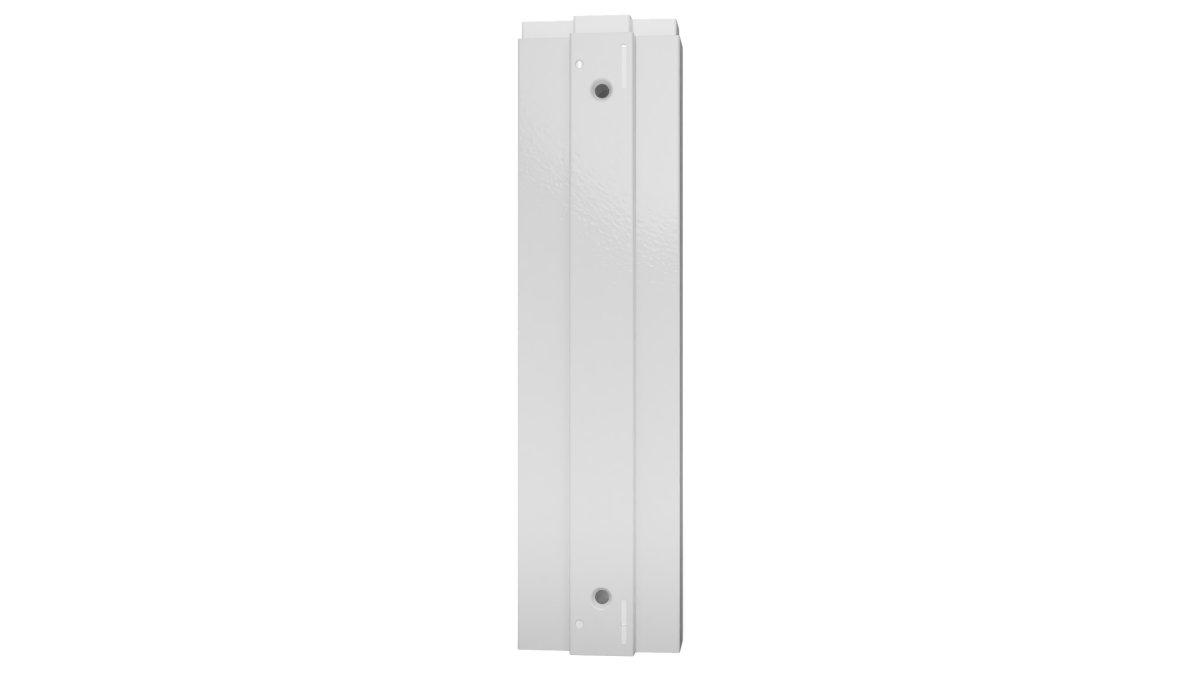
Our Jamb Patch line is built for the first case. The Steel Door Institute publishes guidance on hollow metal frame installation that helps confirm whether a frame is still serviceable. For frames with more than 2 inches of rust at the bottom, the Strike Side Jamb Patch and the hinge-side patches cover the damaged section with a 21-5/8 inch tall repair panel. For early rust, the Jamb Patch Kit (4") handles the first sign of corrosion at $130.37.
| Recommended product | Price |
|---|---|
| Jamb Patch Kit (4") | $130.37 |
| Strike Side Jamb Patch | $180.91 |
| Left or Right Hand Hinge Jamb Patch | $180.91 |
| Hinge Jamb Patch Kit | $320.00 |
| Jamb Anchor Side or Center Jamb Kit | $119.00 |
6 Ways to Fix Door Gaps for Fire Safety
Most guides stop at tolerances. Here are the six fixes, organized by gap location and cause, with a clear line between what maintenance can safely do and what requires a qualified fire door professional. Work down the list until the gap closes and the door latches on its own from fully open using only its closer.
Fix 1: Adjust or replace hinges (hinge-side and uneven gaps)
A hinge-side gap wide at the bottom and tight at the top almost always traces to a hinge, not a seal. Tighten loose screws first; if a screw spins, replace it with a longer fastener of the same gauge, never a larger diameter, which enlarges the hole in a listed frame. If the top hinge is pulling out, the door is sagging and the gap will reopen after any seal.
Fix 2: Reset the door closer (strike-side gaps)
A closer that pulls the door out of alignment at the latch creates a strike-side gap that looks like a frame problem. Adjust closing and latch speed per the closer's instructions and confirm the arm angle. An undersized closer, or one mounted on the wrong side, will keep pulling the door out of square no matter how often you adjust it.
Fix 3: Replace worn smoke seals and intumescent strips (perimeter gaps)
Smoke seals and intumescent strips compress, tear, and lose seating over time, widening the effective gap at the head and jambs even when the leaf-to-frame measurement looks fine. Replace with the same rated product, same model, manufacturer, and listing, not generic weatherstrip, which is not part of the listed assembly and can fail in a fire. This is one of the safest fixes because it restores the listed condition rather than altering it.
Fix 4: Install or reset the threshold seal (under-door gaps)
The fix for an under-door gap is a threshold seal or automatic door bottom, not a thicker sweep screwed to the door face. Check clearance first: open the door through its full swing and confirm it clears the floor covering without dragging. Identify the cause, a sagging hinge, worn closer, or settled frame will reopen the gap after any seal.
Fix 5: Repair the corroded or loose jamb (recurring gaps at the bottom)
Rusted steel and corroded aluminum frames are the most common cause of a widening gap that keeps coming back. Corrosion eats the jamb at floor level, the frame loses its grip on the anchor, and the door sits out of square. Sealing that gap without repairing the frame is a temporary patch on a structural problem. A jamb patch covers the damaged section; a jamb anchor kit re-secures a loose aluminum frame.

Fix 6: Call a qualified fire door professional (everything else)
Stop and call a professional if the frame is twisted, the wall opening has moved, the door won't latch after fixes 1-5, or the gap exceeds tolerance at the head or jambs after hinge and closer adjustment. Field modifications beyond the listing, planing the leaf, relocating hardware, adding or moving hinges, changing the frame profile, require an approved repair and often a new listing.
Which fix applies to which gap
| Gap location | Most likely cause | Safe fix | Professional required |
|---|---|---|---|
| Hinge side, uneven top to bottom | Loose or pulled hinge | Fix 1 | If hinge relocation needed |
| Strike side, wide at latch | Closer out of adjustment | Fix 2 | If closer type must change |
| Head and jambs, uniform | Worn smoke seal | Fix 3 | No |
| Under door | Missing or worn threshold seal | Fix 4 | No |
| Bottom of jamb, recurring | Corroded or loose frame | Fix 5 | If frame is twisted |
| Any gap after fixes 1-5 | Frame or wall movement | , | Fix 6 |
Common Unsafe Fixes to Avoid
Never pack a gap with expanding foam, caulk, or wood shims, they aren't part of the listed assembly, hide the real cause, and can fail in a fire. Don't plane or sand a door leaf to close a head gap, don't add a second sweep over an existing one, and don't paint over a corroded jamb, which traps moisture and speeds corrosion.
Fire Door Inspection Checklist After Repairs
Run this fire door inspection checklist after every repair, before you sign off the work:
- Door closes and latches from the fully open position using only the closer
- Perimeter gaps measured at head, hinge side, and strike side, all within tolerance
- Under-door clearance checked across the full width
Record the readings and the date. A written record is what an inspector asks for, and it protects you if a question comes up later.
Conclusion
Gaps that reopen, frames that keep moving, and doors that won't latch are usually one problem: a frame that has lost its grip. Our Jamb Patch and Jamb Anchor kits restore rusted steel and corroded aluminum frames at a fraction of replacement cost and add years to door systems you already own.

Get started with Door Innovation and close the gap for good. Order now.
Frequently Asked Questions
What is the acceptable gap around a fire door?
Fire door gap requirements typically allow a maximum gap of 3 mm (about 1/8 inch) at the sides and top of the door leaf. The gap under the door should be no more than 8 mm (about 5/16 inch) on a non-smoke-sealed door, or 3 mm where smoke seals are fitted. These tolerances ensure the door closes properly and restricts the spread of smoke and fire. Always verify local codes and the door's certification label before making adjustments.
How do you fix a gap at the bottom of a fire door?
To fix a gap under a fire door, first measure the clearance with a feeler gauge. If the gap exceeds 8 mm, you can install a threshold seal or a fire-rated door sweep that is certified for use on fire doors. Never use a standard weatherstrip that isn't fire-rated. If the gap is caused by a warped door or damaged frame, repair the frame or replace the door leaf. After installation, test the self-closing action and confirm the gap meets fire door gap requirements.
Can you use intumescent strips to fix a fire door gap?
Intumescent strips are designed to expand when exposed to heat and seal the gap between the door and frame. They can be effective for gaps up to 3-4 mm but are not a substitute for proper gap tolerances. If the gap is larger, intumescent strips alone won't provide adequate fire protection. Use them in conjunction with smoke seals and ensure the gap is within the permitted tolerance. Always check that the strips are certified for the specific door assembly.
When should a damaged fire door frame be repaired or replaced?
A fire door frame can often be repaired if the damage is localized, such as rust at the bottom. Products like Jamb Patch kits can restore steel frames when rust is present. However, if the frame is structurally compromised, warped, or has large sections missing, replacement is necessary. For aluminum frames that have come loose, Jamb Anchor kits re-anchor the frame. Consult a qualified fire door inspector to determine if repair meets fire door gap requirements and safety standards.
Who should inspect a fire door after repairs?
After any repair that affects a fire door assembly, a qualified fire door inspector or licensed professional should verify compliance with fire door gap requirements. This person should be familiar with local building codes and the door's certification. The inspection should include checking gaps, seals, self-closing mechanisms, and latching. A fire door inspection checklist can help ensure all points are covered. Document the inspection and keep records for compliance audits.