
Door Armor Alternatives for Commercial Facilities
Table of Contents
- Why Facility Managers Choose Door Armor Alternatives
- Commercial Door Frame Repair: When to Repair vs. Replace
- Steel Door Frame Repair Kit Options and Compatibility
- Aluminum Door Frame Repair and Re-anchoring Solutions
- Commercial Door Security Retrofit: Strengthening Weak Points
- Installation Requirements and Difficulty Level
- Cost Comparison: Repair Kits vs. Full Door Replacement
- Selection Criteria for Your Facility Type
- Frequently Asked Questions
Last Updated: October 16, 2026
Why Facility Managers Choose Door Armor Alternatives
When a commercial door frame starts to fail, facility managers face a choice: replace the entire frame or repair what's already there. Full replacement means downtime, higher labor costs, and waste of functional doors. Targeted repair delivers the same security and durability at a fraction of the cost.
Door Innovation helps facility managers across healthcare, educational, industrial, and residential settings extend the life of existing door systems. Most door frame damage doesn't require replacement: rust on steel frames, loose aluminum jambs from corrosion, and compromised strike areas can all be addressed with precision repair kits.
A door armor alternative for commercial facilities gives you control over cost, timeline, and outcomes. Instead of waiting weeks for a full frame replacement and absorbing labor expenses that can exceed the cost of the door itself, targeted reinforcement keeps entrances secure and presentable.
Commercial Door Frame Repair: When to Repair vs. Replace
The decision hinges on the extent of damage and the frame's structural integrity. If rust penetration exceeds 2 inches at the base of a steel frame, or an aluminum jamb has pulled away from the wall due to corrosion, repair is the practical choice.
Replacement makes sense only when the frame is bent, severely cracked, or beyond localized patches, a rare scenario. Corrosion, loose anchors, and surface rust affect specific zones (strike side, hinge side, outboard jambs), not the entire frame.

The cost difference is substantial: Door Innovation's repair kits address the specific failure point without touching the rest of the frame, so work completes in hours rather than days.
Consider compliance: many healthcare, educational, and industrial buildings operate under strict access and safety protocols. Repair minimizes downtime and keeps your facility operational, while replacement requires temporary access solutions and potential code compliance complications.
Steel Door Frame Repair Kit Options and Compatibility
Steel frames are durable but vulnerable to rust from moisture, salt air, or aggressive cleaning chemicals, with damage typically concentrated at the bottom of the jamb where water pools.
Door Innovation's Jamb Patch solutions target this specific failure pattern. The Strike Side Jamb Patch ($180.91) is designed for non-handed installation on either side of the door opening, making it a versatile choice for facilities with mixed door configurations. It's engineered for compatibility with major frame manufacturers including Steelcraft, ASSA Abloy, Ceco, Curries, and others, a critical detail for retrofit work in older buildings where frame manufacturers vary by wing or floor.
Strike Side Jamb Patch for Severe Rust Damage
The strike side, where the locking mechanism meets the frame, bears the most stress and corrosion risk. When rust penetration exceeds 2 inches at the bottom, the strike area can't hold latch bolts securely, a security liability and functional failure.
The Strike Side Jamb Patch replaces the damaged section with a galvanized steel insert that restores structural integrity and security function. The non-handed design works on left or right openings, simplifying inventory across multiple buildings. Installation is three steps, remove old hardware, position the patch, secure with provided fasteners.
Hinge-Side Patches: Left Hand and Right Hand Options
The hinge side requires precision because it must accommodate the commercial hinge pocket while providing full support. Door Innovation offers Left Hand Hinge Jamb Patch and Right Hand Hinge Jamb Patch options, each priced at $180.91.
Both include a 4-1/2-inch commercial hinge pocket pre-formed into the patch, eliminating field fabrication and ensuring proper hinge alignment.
Hinge-side rust is often less visible than strike-side damage but equally critical. A loose or corroded hinge side lets the door sag, creating gaps that compromise security and weather sealing. These patches restore the original frame geometry.
Aluminum Door Frame Repair and Re-anchoring Solutions
Aluminum frames fail differently than steel. Instead of rust, aluminum corrodes from salt, water, and certain cleaning solutions, often invisibly, until the frame pulls away from the wall, leaving a loose, rattling door that won't close properly.
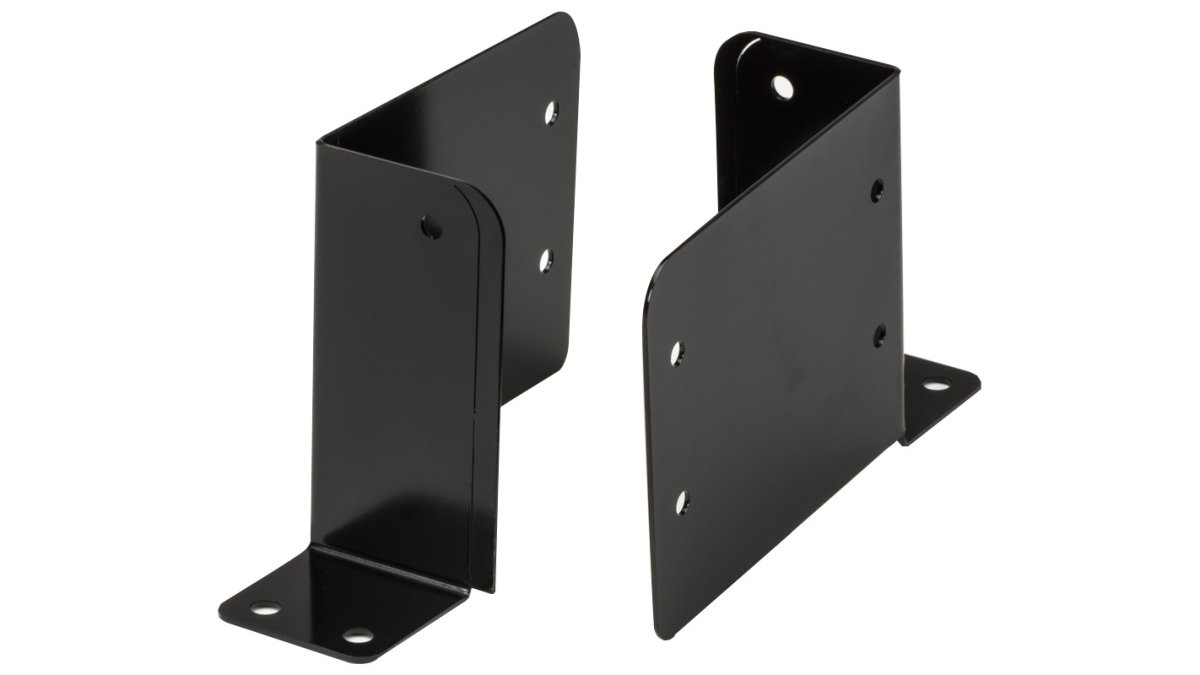
This failure mode requires a different solution. Rather than replacing the damaged section, aluminum frame repair focuses on re-anchoring the frame to the building structure. Door Innovation's Jamb Anchor kits address this directly.


The Jamb Anchor Side Jamb Kit ($119.00) re-anchors the outboard jambs, the sides of the frame that face outside or into corridors. The Jamb Anchor Center Jamb Kit ($119.00) handles the inboard jambs, the sides facing the interior of the door opening.
Both kits include all hardware and installation instructions. Aluminum frames rarely lose structural integrity; they simply lose connection to the wall.
Commercial Door Security Retrofit: Strengthening Weak Points
A door armor alternative for commercial facilities must address the weak points that compromise security: the strike area, jamb anchors, and hinge support are the primary failure zones under forced-entry attempts or repeated equipment impacts.
Strengthening these areas requires understanding the actual threat. Healthcare facilities face different security challenges than industrial warehouses, and residential buildings differ from educational institutions. A one-size-fits-all retrofit misses the mark; targeted reinforcement at the actual weak points delivers better results.
Door Jamb and Strike Area Reinforcement
The strike area is where forced-entry attempts concentrate force. A reinforced strike side resists prying, kicking, and impact. The jamb, the vertical frame member on either side of the door, must be solid enough to support hinges and latch bolts under stress.
Repairing a compromised strike side or hinge side with a Jamb Patch restores the frame's ability to resist forced-entry attacks. The galvanized steel construction provides the same durability and impact resistance as the original frame material, essential where security is non-negotiable.
Jamb reinforcement also prevents the frame from pulling away under stress, a common failure mode in older or heavily used facilities. A loose jamb lets the door shift, creating gaps and compromising the seal; proper reinforcement keeps it aligned and functional.
Anti-Pry and Forced-Entry Resistance
Anti-pry resistance depends on frame rigidity and strike-side integrity. A door armor alternative for commercial facilities must eliminate the gaps and weak points pry tools exploit. Jamb Patch solutions do this by replacing the damaged section with a solid, properly anchored component.
The galvanized steel resists corrosion for long-term durability, and the patches are compatible with standard commercial hardware.
For high-security applications, healthcare, correctional settings, secure storage, this reinforcement ensures the door system performs as intended. The repair is permanent, not a temporary fix requiring follow-up work.
Installation Requirements and Difficulty Level
One of the strongest advantages of repair kits over full frame replacement is installation simplicity. Door Innovation's three-step process requires no special tools beyond a drill, fasteners, and basic hand tools.
The process begins with hardware removal: your team removes the door, hinges, closer, and latch hardware from the damaged frame section.
Next, the patch or anchor kit is positioned and secured, pre-drilled holes eliminate guesswork about fastener placement. Finally, the original hardware is reinstalled, and the door is rehung and adjusted.
Total installation time typically runs 2-3 hours per opening, including adjustment and testing, well within the capability of a trained maintenance technician or experienced locksmith. Door Innovation offers a Certified Installer program for professionals who want to offer these services to clients.
Compare this to frame replacement, which requires removing the old frame, potential wall repair, aligning the new frame, and reinstalling hardware.
Cost Comparison: Repair Kits vs. Full Door Replacement
The financial case for repair is compelling. A Jamb Patch ($180.91) or Jamb Anchor kit ($119.00) plus 2-3 hours of labor costs significantly less than a replacement frame.
If you're managing 40 doors across a facility with rust or corrosion issues, the math becomes dramatic. Forty patches at $180.91 each totals $7,236. Total investment: roughly $13,000-19,000 to restore all 40 openings.
Full replacement of 40 frames would cost $16,000-24,000 in materials alone, plus $12,000-20,000 in installation labor.
Beyond immediate cost, consider lifecycle value: a properly installed repair kit extends the life of your existing door system.
For healthcare facilities, educational institutions, and industrial operations where downtime is expensive, the speed advantage of repair becomes a financial advantage as well.
| Comparison Factor | Repair Kit | Full Replacement |
|---|---|---|
| Material Cost (per opening) | $119-181 | $400-600 |
| Installation Time | 2-3 hours | 1-2 days |
| Facility Downtime | Minimal | Extended |
| Skill Required | Standard maintenance | Specialized frame installation |
| Lifecycle Value | ||
| Total Cost (40 openings) | $13,000-19,000 | $28,000-44,000 |
Selection Criteria for Your Facility Type
Different facility types face different door frame challenges: healthcare prioritizes security and infection control, educational institutions manage high-traffic areas with frequent impacts, and industrial warehouses deal with equipment damage and chemical corrosion.
Matching your repair solution to your actual threat environment ensures you invest wisely. A coastal healthcare facility faces salt-air corrosion; an inland school faces impact damage from carts and equipment. The approach is the same, targeted reinforcement of weak points, but the kit depends on your primary failure mode.
Healthcare and Residential Facilities
Healthcare facilities require security and compliance with accessibility standards: doors must operate smoothly, close reliably, and provide secure access control. Corrosion is a constant threat where frequent cleaning with harsh chemicals is standard.
Aluminum frame corrosion is common in healthcare settings. Jamb Anchor kits restore the frame's connection to the wall, eliminating loose, rattling doors that frustrate staff and compromise security. Re-anchored frames operate smoothly and close predictably, supporting patient safety and staff efficiency.
Residential facilities, retirement communities, assisted living, memory care, face similar challenges: residents need reliable door operation, and managers need cost-effective maintenance. Jamb Anchor kits address the corrosion-related failures typical in these settings.
For both healthcare and residential facilities, repair minimizes disruption: you're not closing a wing or corridor for a full frame replacement, just restoring specific openings while the facility operates normally.
Educational and Industrial Facilities
Educational institutions experience high-impact damage from carts, equipment, and heavy use. Steel frame corrosion is less common than in coastal or chemical-heavy environments, but rust develops in areas exposed to moisture or aggressive cleaning.
Industrial facilities face impact damage and chemical corrosion: equipment strikes frames, and cleaning or production chemicals accelerate corrosion. Jamb Patch solutions address both, restoring strike-side integrity after impact and replacing corroded sections that have lost structural strength.
Industrial facilities also benefit from repair's speed and cost advantages.
For educational and industrial settings, choosing between Jamb Patch (steel frame corrosion) and Jamb Anchor (aluminum frame looseness) depends on frame material and primary failure mode. Most facilities have a mix of both, making a combination approach practical.
Door frame damage doesn't require full replacement in most commercial settings. For facility managers overseeing multiple buildings or managing tight budgets, this approach delivers both immediate savings and long-term reliability. Order Now and extend the life of your existing door systems with proven repair solutions.
Frequently Asked Questions
What are the best alternatives to Door Armor for commercial facilities?
Repair kits designed for commercial door frame repair offer cost-effective alternatives to full replacement. Jamb Patch kits address severe rust on steel frames, while Jamb Anchor kits re-anchor loose aluminum frames caused by corrosion or impact damage. Both solutions extend door system life and restore structural integrity at a fraction of replacement cost. Selection depends on your frame material, damage severity, and facility type.
Can a damaged commercial door frame be repaired instead of replaced?
Yes. If rust damage is limited to specific areas (typically the lower 2 inches of the jamb), steel door frame repair kits like the Jamb Patch can restore functionality and security. For aluminum frames loosened by corrosion or impact, Jamb Anchor kits re-anchor the frame without replacement. Full replacement is necessary only when damage is structural or affects the entire frame width.
How much can a facility save by using a repair kit instead of full door replacement?
Repair kits cost $119-$181 per kit, plus labor. For a facility with 40 doors needing repairs, kit-based solutions can save thousands in material costs. Labor savings are significant too: most kits install with basic tools, reducing downtime and maintenance crew hours compared to frame replacement.
Do repair kits work on both steel and aluminum frames?
No. Jamb Patch kits are designed for steel frames with rust damage. Jamb Anchor kits are designed for aluminum frames that have come loose due to corrosion, salt exposure, or equipment impacts. Identify your frame material before selecting a kit. Steel frames show rust discoloration; aluminum frames appear silver or gray and may show white corrosion powder or loose movement.
What training do maintenance staff need to install these repair kits?
Most repair kits follow a simple three-step installation process. Standard tools (drill, wrench) and basic mechanical ability are sufficient. Locksmiths and facility maintenance crews can install kits, making them practical for in-house repairs at scale.