
Door Maintenance Solutions for Facility Managers
Table of Contents
- Why Door Maintenance Solutions Matter in Facility Management
- Creating a Commercial Door Inspection Checklist
- Establishing a Door Maintenance Schedule
- Commercial Door Frame Repair vs. Full Replacement
- Door Frame Repair Kits for Steel and Aluminum
- Integrating Door Maintenance into Facility Operations
- Safety, Compliance, and Long-Term Asset Management
- Conclusion
- Frequently Asked Questions
Last Updated: October 10, 2026
Why Door Maintenance Solutions Matter in Facility Management
Rust doesn't announce itself. One month your commercial doors look fine. The next, you notice orange staining at the bottom of the jamb. By the time corrosion becomes visible, structural damage is already underway.
Buildings that catch frame damage early spend a fraction of what those that wait until replacement becomes inevitable.
Door maintenance solutions address the core challenge: extending the life of existing door openings without the downtime and expense of full frame replacement.
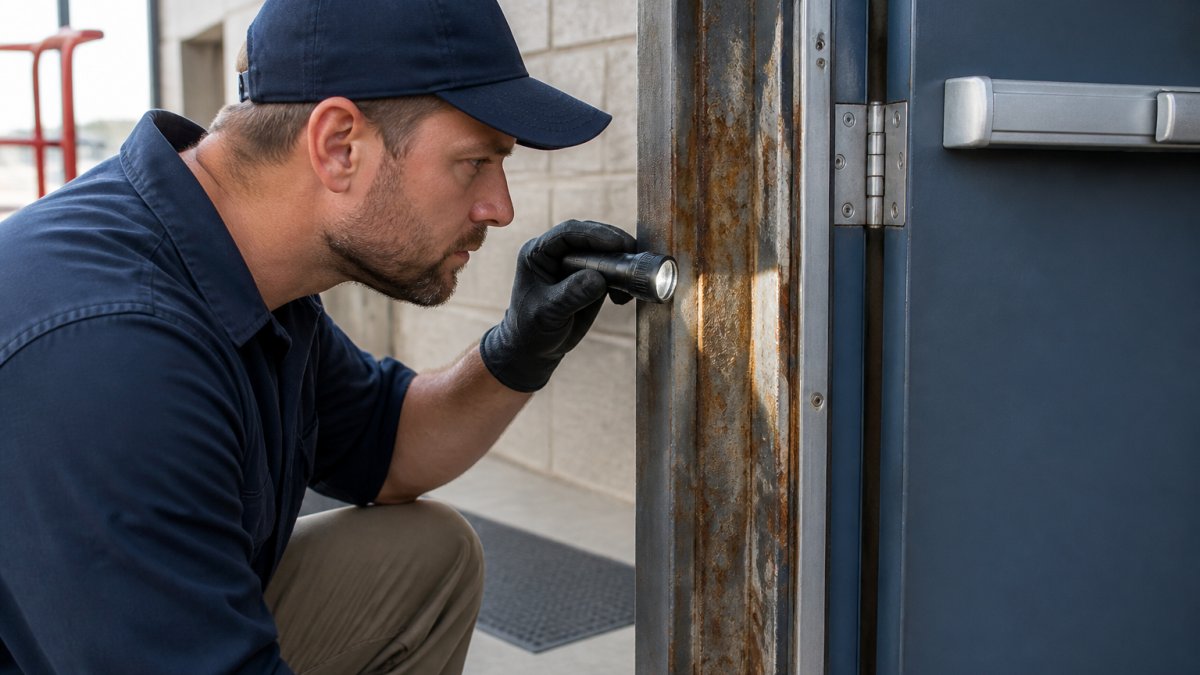
Creating a Commercial Door Inspection Checklist
A commercial door inspection checklist is your first line of defense. Without one, maintenance becomes reactive, and problems surface only after they create liability or operational disruption.
An effective checklist focuses on structural integrity, safety, and early warning signs. Document location, frame material (steel or aluminum), door type, and installation date to provide context for inspections.
What to Inspect Before Rust Develops
Light rust staining at the base of the jamb is your earliest warning. Address it at this surface stage for a simple repair; ignoring it allows rust to penetrate deeper into the frame structure.
Check door operation for smooth closure and signs of sticking or dragging, which signal frame movement from corrosion or impact. Inspect weather sealing for gaps or deterioration that allow water penetration and accelerate rust.
Examine hinge and strike hardware for corrosion or looseness, which indicate frame movement. For aluminum frames, look for white powdery corrosion from salt exposure or chemical contact.
Red Flags That Require Immediate Attention
Rust showing pitting or flaking needs urgent attention. If more than 2 inches of rust is visible at the frame bottom, repair kits become the practical solution versus full replacement.
Listen for clicking or grinding during operation, which suggests mechanical friction or misalignment. Water staining on walls or floors adjacent to the opening indicates seal failure and moisture intrusion.
A door that won't stay closed or opens on its own signals frame failure, a safety issue requiring immediate attention.
Establishing a Door Maintenance Schedule
Monthly inspections catch problems early; annual inspections often discover damage only when it becomes critical.
Align your schedule with facility type and climate. High-traffic retail and coastal facilities see accelerated corrosion; healthcare facilities require more frequent checks due to safety and accessibility standards.
Monthly and Quarterly Tasks
Monthly inspections (10-15 minutes per door) should check for rust staining, test operation, and verify hardware. Document findings in a spreadsheet or work order system for liability and planning.
Quarterly inspections should include weather stripping and seal checks, debris cleaning, and testing of automatic operators and safety sensors.
Annual Deep-Dive Inspections
Annual assessments should measure rust depth, photograph problem areas, assess alignment, and evaluate whether maintenance is keeping pace with deterioration.
This annual review informs your capital planning. If rust is advancing despite monthly maintenance, you may need repair kits or replacement sooner than expected. If maintenance is holding the line, you can confidently extend asset life.
| Maintenance Task | Frequency | Time per Door | What You're Looking For |
|---|---|---|---|
| Visual inspection | Monthly | 10-15 min | Surface rust, operation, hardware |
| Seal and weather check | Quarterly | 15-20 min | Water intrusion, deterioration, gaps |
| Comprehensive assessment | Annually | 20-30 min | Rust depth, alignment, safety issues |
| Lubrication (if needed) | As-needed | 5-10 min | Smooth operation, reduced friction |
Commercial Door Frame Repair vs. Full Replacement
The conventional assumption that damaged frames require replacement often costs more than necessary.
Full frame replacement is labor-intensive, time-consuming, disruptive, and expensive.
Repair kits address damage directly without removing the frame, keeping the door functional with installation taking hours, not days.
When Repair Kits Save Time and Money
Repair kits work when corrosion is localized to the jamb areas (vertical sides) where rust concentrates. If rust is confined to the bottom 12-24 inches, a repair kit reinforces the damaged section without touching the rest of the structure.
Jamb Patch kits are designed for steel frames with significant rust (more than 2 inches at the base), reinforcing the damaged jamb and extending frame life. Jamb Anchor kits re-anchor loose aluminum frames without full replacement.

Repair kits let you address multiple doors systematically over weeks while managing labor costs. Full replacement of 40 frames would require facility shutdowns and significantly higher spending.
Cost Comparison: Repair vs. Replacement
Full frame replacement typically costs several hundred to over a thousand dollars per opening, with downtime costs adding up quickly.
Repair kits cost a fraction of replacement: Jamb Patch Kits ($130.37), Strike Side Jamb Patches ($180.91), and Jamb Anchor kits ($119.00). Even with labor, the cost per door is dramatically lower than replacement.
A technician can install a repair kit in an afternoon versus days for full frame replacement. For facilities managing dozens of doors, time savings alone justify the repair approach.
Door Frame Repair Kits for Steel and Aluminum
Not all frames are created equal, and repair solutions need to match the material and damage type.
Steel frames corrode from water, salt spray, and chemicals, with rust spreading inward. Aluminum frames come loose from mounting points due to anchor corrosion or repeated impact.
Jamb Patch Kits for Rusted Steel Frames
The Jamb Patch Kit addresses early-stage corrosion with two 4-inch patches that reinforce critical stress points. Installation is straightforward: clean, apply, and secure with included hardware.
For advanced rust (more than 2 inches), Strike Side Jamb Patch kits ($180.91, non-handed) and Hinge Jamb Patch kits ($180.91 each, left/right-hand versions) address deeper damage while maintaining frame profile.

For both-sides rust, Right Hand ($320.00) and Left Hand ($320.00) Hinge Jamb Patch Kits provide both patches in a single kit.
These kits are compatible with standard commercial hollow metal frames from major manufacturers including Steelcraft, ASSA Abloy, Dean Steel, Ceco, Curries, DCI, Republic, Pioneer, and Mesker.
Jamb Anchor Kits for Loose Aluminum Frames
Aluminum frames don't rust the way steel does, but they corrode and fail differently. Corrosion of the anchoring system causes the frame to come loose from its mounting points. Impact from shopping carts, equipment, or repeated door slamming accelerates this failure.
The Jamb Anchor Side Jamb Kit ($119.00) re-anchors the outboard jambs, the outer vertical edges of the frame. The Jamb Anchor Center Jamb Kit ($119.00) addresses the inboard jambs. Both kits include anchors for left and right sides, plus installation hardware.
These kits restore frame stability without removing the existing frame. The door continues to operate while you're making the repair. For facilities managing aluminum door systems across multiple locations, having both side and center jamb kits on hand lets you address any loose-frame scenario.
Integrating Door Maintenance into Facility Operations
Door maintenance only works if it's actually integrated into your facility workflow. A great inspection checklist is useless if it lives in a file somewhere and nobody follows it.
Build door maintenance into your preventive maintenance program. Assign responsibility for inspections to specific team members. Use a work order system to track what's been inspected, what issues were found, and what repairs were completed. This creates accountability and gives you data for planning.
Assigning Maintenance Tasks and Tracking Progress
Designate one person as the door maintenance coordinator if you have a large facility. This person doesn't need to do all the work, but they manage the schedule, assign tasks, and track progress.
Use a simple spreadsheet or a computerized maintenance management system (CMMS) to log inspections. Record the date, which doors were inspected, what condition they're in, and what action was taken. Over time, this data shows you which doors are aging fastest and which repairs actually extend frame life.
When you identify a door needing repair, create a work order. Specify which kit is needed, which door, and when the repair should happen. Track when the repair was completed and by whom.
Training Staff for Simple Repairs
Most door maintenance staff don't need specialized training to install repair kits. The installation process is designed to be straightforward: clean the area, position the kit, and secure it with provided hardware. Detailed instructions come with every kit.
That said, spend 30 minutes with your maintenance team showing them how to properly assess rust depth, measure frame damage, and select the right kit for the job. Show them the difference between surface rust and structural corrosion. Explain why timing matters, why catching rust early means a simple repair instead of a frame replacement later.
If your facility uses automatic door operators, make sure whoever does maintenance understands the safety sensors and obstruction detection systems. These need to stay functional during and after repairs.
Safety, Compliance, and Long-Term Asset Management
Door maintenance isn't just about avoiding replacement costs. It's about keeping your facility safe and compliant.
Damaged door frames create liability. A door that won't close properly compromises security. A frame that's structurally compromised could fail suddenly, creating a hazard.
Building codes and accessibility standards require doors to operate smoothly and close securely. A corroded or misaligned frame can violate these standards. Regular maintenance and timely repairs keep you compliant.
Think of door maintenance as asset management. Every door frame has a lifespan. With proper maintenance, you extend that lifespan by years. Without it, you're replacing frames far earlier than necessary.
Document your maintenance program. Keep records of inspections, repairs, and any issues found. This documentation protects you if a door-related incident occurs.
Conclusion
Door maintenance solutions transform how facility managers approach one of the most overlooked assets in commercial buildings. Rather than waiting for frame failure and expensive replacement, a systematic inspection and repair program catches problems early and extends the life of existing door systems. Door Innovation's Jamb Patch and Jamb Anchor kits provide the practical tools to address rust and corrosion without full frame replacement. With a clear maintenance schedule, staff training, and a commitment to tracking progress, your facility stays safe, secure, and presentable while your maintenance budget stays under control. Start with a comprehensive inspection checklist, establish monthly and quarterly routines, and invest in targeted repairs when needed. Your doors, and your bottom line, will thank you.

Frequently Asked Questions
What should be included in a commercial door inspection checklist?
A commercial door inspection checklist should cover frame condition (rust, corrosion, loose anchors), hardware functionality (hinges, closers, locks), weather sealing integrity, door operation smoothness, and safety sensors on automatic doors. Visual inspection for discoloration, pitting, or white powder (aluminum oxide) indicates corrosion. Check that doors open and close without binding, and verify that all hardware moves freely without grinding sounds or unusual clicking.
How often should facility managers perform door maintenance?
Monthly visual inspections catch early corrosion and operational issues. Quarterly deep checks should include lubrication, hardware tightening, and weather seal assessment. High-traffic facilities and those in coastal or humid climates warrant more frequent inspections. Annual comprehensive reviews document frame condition and help prioritize repairs. This door maintenance schedule prevents small problems from becoming costly frame failures that disrupt operations.
When is door frame repair better than full replacement?
Repair is preferable when rust or corrosion is limited to specific sections, the frame structure is sound, and hinges and hardware are functional. If rust covers less than 2 inches of the frame bottom, early-stage repair kits work well. Full replacement becomes necessary only if structural integrity is compromised, multiple frame sides are severely damaged, or the frame no longer holds the door square. For most facilities, targeted commercial door frame repair extends frame life by years at a fraction of replacement cost.
Can facility staff install door repair kits without special training?
Yes. Jamb Patch and Jamb Anchor kits are designed for straightforward installation with basic tools. The three-step process requires no welding or specialized equipment. Most maintenance staff can complete a repair in an afternoon. However, staff should understand door handing (left vs. right), frame type (steel vs. aluminum), and rust severity before selecting the correct kit. Clear installation instructions and a quick training session ensure consistent, professional results across multiple doors.