
Extending Life of Commercial Door Frames
Table of Contents
- Why Commercial Door Frame Maintenance Matters
- Regular Maintenance Schedules for Commercial Door Frames
- Commercial Door Frame Rust Repair and Prevention
- Hardware Inspection and Lubrication Best Practices
- Locksmith Door Frame Repair Methods and Installation
- NFPA 80 Inspection Requirements for Door Frame Safety
- Repair vs. Replacement: A Cost-Benefit Analysis
- Frequently Asked Questions
Last Updated: September 20, 2026
Why Commercial Door Frame Maintenance Matters
Commercial door frames take a beating. High traffic, weather exposure, and constant use wear them down faster than most facility managers expect. A single damaged frame can compromise security, create liability issues, and force expensive emergency repairs.
Ignoring maintenance leads to full replacement at thousands per opening. Strategic maintenance catches problems early, when repair kits cost a fraction of replacement.

This guide covers the maintenance practices that actually work. We'll walk through inspection schedules, rust prevention, hardware care, and when repair makes sense versus replacement. By the end, you'll have a clear maintenance plan that keeps your doors secure and your budget intact.
Regular Maintenance Schedules for Commercial Door Frames
Most facilities benefit from quarterly inspections. High-traffic or harsh-environment areas need monthly checks; low-traffic doors can stretch to twice yearly.
Here's what a basic quarterly schedule looks like:
- Month 1: Visual inspection of all frames for rust, gaps, or visible damage
- Month 2: Lubricate hinges and latch mechanisms; check door alignment
- Month 3: Test door closers and strike plates; document any issues
- Month 4: Deep clean frames; inspect weatherstripping and seals
A rust spot caught early takes minutes to address; ignored for six months it spreads and becomes a major repair.
Adjust inspection frequency based on traffic volume. High-traffic doors see accelerated wear on hinges, closers, and strike plates.
Document inspections with date, location, findings, and actions taken to reveal patterns and identify problem areas.
Commercial Door Frame Rust Repair and Prevention
Rust threatens commercial door frames differently by environment. Steel corrodes from moisture, salt, and chemicals; aluminum develops white oxidation. Prevention and early intervention are critical.
Environment-Specific Corrosion Risks
Coastal facilities experience accelerated corrosion. Monthly inspections and appropriate coatings are essential.
High-humidity industrial facilities accelerate corrosion. Control moisture through ventilation, door sweeps, weatherstripping, and sealed gaps. Dehumidification systems help if corrosion recurs.
Chemical-exposure environments (hospitals, food service, manufacturing) accelerate corrosion. Inspect monthly and after chemical cleaning. Rinse frames and apply chemical-resistant sealants.
Rust Detection and Early Intervention
Light surface rust appears as discoloration or small pits. Clean with a wire brush, apply rust converter and protective coating.
Deep rust requires a wire wheel to remove loose rust. If structural integrity remains, jamb patch repair kits reinforce corroded areas without full replacement.

Aluminum white oxidation and pitting are often more advanced than they appear. Localized pitting can be sealed; widespread pitting requires frame replacement.
Protective Coatings and Sealants
Apply protective coatings after rust removal; reapply annually in high-corrosion environments. Use appropriate coatings rated for your environment (salt-air, chemical, or moisture). Clean frame, apply primer if needed, then topcoat.
Prevention as the Lowest-Cost Strategy
Prevention: keep frames dry, install sweeps and weatherstripping, seal gaps, ensure ventilation. In coastal areas, rinse periodically with fresh water. For high-corrosion environments, upgrade to stainless steel or marine-grade coated frames during replacement cycles. Document corrosion patterns to adjust maintenance frequency.
Hardware Inspection and Lubrication Best Practices
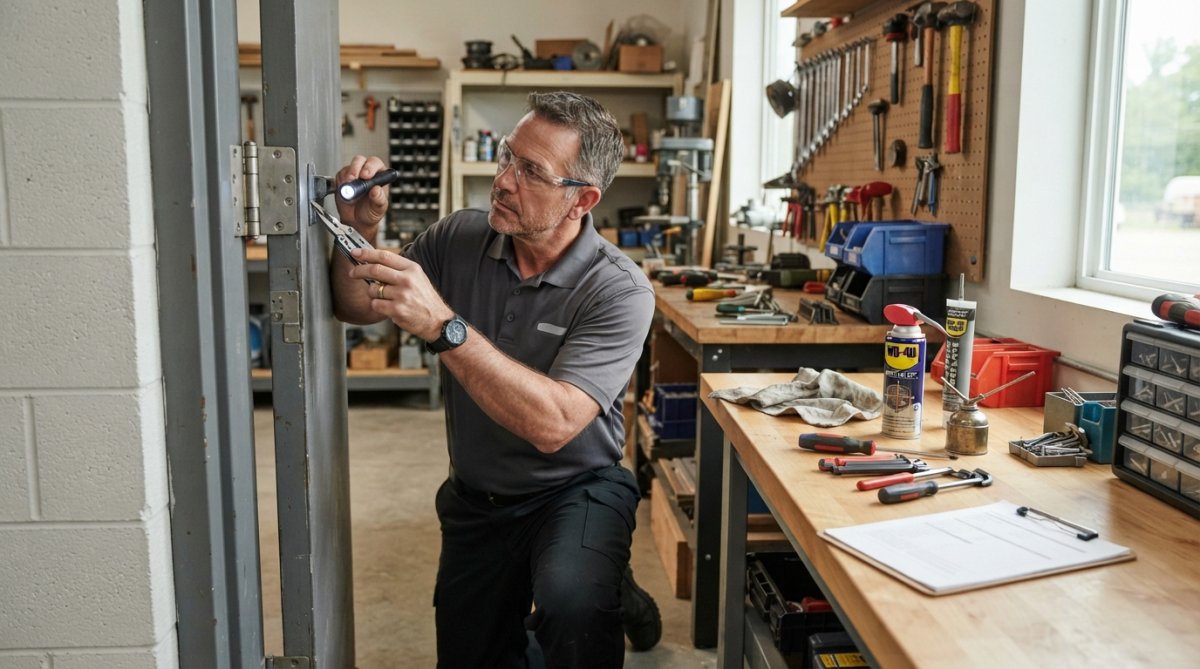
Door hardware, hinges, closers, latches, strike plates, determines smooth function. Inspection catches wear before failure.
Tighten loose hinge fasteners. Loose hinges cause sagging, misaligned latches, incomplete closure, and security gaps.
Lubricate hinges, closers, and latches quarterly with light machine oil or silicone spray. Apply sparingly to avoid dust attraction.
Strike plates can loosen or bend from repeated closing, preventing proper latch seating. Check fasteners and alignment during each inspection.
Jamb Patch - Jamb Anchor Catalogue →
Door closers wear out over time. A closer that closes too slowly or too fast indicates wear. Replace before failure to prevent doors left propped open.
If a door is hard to lock or unlock, inspect the latch, frame alignment, and strike plate. Often adjustment or lubrication fixes the problem.
Locksmith Door Frame Repair Methods and Installation
Locksmiths trained in frame repair can patch and reinforce rust areas, re-anchor loose frames, replace damaged components, and apply protective coatings. Installation of repair kits takes a few hours using a three-step process: clean, install, seal. This approach is faster, less disruptive, and significantly cheaper than full replacement.
NFPA 80 Inspection Requirements for Door Frame Safety
NFPA 80 governs fire door assemblies. Compliance directly affects insurance coverage, liability exposure, and emergency safety.
What NFPA 80 Requires and Why It Matters
NFPA 80 requires annual inspection of fire-rated door assemblies. Frames must be fire-rated (20, 45, 60, or 90 minutes) with all components listed for that rating. A damaged or corroded frame can compromise the fire rating and fail to contain fire and smoke.
Inspection Scope and Documentation
Inspectors check: frame alignment (gaps not exceeding 1/8 inch), hinge and closer function, weatherstripping and intumescent seals, hardware fastening, and visible damage or corrosion.
Keep inspection records on-site with date, inspector credentials, location, findings, and corrective actions.
The Liability and Insurance Connection
This is where NFPA 80 compliance becomes a financial and legal issue, not just a regulatory one.
- Insurance claim denial: Many commercial property and liability policies require compliance with NFPA 80. If an inspection shows deferred maintenance or non-compliance, the insurer may deny or reduce coverage for fire-related losses.
- Life safety liability: If occupants are injured or killed because a fire spread through a failed door assembly, your facility may face wrongful death or personal injury litigation. Documented neglect of NFPA 80 maintenance strengthens plaintiffs' cases.
- Building code violations: Fire marshals and building inspectors cite non-compliant fire doors. Repeated violations can result in fines, work orders, or even facility closure orders.
- ADA compliance issues: Fire-rated frames must also meet ADA accessibility requirements. A frame that is damaged and requires repair may also need to be brought into ADA compliance during the repair process.
Repair vs. Replacement for Fire-Rated Frames
When a fire-rated frame is damaged, the decision between repair and replacement depends on the damage type and whether repair maintains the fire rating.
Damage that can typically be repaired:
- Loose hinges or fasteners: Tightening or replacing fasteners restores function without affecting the fire rating.
- Minor rust or surface corrosion: Light surface rust can be cleaned and sealed without compromising the frame's fire rating, provided the structural integrity is not affected.
- Damaged weatherstripping or seals: Intumescent seals and smoke seals can be replaced with listed components rated for the same fire rating.
- Strike plate misalignment: Strike plates can be adjusted or replaced to restore proper latch function.
Damage that typically requires replacement:
- Structural warping or bending: If the frame is warped or bent such that it no longer closes properly or maintains the required gap tolerance, replacement is necessary. Attempting to straighten a warped frame risks compromising the fire rating.
- Corrosion that has eaten through the frame material: If rust has created holes or significantly reduced metal thickness, the frame's structural integrity is compromised. Repair kits may not be rated for fire-rated applications, and using them could void the fire rating.
- Damage to the frame that affects the seal: If the frame is damaged in a way that prevents the intumescent seal from functioning (e.g., the frame is bent so the seal no longer contacts the door), replacement is required.
- Frames at the end of service life: If the frame is 20+ years old and showing multiple corrosion or damage issues, replacement is often more cost-effective and reliable than repeated repairs.
Professional Assessment is Essential
This is where professional assessment matters critically. A locksmith or door specialist trained in fire-rated assemblies can determine whether a damaged fire-rated frame can be repaired or must be replaced while maintaining compliance. Attempting repairs without understanding fire rating requirements creates liability.
For Non-Fire-Rated Doors
If your doors are not fire-rated, NFPA 80 does not apply. However, local building codes may have other requirements for door maintenance and accessibility. Check your jurisdiction's building code and ADA requirements to understand what applies to your facility. Many jurisdictions require annual inspection of all commercial doors, not just fire-rated ones, to ensure they function properly and meet accessibility standards.
Repair vs. Replacement: A Cost-Benefit Analysis
The decision between repair and replacement comes down to damage extent, frame age, and total cost of ownership. Here's how to think through it.
Choose repair when:
- Rust or damage is localized to one area of the frame
- The frame is structurally sound otherwise
- Repair cost is less than 40-50% of replacement cost
- The door is not fire-rated or is within its service life
- You need the door operational quickly
Choose replacement when:
- Damage spans multiple areas or the entire frame
- The frame is severely corroded or structurally compromised
- The door is fire-rated and repair would void the rating
- The frame is at the end of its service life anyway
- Long-term cost of repeated repairs exceeds replacement
Frequently Asked Questions
Can you repair a rusted commercial door frame without replacing the whole unit?
Yes. Early-stage rust on steel door frames can be repaired using specialized jamb patches designed to restore structural integrity without full replacement. The Jamb Patch Kit is effective for corrosion under 2 inches at the frame base. For more extensive rust, the Strike Side Jamb Patch addresses larger damaged areas. These repair kits are compatible with major manufacturers like Steelcraft and ASSA Abloy, making them a practical alternative that extends frame life significantly.
What are the NFPA 80 requirements for door frame maintenance?
NFPA 80 (Standard for Fire Doors and Other Opening Protectives) requires regular inspection of door frames to ensure they maintain fire-rating integrity and proper operation. Inspections must verify that frames are free from damage, corrosion, and misalignment that could compromise safety or fire containment. Facility managers should conduct inspections at intervals specified by local building codes, document findings, and address identified defects promptly to remain compliant.
How often should commercial door frames be inspected?
High-traffic facilities should inspect door frames quarterly, while standard commercial buildings benefit from semi-annual inspections. Facilities in corrosive environments (healthcare, food service, coastal areas) need more frequent checks due to accelerated rust and corrosion. Visual inspections take minutes and should focus on gaps, misalignment, visible rust, hinge wear, and latch function. Document all findings to track deterioration patterns and plan maintenance accordingly.
What is the typical lifespan of a commercial steel door frame?
Steel door frames typically last 15-20 years with proper maintenance. However, corrosive environments, high traffic, and poor maintenance can reduce lifespan to 5-10 years. Regular lubrication, protective coatings, and prompt rust repair can extend frame life well beyond typical expectations. Using repair kits on early-stage rust damage prevents deterioration from accelerating, making preventative maintenance the most cost-effective way to maximize frame longevity.