
How to Prevent Door Frame Corrosion: A Complete Guide
Table of Contents
- Understanding Metal Door Frame Corrosion Causes
- Diagnosing the Moisture Source Before Treatment
- How to Remove Rust from a Metal Door Frame
- Best Paint for Steel Door Frames and Protective Coatings
- Corroded Steel Door Frame Repair vs. Replacement
- Installation Details That Prevent Corrosion
- Long-Term Prevention: Inspection and Maintenance Schedule
- Frequently Asked Questions
Last Updated: October 12, 2026
Understanding Metal Door Frame Corrosion Causes
To prevent door frame corrosion, you must stop moisture from reaching the steel or aluminum surface, where it begins a chemical reaction that breaks down the protective coating. This process happens faster in high-moisture environments and accelerates when water sits on the frame for extended periods.
The most common cause is water exposure. Rain, humidity, or splash-back from cleaning all introduce moisture. Once water penetrates the paint or protective coating, rust develops quickly on steel frames. Aluminum frames develop white corrosion (oxidation) instead of rust, but the damage is equally destructive.
Poor ventilation traps moisture around the frame. Bathrooms, showers, and areas near floor level are corrosion hotspots because water pools there and dries slowly. Damaged coatings, scratches, chips, or peeling paint, expose bare metal and accelerate corrosion.
Moisture exposure and water ingress
Water enters door frames through three main paths: direct splash, condensation, and poor drainage. Direct splash happens at floor level where mop water, rain, or shower spray hits the frame. Condensation forms when warm, humid air meets a cold frame surface. Poor drainage occurs when water cannot escape from the frame's edges or joints.
The bottom of the frame is most vulnerable. Water pools at floor level and takes longest to dry. This is why rust and corrosion typically start 2 to 4 inches above the floor and spread upward if left untreated.
Damaged coatings make moisture penetration worse. A single scratch through the paint exposes bare metal. Water seeps into that spot and spreads beneath the coating, creating rust that pushes the paint away and spreads faster than you can see.
Corrosion hotspots: bathrooms, showers, and floor-level edges
Bathrooms are the worst environment for door frames. Shower spray, steam, and standing water create constant moisture. The humidity stays high even after showers end. Steel frames in bathrooms typically show rust within 18 to 24 months if not protected properly.
Shower enclosure frames face direct water spray. The strike side (where the latch hits) and the hinge side both get soaked during showers. Water runs down the frame and collects at the floor junction. This is why corrosion at the bottom of the frame spreads fastest in wet areas.

Floor-level edges are critical. Water pools at the junction between the frame and the floor. If the frame sits directly on concrete or tile, water wicks up into the frame material. The frame bottom becomes a moisture trap where rust develops continuously.
Diagnosing the Moisture Source Before Treatment
Before you repair a corroded frame, find and stop the water source. Otherwise, rust will return quickly after you fix it.
Start by inspecting around the frame during wet conditions. Watch where water runs when it rains or when you spray the area with a hose.
Test the frame with your hand. Press on the corroded area. If it feels soft or spongy, water is actively penetrating.
Look at the pattern of corrosion. Rust that starts at the bottom and spreads upward suggests water pools at floor level. Corrosion on one side only suggests water comes from that direction.
Common moisture sources include:
- Missing or damaged caulk around the frame
- Cracks in the surrounding wall or concrete
- Poor drainage outside the door
- Condensation from high humidity inside
- Damaged door seals that let water in when the door closes
- Roof leaks or water running down exterior walls
- Standing water at floor level
Once you identify the source, fix it before repairing the frame. Seal cracks with caulk. Improve drainage by grading soil away from the door. Add ventilation to reduce humidity. Replace damaged door seals.
How to Remove Rust from a Metal Door Frame
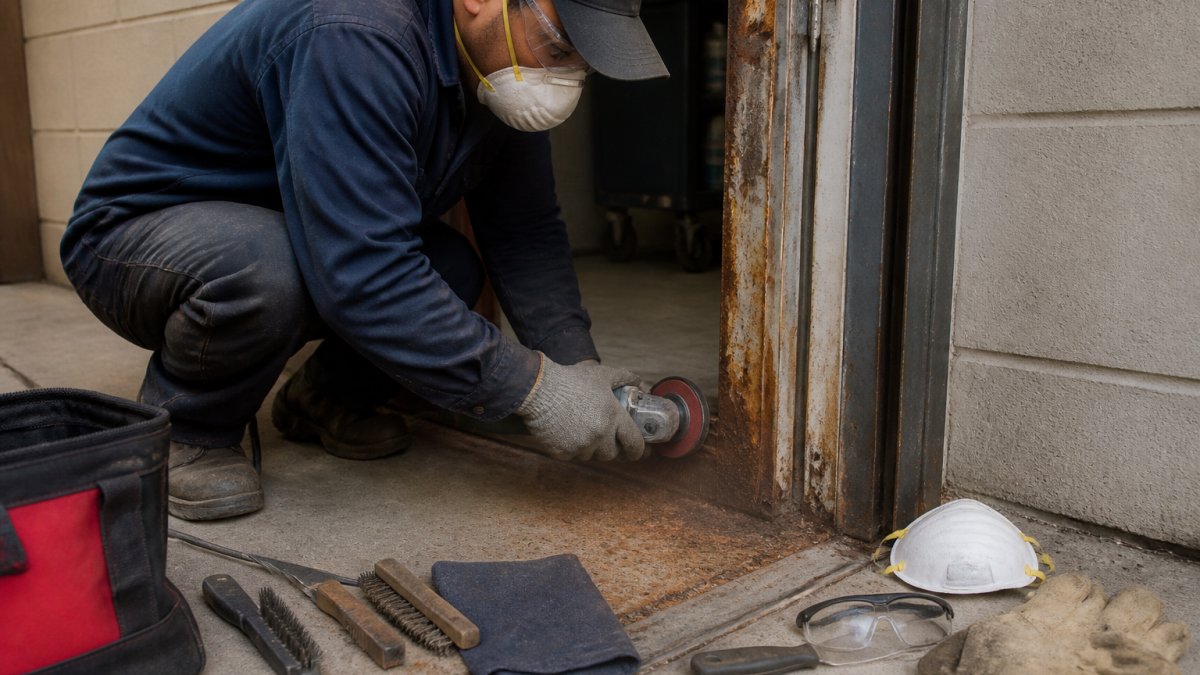
Removing rust is a three-step process: clean the surface, remove loose rust, and prepare bare metal for primer and paint.
Surface preparation and cleaning
Start by cleaning the corroded area thoroughly. Use a wire brush or abrasive pad to scrub away loose rust, corrosion flakes, and old paint. Work until you reach solid metal that doesn't crumble or flake away.
For light surface rust, a wire brush by hand is often enough. For heavier corrosion, use an electric drill with a wire wheel attachment or a handheld grinder. These tools remove rust faster and reach into pitted areas better than hand tools.
Clean away all dust and debris. Use a damp cloth to wipe the area. Let it dry completely. Any dust left on the surface will interfere with primer adhesion and reduce coating durability.
Removing loose rust with sanding and abrasion
Sanding removes loose rust and smooths the surface for primer. Use medium-grit sandpaper (80-120 grit) to start, then finish with fine-grit (150-220 grit) for a smoother surface. Sand until the area looks dull and uniform, not shiny.
For deep pitting or severe corrosion, grinding is more effective than sanding. An angle grinder with a metal wheel removes rust quickly and reaches into pitted areas. Wear safety glasses and gloves, metal particles fly during grinding.
Work in the direction of the grain if the frame has one. Sand until all loose rust is gone and the metal feels solid. The goal is bare metal that will bond well with primer.
Pay special attention to edges and corners where rust hides. Corrosion often spreads beneath the surface, so sand deeper than the visible rust.
Best Paint for Steel Door Frames and Protective Coatings
The right primer and paint combination prevents future rust. Steel door frames need both a rust-inhibiting primer and a durable topcoat designed for metal.
Applying rust inhibitors and primers
Rust inhibitors work by creating a barrier between bare metal and moisture. Apply a rust-inhibiting primer immediately after sanding. Don't wait, bare metal oxidizes quickly, especially in humid areas.
Zinc phosphate primer is a common choice for steel frames. It bonds well to bare metal and provides rust protection. Apply it according to the manufacturer's instructions, typically one coat is enough, but two coats offer better protection.
Epoxy primer offers stronger adhesion and corrosion resistance than zinc phosphate. It's more expensive but lasts longer on high-moisture frames. Epoxy primer is ideal for bathrooms and exterior doors where moisture exposure is constant.
Jamb Patch - Jamb Anchor Catalogue →
Apply primer with a brush or spray, depending on the product. Use smooth, even strokes. Cover all bare metal completely. Let primer dry fully before applying topcoat, typically 2 to 4 hours, but check the label.
Coating selection by location and exposure
Paint selection depends on where the frame is and how much moisture it faces. Interior frames in dry areas can use standard interior metal paint. Exterior frames and bathroom frames need moisture-resistant paint rated for high-humidity or wet environments.
For bathrooms and shower areas, use paint formulated for moisture resistance. Look for products labeled "bathroom" or "wet area" paint. These paints resist mildew and resist moisture penetration better than standard paint.
For exterior frames, use exterior metal paint or enamel. These paints withstand UV exposure and temperature changes. Some exterior paints include mildew resistance, which is helpful in humid climates.
Apply paint in thin, even coats. Two coats provide better coverage and durability than one thick coat. Let each coat dry completely before applying the next, typically 4 to 8 hours depending on the product.
Corroded Steel Door Frame Repair vs. Replacement
When corrosion is light or moderate, repair makes sense. When corrosion is severe or structural, replacement may be necessary.
Repair is the right choice if corrosion is limited to the bottom 6 inches of the frame and the rest of the frame is solid.
The Jamb Patch Kit (4") works well for early-stage rust and is designed to be installed with a simple three-step process.
Replacement is necessary if corrosion has spread across most of the frame, if the frame has structural damage (bending, warping), or if multiple frames are failing.
Compare the cost of repair versus replacement. Repair kits cost significantly less than new frames and installation. Labor time for repair is also much shorter, most repairs can be completed in an afternoon.
Installation Details That Prevent Corrosion
How a frame is installed determines whether you can prevent door frame corrosion or whether it develops quickly. Proper installation includes drainage, sealing, and ventilation.
Drip caps, seals, and proper ventilation
A drip cap is a metal or plastic trim piece installed above exterior doors. It sheds water away from the frame instead of letting it run down.
Sealing the frame is equally important. Caulk all gaps between the frame and the surrounding wall. Use a flexible, paintable caulk that moves with the frame as it expands and contracts with temperature changes.
Ventilation around the frame reduces moisture buildup. In bathrooms, exhaust fans pull humid air out of the room. In other areas, allow air to circulate around the door.
At floor level, ensure water drains away from the frame. Sloped concrete or tile directs water away.
Check door seals regularly. Weatherstripping and door seals wear out and develop gaps. Replace them when they no longer seal tightly. A good seal keeps rain and humidity out.
Long-Term Prevention: Inspection and Maintenance Schedule
Preventing corrosion is easier and cheaper than repairing it. A simple inspection and maintenance routine catches problems early and extends frame life.
Inspection Schedule:
- Monthly: Look for new rust spots or paint damage. Check caulk for cracks.
- Quarterly: Inspect bathrooms and high-moisture areas closely. Look for water stains or soft spots.
- Annually: Check all exterior frames for damage. Look at drip caps and seals.
- Every 2-3 years: Recaulk gaps around frames if needed.
Maintenance Tasks:
| Task | Frequency | What to Do |
|---|---|---|
| Visual inspection | Monthly | Look for rust, paint damage, water stains |
| Clean frames | Quarterly | Wipe away dirt and debris with a damp cloth |
| Check caulk | Annually | Look for cracks or gaps; recaulk if needed |
| Inspect seals | Annually | Check door seals and weatherstripping for wear |
| Touch up paint | As needed | Paint over small scratches or chips immediately |
| Clean drains | Annually | Clear debris from drainage areas around doors |
Early detection saves money. A small rust spot caught early can be sanded and painted in minutes. The same spot ignored for months spreads across the frame and requires a repair kit or replacement.
Keep records of inspections and maintenance. Note when you paint, recaulk, or repair. This helps you spot patterns, for example, if one bathroom always develops rust first, you know that area needs extra attention.
Corroded steel door frames don't have to mean expensive replacements. Door Innovation's repair kits are designed for exactly this situation, they let you restore damaged frames without the time and expense of full replacement.

Frequently Asked Questions
What causes a metal door frame to corrode?
Metal door frames corrode when moisture penetrates the protective coating and reaches the underlying steel or aluminum. Common causes include water exposure from bathrooms and showers, poor ventilation, damaged finish allowing water ingress, and floor-level moisture accumulation. Hollow metal door frames are especially vulnerable at edges and seams where water can become trapped. Regular inspection helps catch early corrosion before it spreads.
How do you prevent rust on a steel door frame?
Prevent rust by maintaining a complete protective coating system: apply a rust inhibitor or zinc phosphate primer to bare metal, then seal with quality epoxy or polyurethane paint. Ensure proper drainage with drip caps and maintain adequate ventilation around the frame. Inspect frames quarterly for chips or scratches in the coating, and touch up damage immediately. Address moisture sources like leaking seals or poor grading before they reach the frame.
Can a corroded steel door frame be repaired instead of replaced?
Yes, corroded steel door frames can be repaired cost-effectively if corrosion is caught early. For rust limited to the bottom edges or strike side, repair kits like the Jamb Patch (starting at $130.37) are available. These kits work on frames from major manufacturers and require only basic tools. However, if corrosion has compromised structural integrity across the entire frame or created safety hazards, full replacement may be necessary.
How often should metal door frames be inspected for corrosion?
Inspect metal door frames quarterly, with extra attention to high-moisture areas like bathrooms and exterior doors. After severe weather or water events, inspect immediately. Check for white cement deposits, rust spots, coating damage, and water stains. Establish a formal maintenance schedule for facilities with multiple doors. Early detection of rust or corrosion allows for inexpensive repairs before damage spreads and compromises the frame's structural integrity.