
Long Term Door Frame Repair: A Professional Guide
Table of Contents
- How to Fix Rotted Door Frames: Assessment and Early Intervention
- Tools, Materials, and Preparation for Frame Repair
- Step-by-Step Repair Process for Structural Reinforcement
- Commercial Door Frame Repair Kits: Material-Specific Solutions
- Cost of Door Frame Replacement vs Repair: Long-Term Value
- Preventative Maintenance to Extend Frame Life
- When to Repair vs Replace: Making the Right Decision
- Preventative Measures and Long-Term Durability
- Frequently Asked Questions
Last Updated: September 23, 2026
How to Fix Rotted Door Frames: Assessment and Early Intervention
Wood rot in door frames often runs deeper than it appears. The key to long term door frame repair is catching rot early and understanding what you're dealing with before committing to a fix.
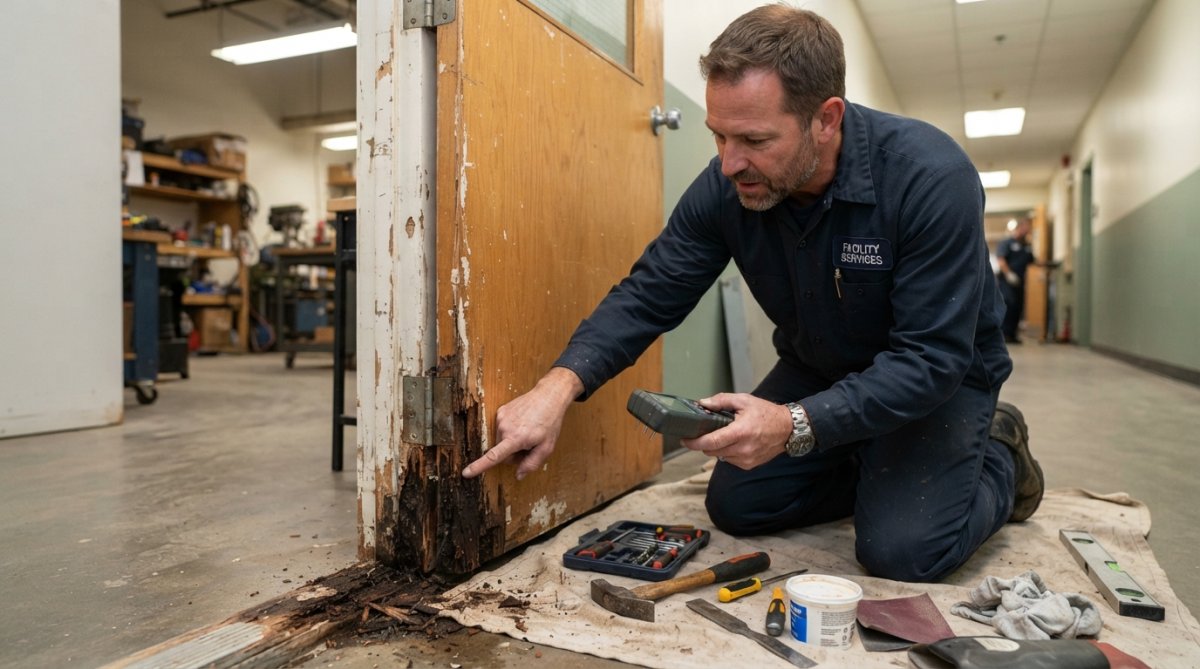
Identifying wood rot and moisture damage
Wood rot requires moisture, wood, and time (Limiting conditions for decay in wood systems). By the time rot becomes visible, the moisture problem has usually been running for months.
Look for these signs:
- Soft spots when you press the wood with a screwdriver
- Discoloration, darkening, or paint that peels in patterns
- Wood that crumbles or feels spongy
- A musty smell near the frame
- Gaps opening between the frame and the wall
Steel frames show orange-brown staining, flaking paint, and pitting. Aluminum shows white powdery deposits and chalky discoloration.
The root cause is almost always moisture. Water gets in through gaps, poor caulking, missing weather stripping, or foundation issues. Once moisture sits against wood or metal, deterioration accelerates.
Testing frame stability and load-bearing capacity
Before deciding whether to repair or replace, test the frame's structural integrity. If too compromised, repair won't hold.
Press firmly on different parts of the frame with your palm:
- The strike jamb (where the door latches)
- The hinge jamb (where hinges mount)
- The head frame (top horizontal piece)
- The threshold or sill (bottom)
If wood flexes more than a quarter inch or feels spongy, the frame has lost structural strength. If a screwdriver pushes in more than half an inch without resistance, rot is too deep for surface repair.
For steel frames, look for rust that has eaten through the metal. For aluminum, check if corrosion has weakened the frame so it no longer holds the door square.
A frame that fails these tests needs replacement, not repair. A frame that's solid with localized damage is a candidate for long term door frame repair using reinforcement techniques.
Tools, Materials, and Preparation for Frame Repair
Successful repair requires the right tools and materials.
Basic tools you'll need:
- Screwdriver set (flathead and Phillips)
- Hammer or mallet
- Pry bar or flat chisel
- Measuring tape
- Utility knife
- Drill with bits
- Circular saw or handsaw (for removing damaged wood)
- Sanding block and sandpaper (80-grit and 120-grit)
- Caulking gun
- Safety glasses and work gloves
Materials for wood frame repair:
- Wood filler or epoxy wood hardener
- Wood glue (exterior grade)
- Finish nails or structural screws
- Wood putty for final finishing
- Primer and paint (exterior grade, matching original)
- Caulk (exterior grade, paintable)
- Weather stripping tape
Materials for steel frame repair:
Door Innovation offers specialized repair kits for rusted steel frames like the Jamb Patch Kit, which comes with pre-cut patches, hardware, and installation instructions. The Jamb Patch Kit ($130.37) handles early-stage rust on steel frames up to 4 inches tall.

Materials for aluminum frame repair:
The Jamb Anchor Side Jamb Kit ($119.00) re-anchors loose aluminum frames that have corroded from salt, water, or repeated impacts. It includes left and right anchors with hardware.
Preparation matters as much as the materials. Clear the work area, remove the door if possible, and protect surrounding surfaces from dust and debris.
Step-by-Step Repair Process for Structural Reinforcement
The repair process follows a logical sequence: assess damage, remove compromised material, reinforce the frame, and finish.
Removing damaged wood and preparing the jamb
Start by removing all loose, rotted, or damaged wood. Use a chisel or pry bar to carefully chip away soft material. Don't leave any crumbling wood behind, it will continue to rot and compromise your repair.
Once damaged wood is removed, sand smooth with 80-grit sandpaper and clean away dust.
For steel frames, use a wire brush or grinding wheel to remove loose rust and flaking paint until bare metal shows, then wipe clean.
For aluminum frames, sand away white corrosion deposits with fine-grit sandpaper until you reach clean aluminum.
Applying epoxy wood hardener and wood filler
Apply epoxy wood hardener according to product instructions, allowing full cure time (usually 24 hours) before proceeding.
Jamb Patch - Jamb Anchor Catalogue →
Once the hardener cures, fill remaining gaps with exterior-grade wood filler. Overfill slightly, then sand flush once dry. The goal is a smooth, solid surface that's ready for reinforcement.
For steel frames, apply a rust-inhibiting primer to the cleaned metal. This prevents rust from returning before you install the repair patch.
Installing reinforcement and finishing
For wood frames, install a sister board (new wood glued and bolted alongside damage) or use metal corner braces to reinforce.
Door Innovation's Jamb Patch system uses a non-handed design that bolts over damage, distributing load across solid frame material.

Commercial Door Frame Repair Kits: Material-Specific Solutions
Repair approaches vary by material. Commercial buildings typically use steel or aluminum.
Steel frame repair with Jamb Patch kits
Steel frames are common in commercial buildings. When rust appears, it spreads quickly if untreated. The Jamb Patch Kit handles early-stage rust repair.
Aluminum frame repair with Jamb Anchor systems
Aluminum frames corrode from salt, moisture, or harsh cleaning solutions, weakening the frame and causing it to shift out of square.
Cost of Door Frame Replacement vs Repair: Long-Term Value
A full frame replacement costs significantly more than repair and causes substantial disruption.
Frame replacement typically involves:
- Removing the existing frame (labor-intensive)
- Patching walls and trim
- Installing a new frame
- Hanging the door
- Finishing and painting
- Potential HVAC and electrical adjustments if the frame is in a critical location
Repair with Door Innovation kits costs less:

- Jamb Patch Kit: $130.37
- Strike Side Jamb Patch: $180.91
- Jamb Anchor Side Jamb Kit: $119.00
- Installation labor: typically 30-60 minutes per door at standard maintenance rates
Preventative Maintenance to Extend Frame Life
After repair, preventative maintenance prevents problems from returning and costs far less than repair.
Weather stripping and moisture control
The biggest factor in frame longevity is keeping moisture out. Weather stripping seals gaps that let water in.
Check weather stripping annually:
- Replace any that's compressed, cracked, or missing
- Ensure the seal is tight when the door closes
- For exterior doors, install threshold sweeps if not present
- Caulk any gaps between the frame and wall
Regular inspection and early rot mitigation
Inspect frames quarterly for early warning signs: soft spots, discoloration, or peeling paint.
When to Repair vs Replace: Making the Right Decision
The decision to repair or replace hinges on three factors: structural integrity, cost, and timeline.
Repair makes sense when:
- The frame is structurally sound (passes the stability test)
- Damage is localized to one or two areas
- The facility needs the door operational quickly
- Budget is constrained
- You want to extend frame life another 5-10 years
Replace when:
- Structural testing shows the frame has lost load-bearing capacity
- Rust or rot affects more than 50% of the frame
- The door no longer closes or latches properly and can't be adjusted
- Repair cost approaches 70% of replacement cost
- The frame is 20+ years old and showing multiple failure points
Preventative Measures and Long-Term Durability
Frames that last longest stay dry. Moisture is the enemy of all frame materials.
Last Updated: September 23, 2026
| Repair Option | Best For | Time to Install | Cost Range |
|---|---|---|---|
| Jamb Patch Kit (4") | Early rust on steel frames | 30-45 min | $130 |
| Strike Side Jamb Patch | Rust at bottom of steel frame | 45-60 min | $181 |
| Jamb Anchor Side Jamb Kit | Corroded aluminum frames | 20-30 min | $119 |
| Full frame replacement | Severe structural damage | 4-8 hours | $400-800+ |
Frequently Asked Questions
How much should it cost to repair a door frame compared to replacement?
Door frame repair kits like the Jamb Patch Kit start at $130.37 for steel frames and $119.00 for aluminum, plus labor costs. Full frame replacement typically runs $300 or more. For facilities with multiple doors, like a 40-door building, repair kits save substantial money while extending the life of existing door openings. The actual savings depend on labor rates and damage extent, but repairs cost significantly less when rust or corrosion is caught early.
Can a damaged door frame be repaired without replacing it?
Yes. Most rust, corrosion, and wood rot can be repaired using commercial door frame repair kits designed for your frame material. Steel frames benefit from Jamb Patch systems that reinforce damaged jambs, while aluminum frames use Jamb Anchor kits to re-anchor loose sections. These solutions work best when damage is identified early, before structural compromise becomes severe. Professional repair kits provide long-term durability comparable to replacement at a fraction of the cost.
What is the most durable way to fix a rusted steel door frame?
Steel frame rust repair requires removing corroded material, applying epoxy wood hardener or rust treatment, and installing structural reinforcement. Commercial repair kits like the Jamb Patch use steel patches secured with installation hardware to restore frame stability and load-bearing capacity. For rust deeper than 2 inches at the bottom of the frame, a Strike Side Jamb Patch ($180.91) provides full-height reinforcement. Proper installation and regular maintenance, including weather stripping and moisture control, ensure the repair holds for years.
Do these repair kits work on both steel and aluminum frames, or do I need different products?
Door frame materials require different repair approaches. Steel frames use Jamb Patch kits designed for rusted metal frames from manufacturers like Steelcraft and ASSA Abloy. Aluminum frames use Jamb Anchor Side Jamb Kits to re-anchor loose sections damaged by salt corrosion or impact. The Door Innovation product catalogue lists specifications for both materials, ensuring you select the correct kit for your frame type. Most commercial facilities have a mix of both, so inventory both solutions for comprehensive maintenance coverage.