
Rust Damage on Commercial Doors: Repair vs. Replace
Table of Contents
- What Causes Rust Damage on Commercial Doors
- Signs of Severe Rust Damage
- How to Fix Rotted Door Frames: Repair Process
- Commercial Door Frame Repair Kit Solutions
- Repair vs. Replace: Cost-Benefit Analysis
- Preventing Rust on Steel Doors: Maintenance Strategy
- Regulatory Compliance and Fire Safety
- Frequently Asked Questions
Last Updated: September 22, 2026
What Causes Rust Damage on Commercial Doors
Rust damage on commercial doors doesn't happen overnight. It's the result of moisture, oxygen, and time working together on steel and metal frames. Understanding what triggers corrosion helps you catch problems early and choose the right fix.
Environmental exposure is the primary culprit. Steel door frames absorb moisture from humidity, rain, and condensation. When water sits on metal surfaces, it triggers oxidation. This surface oxidation starts as discoloration but progresses quickly to structural damage if left untreated. Facility managers often miss early signs because rust begins invisibly beneath paint layers.
Salt spray and industrial environments accelerate corrosion dramatically. Coastal facilities, areas near highways treated with road salt, and industrial zones experience faster rust development. The salt compounds break down protective coatings and penetrate metal surfaces more aggressively than plain moisture alone. Healthcare facilities and educational institutions in these zones face particular challenges because they operate year-round with constant door traffic.
Moisture ingress through worn weatherstripping compounds the problem. When door sweeps fail or weather stripping deteriorates, water pools at the frame base. This standing water is where rust thrives. Poor drainage design around exterior doors creates the same effect. The frame's bottom edge becomes a collection point for moisture, dirt, and corrosive materials.
Signs of Severe Rust Damage
Not all rust requires replacement. The key is distinguishing surface oxidation from structural failure. Surface oxidation appears as discoloration or light flaking paint on steel door frames. This stage responds well to repair. Structural failure means the metal has lost integrity and cannot safely support door operation.
Surface oxidation vs. structural failure tells you whether repair or replacement makes sense. Surface rust looks like rust spots or light discoloration on the paint. The metal underneath remains solid. Structural rust means the frame has lost thickness. You can often press a fingernail into severely corroded areas. The metal becomes soft or crumbles. This indicates the frame cannot safely bear the door's weight or security demands.
Flaking paint is an early warning sign. When paint bubbles or peels, moisture has penetrated the coating. The rust underneath is spreading. This is the ideal moment to act. Flaking paint at the frame base, around hinges, or near the threshold indicates active corrosion.
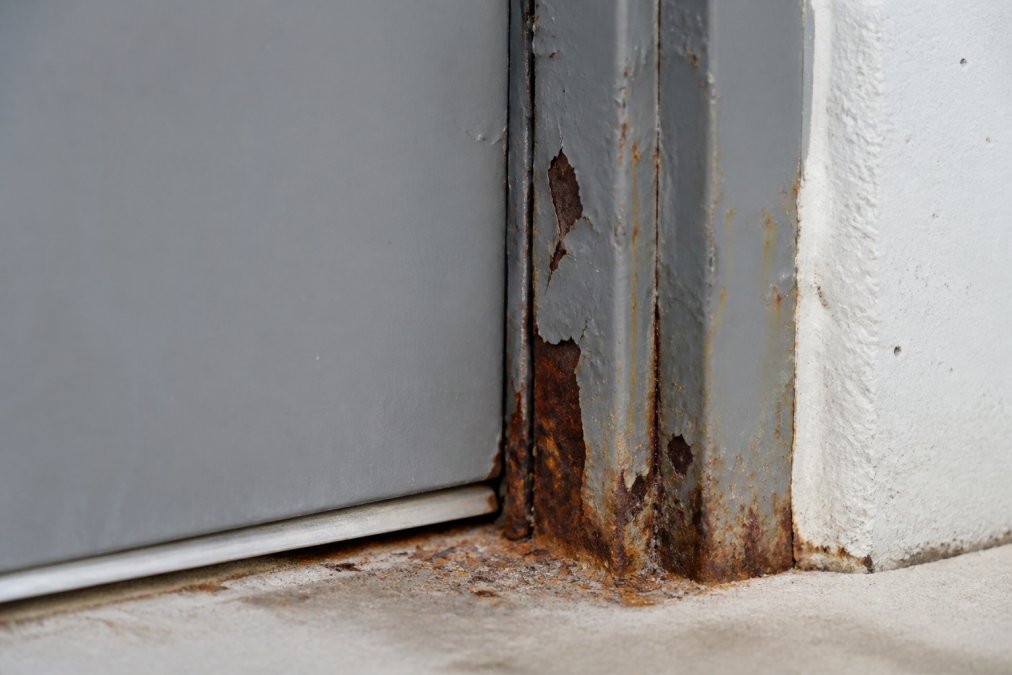
Door frame deterioration progresses in stages. Early stage: surface discoloration and paint loss. Middle stage: visible rust spots and minor pitting. Late stage: deep pitting, metal loss, and frame warping. Once warping occurs, the door no longer closes properly. Security and fire safety are compromised. At this point, replacement becomes necessary.
How to Fix Rotted Door Frames: Repair Process
Repairing rust damage on commercial doors follows a three-step process: surface preparation, rust removal, and protection. This approach works for early to moderate rust stages.
Step 1: Surface preparation and abrasive sanding removes loose paint and corrosion. Start by scraping away flaking paint with a paint scraper. Use a wire brush to remove loose rust and debris. Sand the affected area with coarse sandpaper (60-80 grit) to expose bare metal. Sand until you reach solid metal with no soft spots. This step is critical because new coatings won't adhere to loose material.
For larger corroded areas, power tools speed the work. A wire wheel attachment on a drill removes rust faster than hand sanding. Work carefully to avoid damaging sound metal. The goal is a clean, bare metal surface ready for treatment.
Step 2: Chemical vs. mechanical rust removal depends on rust depth. Mechanical removal (sanding, grinding, wire brushing) works for surface rust. Chemical rust converters work for moderate rust that has pitted the metal. Rust converters chemically transform rust into a stable compound that prevents further corrosion. Apply the converter per product instructions, typically with a brush. Allow full curing time before moving to the next step.
For severe pitting, both methods work together. Mechanically remove loose rust first, then apply a chemical converter to remaining rust. This combination ensures all corrosion is addressed.
Jamb Patch - Jamb Anchor Catalogue →
Step 3: Applying rust-inhibiting primers and protective coatings seals the repair. A rust-inhibiting primer bonds to bare metal and prevents new rust formation. Apply primer per manufacturer instructions, typically two thin coats rather than one thick coat. Allow proper drying time between coats.
After primer cures, apply a protective topcoat. Industrial-grade epoxy coatings provide superior durability in high-moisture environments. Polyurethane topcoats offer good protection and faster curing. The topcoat protects the primer and gives a finished appearance.
Commercial Door Frame Repair Kit Solutions
Door Innovation offers specialized repair kits designed for commercial facilities managing rust on steel and aluminum frames. These kits provide a faster alternative to full frame replacement for many situations.
Jamb Patch kits for early-stage rust address corrosion at the frame edge. The Jamb Patch Kit (4") comes complete with two 4-inch patches, hardware, and installation instructions. This kit works when rust damage is limited to the bottom 4 inches of the frame. It's ideal for facilities with multiple doors needing repair.

The kit is compatible with steel frames from major manufacturers including Steelcraft, ASSA Abloy, Dean Steel, Ceco, Curries, and others. The non-handed design means you can install patches on either the left or right side without special ordering.
Strike side and hinge side options address rust in specific locations. When rust extends more than 2 inches up the frame, the Strike Side Jamb Patch handles the strike side (where the door latches). The Left Hand Hinge Jamb Patch addresses hinge side damage. Both are 21-5/8 inches tall, covering the full jamb height where rust typically concentrates.


The cost per door averages $130-180 depending on which kit you select.
Repair vs. Replace: Cost-Benefit Analysis
The decision between repair and replacement comes down to rust severity, frame age, and total facility costs. Early rust almost always favors repair. Advanced structural damage typically requires replacement.
| Condition | Repair | Replace | Reason |
|---|---|---|---|
| Surface rust, paint flaking | Yes | No | Metal integrity intact |
| Rust extends 2-4 inches up frame | Yes | No | Patch kits handle this depth |
| Rust deeper than 6 inches | Consider | Often | Depends on pitting severity |
| Frame warping or gaps visible | No | Yes | Structural failure present |
| Door won't close properly | No | Yes | Frame geometry compromised |
| Fire-rated door with rust | No | Yes | Safety rating lost |
Preventing Rust on Steel Doors: Maintenance Strategy
Rust prevention is far cheaper than repair or replacement. A simple maintenance routine catches problems early and extends door life by years.
Regulatory Compliance and Fire Safety
Commercial doors must meet fire and safety codes. Rust damage can compromise these ratings. Understanding compliance requirements protects your facility from liability.
Frequently Asked Questions
Can rust on a commercial door frame actually be repaired, or does it always require full replacement?
Yes, rust damage on commercial doors can be repaired effectively, especially when caught early. Surface oxidation and corrosion limited to the jamb or strike side respond well to rust removal, primer application, and protective coatings. Specialized repair kits like Jamb Patch solutions address rust damage on steel and aluminum frames without full replacement. However, if rust has caused structural damage affecting door alignment, security, or fire rating, replacement becomes necessary. The key is assessing the extent of corrosion and whether the frame's integrity remains sound.
How do I know if rust damage is too severe to repair with a commercial door frame repair kit?
Rust damage is typically too severe for repair kits when more than 50% of the frame thickness is compromised, the door no longer closes or locks properly, or structural failure is evident. If rust has penetrated deeply into the hinge or strike side, affecting door alignment or security hardware function, replacement is safer. Additionally, if rust has compromised the fire-rated integrity of the frame, building codes may require replacement. A professional inspection can determine whether corrosion is surface-level or structural.
What's the best way to prevent rust on steel doors and extend door frame life?
Preventing rust on steel doors requires regular maintenance and environmental control. Install weather stripping and door sweeps to minimize moisture ingress at the threshold. Apply rust-inhibiting primers and protective topcoats every 3-5 years, depending on exposure. Inspect frames quarterly for early signs of surface oxidation and address flaking paint immediately. In high-moisture or salt-spray environments, consider epoxy coatings for enhanced corrosion resistance. Keep door hardware clean and lubricated, as metal fatigue accelerates rust formation. Regular preventative maintenance is far more cost-effective than addressing advanced corrosion.
How does rust affect the security and fire rating of a commercial door?
Rust can compromise both security and fire safety. Structural corrosion weakens the frame, allowing door misalignment that defeats locking mechanisms and security hardware function. Fire-rated doors rely on precise frame integrity to contain flames and smoke; rust-induced warping or frame deterioration can breach that seal. Additionally, metal fatigue from corrosion reduces the frame's ability to withstand impact or forced entry. For healthcare facilities, educational institutions, and other regulated spaces, rust-compromised frames may violate fire codes and security standards, making repair or replacement essential for compliance.