
Save Money on Door Maintenance: A Practical Guide
Table of Contents
- Why Save Money on Door Maintenance Matters
- Understanding Door Frame Replacement Cost vs. Repair
- Preventative Maintenance for Facility Doors
- How to Fix Rusted Door Frames Before They Fail
- DIY vs. Professional Door Maintenance
- Cost-Saving Strategies That Actually Work
- Extending Door Lifespan Through Early Intervention
- Frequently Asked Questions
Last Updated: September 19, 2026
Why Save Money on Door Maintenance Matters
Door frames take a beating. They face constant use, exposure to weather, and physical impacts that gradually wear them down. When rust or corrosion sets in, facility managers face a critical choice: replace the entire frame or repair it. Understanding how to save money on door maintenance starts with that decision, which has major cost implications.
Full frame replacement can run thousands of dollars per opening. Labor, materials, and downtime add up fast. For a facility with multiple damaged doors, those costs become a serious budget hit. But here's what many managers don't realize: early intervention catches problems before they become expensive emergencies.
Preventative maintenance for facility doors isn't just about avoiding catastrophic failure. It's about making smarter spending decisions. A small repair done early can extend a door's life by years. That's the core of saving money on door maintenance. The strategy is simple: catch problems early, fix them right, and avoid the massive expense of full replacement.
Understanding Door Frame Replacement Cost vs. Repair
When a door frame corrodes, you have two paths forward. Understanding the financial difference between them shapes your entire maintenance strategy.
Full frame replacement involves removing the existing frame and installing a new one. This requires skilled labor, structural work, and often facility downtime. The process can take days. For commercial buildings, that means disrupted operations. Replacement frames themselves cost money, and installation labor adds substantially to the bill.
Repair focuses on addressing the specific damage without removing the frame. For rusted steel frames, targeted patches can restore structural integrity. For corroded aluminum frames, re-anchoring solutions can tighten loose jambs. These repairs happen faster and cost less.
The financial gap is significant. A repair kit with professional installation typically costs a fraction of full replacement. More importantly, repairs preserve your existing infrastructure while buying you years of additional service life. This is why preventative maintenance for facility doors makes financial sense.
The key is timing. Catching rust early means simpler, cheaper repairs. Waiting until structural damage spreads means more extensive work and higher costs.
Preventative Maintenance for Facility Doors
Preventative maintenance is your first line of defense against expensive repairs and replacements. It's the practice of regularly inspecting and servicing door systems before problems become critical.
This approach works because most door failures don't happen overnight. They develop gradually. Rust spreads slowly. Hardware loosens over time. Weatherstripping degrades. By catching these issues early, you stop them from becoming structural problems.
The maintenance schedule breaks into two components: seasonal inspections and ongoing hardware care.
Seasonal Inspection Checklist
Seasonal changes stress door systems. Temperature swings, moisture exposure, and weather shifts all accelerate wear. A quarterly inspection catches problems before they worsen.
Spring Inspection:
- Check for water damage or moisture around frames
- Inspect weatherstripping for gaps or deterioration
- Test door operation and alignment
- Look for rust spots on metal frames
- Verify locks and closers function smoothly
Summer Inspection:
- Examine frames for paint peeling or coating failure
- Check for corrosion from increased humidity
- Verify door seals are intact
- Test automatic closers and safety sensors
- Inspect hardware for looseness or wear
Fall Inspection:
- Clean debris from door tracks and frames
- Check weatherstripping before cold weather
- Inspect for cracks or structural issues
- Verify proper door closure and latching
- Test emergency exit functions
Winter Inspection:
- Check for ice buildup affecting operation
- Inspect salt damage on metal frames
- Verify door closure in cold conditions
- Check for condensation or moisture inside frames
- Test all safety and security features
Documentation matters. Keep records of each inspection. Note any issues found and when they were addressed. This creates a maintenance history that helps predict future problems.
Hardware and Lubrication Schedule
Door hardware requires regular attention. Hinges, closers, locks, and latches all need maintenance to function properly.
Monthly Tasks:
- Lubricate hinges with light machine oil
- Check hinge bolts for tightness
- Wipe frames clean of dust and debris
- Test door operation for smooth movement
Quarterly Tasks:
- Lubricate door closers per manufacturer specs
- Check all fasteners for looseness
- Inspect strike plates and latches
- Clean weatherstripping and seals
Annual Tasks:
- Full hardware inspection and adjustment
- Replace worn weatherstripping
- Deep clean frames and hardware
- Professional technician review of safety systems
Regular lubrication prevents rust and corrosion. It keeps moving parts functioning smoothly. This simple maintenance extends hardware life significantly and prevents the mechanical failures that force emergency repairs.
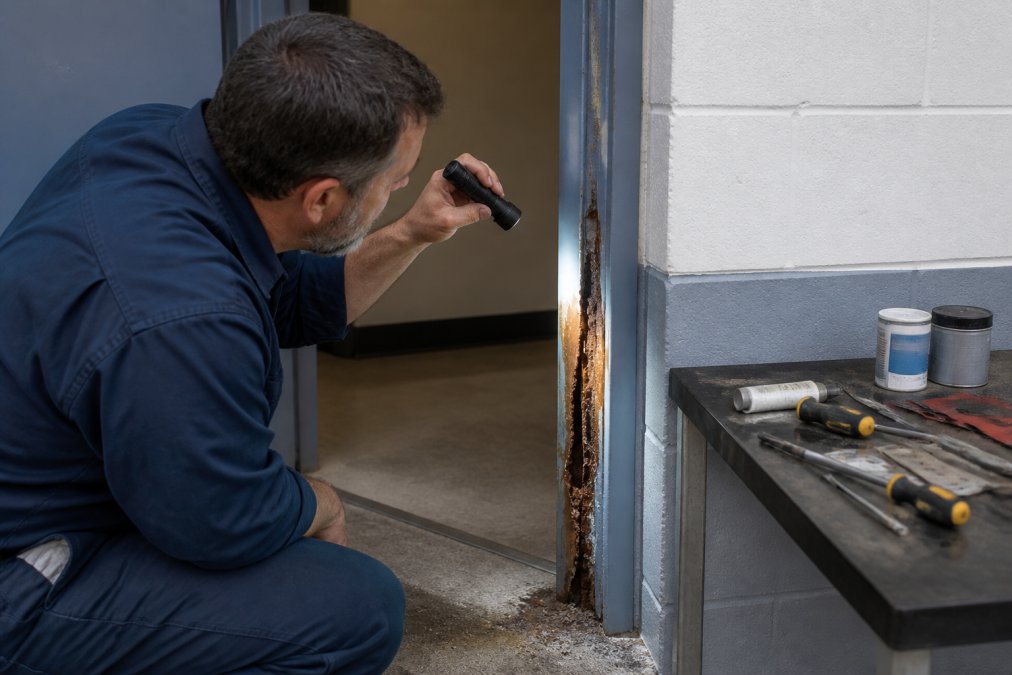
How to Fix Rusted Door Frames Before They Fail
Rust is the enemy of steel door frames. Once it starts, it spreads. The key is catching it early and stopping the progression before structural damage occurs.
Early detection makes repair simple. Minor surface rust can be addressed with basic maintenance. Moderate rust confined to a small area responds well to targeted repair. Severe rust that has spread across large sections requires more extensive work.
Jamb Patch - Jamb Anchor Catalogue →
Early Detection and Minor Fixes
The earliest sign of rust is discoloration. Steel frames develop orange or brown spots. This is surface rust. It hasn't compromised structural integrity yet, but it will if left untreated.
Catch it at this stage and you have options. Light sanding removes surface rust. Applying rust-inhibiting primer and paint stops further corrosion. This takes minimal time and minimal cost. A facility manager can often handle this without professional help.
The next stage is localized rust that has begun eating into the metal. You'll see pitting or small holes. At this point, surface treatment isn't enough. The frame needs reinforcement. This is where repair kits become valuable. They address the damaged area without removing the entire frame.
Minor fixes at this stage prevent major problems later. A small repair done now avoids expensive replacement later.
Professional Repair Kits vs. Full Replacement
This is where the financial logic becomes clear. Professional repair kits like Door Innovation's Jamb Patch solutions are designed for exactly this situation.
A repair kit targets the specific damaged area. For steel frames with localized rust, a Jamb Patch kit provides reinforcement. The kit includes the patch, installation hardware, and instructions. Installation takes hours, not days. Cost runs significantly less than frame replacement.
The Jamb Patch Kit comes with two 4-inch patches and everything needed for installation. It works on steel frames from major manufacturers including Steelcraft, ASSA Abloy, and Ceco. For rust at the bottom of the frame, a Strike Side Jamb Patch provides targeted repair.
For aluminum frames that have come loose due to corrosion, the Jamb Anchor Side Jamb Kit re-anchors the frame firmly. This kit includes left and right anchors with installation hardware. It solves the problem without frame replacement.
Full replacement removes the entire frame and installs new. This is necessary when structural damage is extensive. But most rust problems don't require replacement. They respond to targeted repair. Choosing repair over replacement saves substantial money while extending door life.
DIY vs. Professional Door Maintenance
The question comes up frequently: can your maintenance staff handle these repairs, or do you need professionals?
The honest answer depends on the damage severity and your team's experience. Simple maintenance tasks, lubrication, hardware tightening, weatherstripping replacement, are well within the capability of in-house maintenance crews. These don't require special training.
Repair kit installation falls into a middle ground. The kits are designed for straightforward installation. Door Innovation's three-step process keeps things simple. A maintenance technician with basic mechanical skills can handle it. No special certification is required. Most installations take an afternoon.
However, some situations benefit from professional expertise. Structural assessment requires experience. Determining whether repair is sufficient or replacement is necessary takes knowledge. Professional technicians evaluate the full scope of damage and recommend the right solution.
For facility managers evaluating this decision, consider your team's bandwidth and expertise. If your staff is stretched thin, professional installation ensures quality work.
Cost-Saving Strategies That Actually Work
Saving money on door maintenance requires a strategic approach. It's not about cutting corners. It's about making smart decisions that reduce total cost of ownership.
Getting Multiple Estimates
When repair or replacement becomes necessary, comparison shopping matters. Different contractors quote differently. Labor rates vary. Material costs differ. Getting multiple estimates reveals the range and helps identify fair pricing.
This comparison process takes time but saves money.
Warranty Preservation and Long-Term Savings
Most commercial door frames come with manufacturer warranties. These warranties often cover defects but not damage from neglect or improper maintenance.
Extending Door Lifespan Through Early Intervention
This principle runs through everything we've discussed. Early intervention changes the economics of door maintenance completely.
Frequently Asked Questions
Is it cheaper to repair a door frame or replace it entirely?
Repair is typically far more cost-effective. A professional repair kit for rusted steel frames costs $130-$181. Repair also preserves your existing door hardware and allows you to avoid extended downtime, making it the practical choice for most facilities managing multiple doors.
How often should commercial doors be inspected for maintenance?
Inspect doors quarterly as part of preventative maintenance, with deeper hardware and alignment checks annually. Early detection of rust, loose frames, or worn weatherstripping prevents emergency repairs and extends door lifespan by years.
What is the average cost of professional door frame repair?
Combined with a repair kit ($130-$181), professional repair avoids the cost of new hardware, masonry work, and extended facility downtime.
Can I use repair kits on both steel and aluminum frames, or do I need different products?
You need different products. Jamb Patch kits are designed for rusted steel frames, while Jamb Anchor kits address loose aluminum frames damaged by corrosion from salt, water, or impacts. Identifying your frame material first, usually stamped on the frame itself, ensures you order the correct kit. Mixed-material facilities should stock both types to handle the full range of door conditions efficiently.