
Steel Door Frame Corrosion Solutions: A 2026 Guide
Table of Contents
- What Causes Steel Door Frame Corrosion
- How to Fix Rusted Door Frame Bottom: Step-by-Step Process
- Hollow Metal Door Frame Repair Kit Options
- Commercial Door Frame Maintenance Best Practices
- Repair vs. Replace: Cost-Benefit Analysis
- Protective Coatings and Standards for Steel Doors
- Safety and Installation Considerations
- Frequently Asked Questions
Last Updated: September 19, 2026
What Causes Steel Door Frame Corrosion
Steel door frame corrosion results from water exposure combined with the metal's susceptibility to oxidation. The most common causes are galvanic corrosion, environmental exposure, and poor maintenance.
Galvanic Corrosion in Hollow Metal Doors
Galvanic corrosion occurs when steel frames contact aluminum components, fasteners, or masonry anchors in the presence of moisture. Steel corrodes faster to protect the more noble aluminum, accelerating in humid and coastal environments with salt spray.
Frame bottoms are vulnerable because water pools there. Rust expands beneath paint, lifting the coating and exposing fresh metal. A single season can create deep pitting that compromises structural integrity.
Environmental Exposure and Climate Factors
Moisture accelerates corrosion. Humid climates, coastal regions, and freeze-thaw cycles all speed steel door frame corrosion. Salt spray is particularly aggressive because it lowers pH and accelerates oxidation.
Ground-level frames absorb water from rain splash, cleaning, and seepage. Frames near loading docks face additional stress from equipment impacts and wet/dry cycles that weaken paint barriers.
In cold climates, freeze-thaw cycles push water into paint cracks, where expansion widens damage and accelerates failure.
How to Fix Rusted Door Frame Bottom: Step-by-Step Process
Repair depends on severity. Light surface rust needs a converter and coating; moderate to severe rust requires substrate removal and patching.
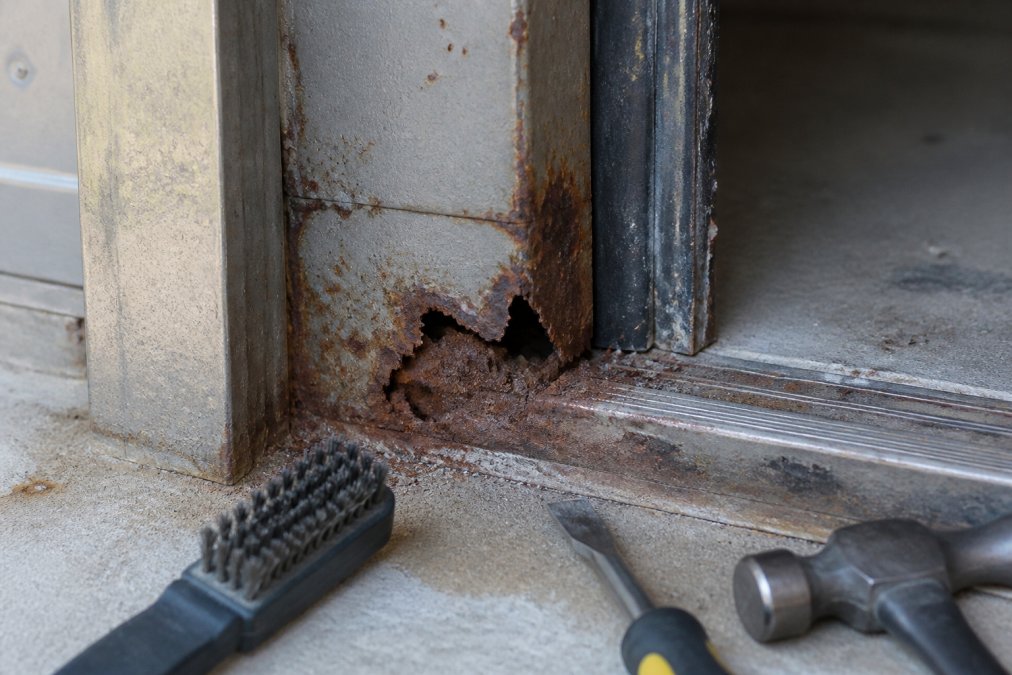
Assessing Rust Severity and Damage Extent
Use a screwdriver or awl to probe suspect areas. If you can press through easily, structural integrity is compromised. Light rust feels rough but holds solid; moderate rust shows visible pitting.
Measure vertical rust extent. Rust confined to the bottom 4 inches can be arrested with repair kits.
Check paint condition. Bubbling, peeling, or cracking paint indicates water has breached the barrier and corrosion is active.
Surface Preparation and Rust Removal
Proper surface preparation determines repair longevity. You cannot patch over active rust; corrosion will continue underneath and cause failure.
Remove loose rust and paint with a wire brush, abrasive pad, or light grinding. For heavy corrosion, use chemical rust converters to transform ferrous oxide into a stable compound. Allow 24-48 hours curing before priming.
Wipe the surface clean with a dry cloth to remove dust and debris. Use an etching primer next, which chemically bonds to bare steel for superior adhesion.
Applying Primer and Protective Coatings
Apply primer within 24 hours to prevent flash rust. Use thin, even coats of rust-inhibiting primer formulated for metal substrates; thin coats cure faster and adhere better.
Apply a protective topcoat after primer cures. Epoxy-based coatings offer superior corrosion resistance for commercial applications. High-build epoxy or polyurethane coatings withstand impact and abrasion.
Allow full curing time before exposing the door to traffic. Most epoxy systems require 7 days minimum before full strength, though surface hardness may be achieved in 24-48 hours.
Hollow Metal Door Frame Repair Kit Options
Door Innovation offers specialized repair kits for different rust scenarios, providing cost-effective alternatives to full frame replacement.
Early-Stage Corrosion: Jamb Patch Kit (4")
The Jamb Patch Kit (4") addresses early corrosion at the frame bottom. It includes two 4-inch patches, hardware, and instructions for preventive maintenance.

The non-handed design simplifies inventory management. At $130.37, it's the most affordable option for rust confined to the lower 4 inches.
Moderate to Severe Rust: Strike Side and Hinge Jamb Patches
For rust extending more than 2 inches up the frame, the Strike Side Jamb Patch and hinge-side options reach 21-5/8 inches tall for full-height coverage.

Aluminum Frame Corrosion: Jamb Anchor Kits
Aluminum frames develop a different type of corrosion problem. Rather than deep pitting like steel, aluminum frames often come loose as corrosion from salts, water, and cleaning solutions weakens the connection between the frame and masonry opening. This looseness creates gaps, allows water infiltration, and compromises door security.
Commercial Door Frame Maintenance Best Practices
Prevention is always cheaper than repair. A structured maintenance program catches corrosion early, before it becomes a safety or security liability.
Preventive Maintenance Schedules
Establish quarterly inspections for all exterior and high-moisture interior doors. Look for paint bubbling, rust discoloration, or visible pitting. Document findings and prioritize frames showing early signs of corrosion for immediate treatment.
Moisture Control and Weather Stripping
Reduce water exposure at the source. Install or upgrade weather stripping around door frames to minimize water infiltration during rain or snow. Proper weather stripping also improves energy efficiency by reducing drafts.
Repair vs. Replace: Cost-Benefit Analysis
The decision between repair and replacement hinges on damage extent, frame age, and total cost of ownership.
When Repair Makes Economic Sense
If rust is confined to the bottom 2-4 inches and the frame is structurally sound, repair is almost always the right choice. A jamb patch kit costs $130-$320 plus labor for installation. Even accounting for 4-6 hours of labor at standard maintenance rates, total cost typically runs $400-$800 per frame.
When Full Replacement Is Necessary
If rust has penetrated more than 2 inches into the frame material, structural integrity is compromised. A frame that wobbles, shows visible deflection, or cannot hold the door securely should be replaced. Patching a severely damaged frame is a temporary fix that will fail within 1-2 years.
Protective Coatings and Standards for Steel Doors
The coatings applied to steel door frames directly determine how long they resist corrosion.
A40 vs. A60 Coating Specifications
Commercial door standards define coating thickness in terms of dry film thickness (DFT). An A40 coating is 40 mils thick, while an A60 coating is 60 mils thick. Thicker coatings provide longer corrosion resistance because they create a greater moisture barrier.
Epoxy Primers and Rust Converters
Epoxy primers bond chemically to steel, creating superior adhesion compared to latex or acrylic primers. They're essential for bare metal surfaces and corroded areas. Epoxy primers cure slowly (24-48 hours) but provide exceptional corrosion resistance.
Safety and Installation Considerations
Proper installation ensures the repair lasts and maintains safety standards.
Frequently Asked Questions
What causes steel door frames to rust at the bottom?
Steel door frame corrosion occurs when moisture, salts, and environmental contaminants reach the metal substrate. The bottom of frames is most vulnerable because water pools there from rain, cleaning solutions, and ground moisture. In commercial settings, salt spray from nearby roads or salt-treated walkways accelerates rust formation. Galvanic corrosion can also occur when dissimilar metals contact each other, such as steel frames with aluminum hardware. Once the protective coating fails, surface oxidation begins and spreads rapidly without intervention.
How do I know if I need a hollow metal door frame repair kit instead of full replacement?
Repair kits work well when rust damage is limited to the bottom 2-4 inches of the frame and the structural integrity remains intact. If rust extends beyond 2 inches up the frame, a full-height Jamb Patch or Hinge Jamb Patch is appropriate. Full replacement is necessary if corrosion has compromised the frame's ability to hold hinges, support door weight, or maintain security. For most commercial facilities, repair kits like those offered by Door Innovation provide a cost-effective solution that preserves existing door systems and extends frame life.
What is the best way to prevent future steel door frame corrosion?
Implement a maintenance protocol that includes regular inspections, prompt moisture removal, and protective coatings. Install weather stripping to reduce water infiltration and maintain proper drainage around door frames. Apply epoxy primers and topcoat finishes that meet A40 or A60 coating standards for commercial environments. For high-salt or humid climates, schedule inspections quarterly and clean frames regularly to remove salt deposits and debris. Ensure hinges and hardware are stainless steel or galvanized to prevent galvanic corrosion. Address rust at the first sign, early treatment prevents expensive repairs later.
Can maintenance teams install repair kits without special training?
Yes. Door Innovation's Jamb Patch and Jamb Anchor kits are designed for straightforward installation following the included instructions. Most maintenance teams can complete installation in an afternoon without specialized training. The kits include all necessary hardware and step-by-step guidance. However, proper surface preparation, cleaning, sanding, and removing loose rust, is critical for long-term durability. Teams should review the installation instructions and follow safety protocols when using abrasive tools and chemical treatments. For facilities managing multiple doors, training one technician to oversee installations ensures consistency.
How long do steel door frame repairs last compared to replacement?
Properly executed repairs using quality repair kits can extend door frame life when combined with preventive maintenance. Full frame replacement typically lasts 20-25 years under normal conditions. The lifespan of repairs depends on environmental exposure, maintenance frequency, and coating quality. In harsh climates with salt spray or high moisture, maintenance intervals should be shorter. Repair solutions are ideal for facilities seeking to maximize the life of existing door systems while managing capital budgets. Regular inspections and touch-up coatings significantly improve durability.
Are repair kits suitable for both steel and aluminum frames?
Door Innovation offers different solutions for each material. Jamb Patch kits are designed for steel, rusted door frames and work with manufacturers like Steelcraft, ASSA Abloy, and Ceco. For aluminum frames that have come loose due to corrosion from salts and water, Jamb Anchor kits re-anchor the frame firmly without replacing it. Aluminum frames experience different corrosion patterns than steel and require specific repair approaches. Always verify frame material and select the appropriate kit to ensure compatibility and long-term performance.