
Steel Door Frame Replacement Cost: A 2026 Guide
Table of Contents
- What Affects Steel Door Frame Replacement Cost
- Average Cost of Steel Door Frame Replacement
- Labor vs. Material Cost Breakdown
- Door Frame Replacement vs Repair: Which Saves More
- Commercial Door Frame Repair Kits as a Cost-Effective Alternative
- Hollow Metal Door Frame Installation Cost and Considerations
- Ways to Reduce Steel Door Frame Replacement Expenses
- Conclusion
- Frequently Asked Questions
Last Updated: September 3, 2026
What Affects Steel Door Frame Replacement Cost
The cost of replacing steel door frames varies dramatically depending on frame condition, door type, labor rates, and whether you're handling interior or exterior openings.
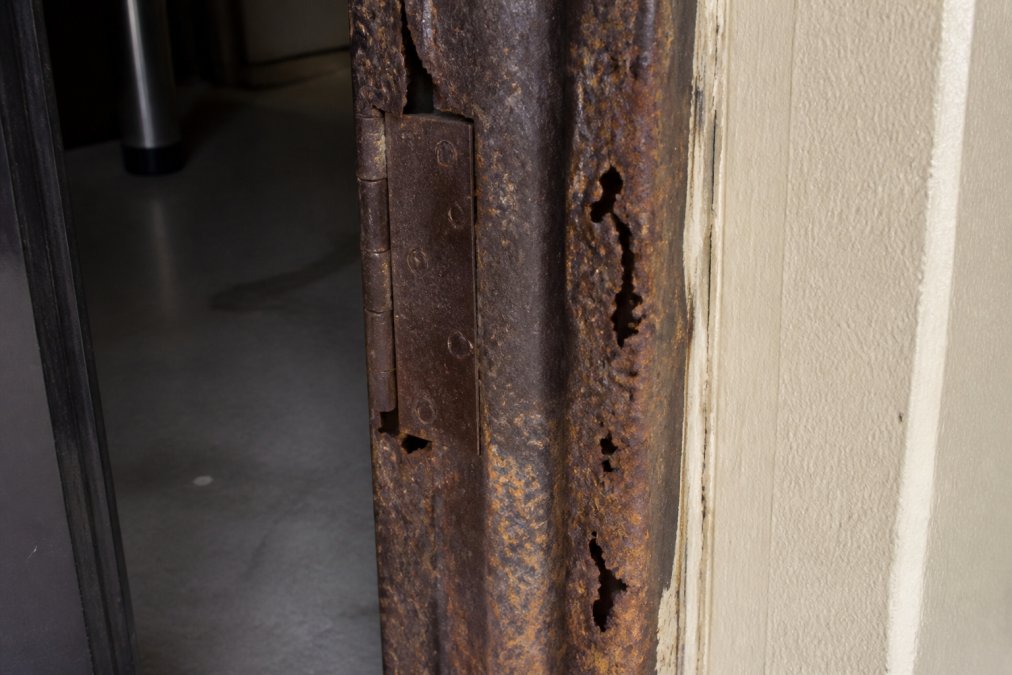
The severity of rust or corrosion is the first cost driver. Surface rust might need only patching, while structural damage requires full replacement. Material choice also affects pricing substantially, hollow metal frames cost less than solid steel but may not meet security or fire-rating requirements. Pre-hung doors cost more upfront but installation is faster.
Site conditions introduce hidden costs. Rough openings that aren't square require shimming and leveling. If the existing frame is bolted to the structure, removal takes longer than if it's simply nailed. Disposal fees vary by location and material weight.
Labor rates depend on your region and contractor expertise. Commercial door installation requires specific skills, particularly for fire-rated or security-rated frames. Interior versus exterior doors carry different cost profiles, exterior frames need weatherstripping, thresholds, and moisture sealing, making them heavier and more complex.
Average Cost of Steel Door Frame Replacement
A complete steel door frame replacement typically ranges from $400 to $1,200 for materials and labor combined, though commercial-grade hollow metal frames can exceed this depending on specifications (bls.gov).
A hollow metal door frame alone costs between $150 and $400. Labor for installation typically adds $300 to $800, depending on complexity and regional rates. Pre-hung door frames cost more upfront because the door is included and pre-fitted. For a standard commercial interior opening, expect $600 to $900 total. Exterior frames or frames requiring fire-rating can reach $1,500 or more.
The real cost isn't always the replacement itself, but the disruption. A facility with 40 doors across multiple locations faces scheduling challenges, potential security gaps during installation, and extended labor costs if work must happen after hours.
If only the jamb shows rust or corrosion, replacement of that single component costs significantly less than a full frame swap.

Labor vs. Material Cost Breakdown
Materials typically account for 35-45% of the total cost of replacing steel door frames, while labor makes up 55-65% (bls.gov).
For a standard hollow metal frame replacement, material costs break down roughly like this: the frame itself ($200-$350), hardware including hinges and strike plates ($50-$100), fasteners and shims ($30-$50), and weatherstripping or threshold materials for exterior doors ($40-$80).
Labor costs depend on complexity and region. A straightforward frame swap in an easily accessible location might take 2-3 hours. If the opening requires structural repair or adjacent drywall needs patching, labor time extends to 4-6 hours or more. Urban areas typically command higher hourly rates ($75-$125 per hour) than rural regions ($50-$75 per hour).
Removing an old frame and hauling it away adds $50-$150 depending on frame weight and local disposal fees. If the old frame is bolted to the structure, removal takes longer and costs more.
Door Innovation's repair kits represent a compelling alternative. A Jamb Patch Kit costs $130.37-$320 and can be installed in 1-2 hours by maintenance staff, versus $600-$900 for a full replacement.

| Cost Component | Percentage of Total | Typical Range |
|---|---|---|
| Frame material | 25-35% | $150-$400 |
| Hardware (hinges, strike) | 8-12% | $50-$100 |
| Installation labor | 40-50% | $300-$600 |
| Fasteners, shims, weatherstripping | 5-10% | $50-$100 |
| Disposal and removal | 5-10% | $50-$150 |
Understanding this breakdown helps facility managers make informed decisions. If labor is the dominant cost driver, investing in a repair solution that requires less skilled labor delivers immediate savings.
Door Frame Replacement vs Repair: Which Saves More
The choice between replacing and repairing a steel door frame hinges on the extent of damage and cost comparison.
Full replacement is necessary when the frame has structural damage that compromises door operation or security. If the frame is bent, severely corroded throughout its depth, or no longer holds the door square, replacement is the only reliable fix.
Repair becomes viable when damage is localized to the jamb or strike side. Surface rust, minor corrosion, or damage limited to one edge can often be addressed through patching. A repair kit costs $130.37-$320 and takes 1-2 hours to install, versus $600-$1,200 for full replacement requiring 3-6 hours of labor plus disposal.
Repair also minimizes downtime. A full frame replacement requires removing the door, cutting out the old frame, installing new blocking if needed, setting the new frame, and potentially patching drywall. A jamb patch can often be installed with just a few hours of closure.

However, repair is not permanent for severe damage. A patched frame buys time, typically several years before underlying corrosion progresses to require replacement. For facilities in humid, corrosive environments, repair extends frame life but doesn't eliminate eventual replacement needs.
The strategic approach is to assess each frame individually. New construction or frames in critical security areas warrant full replacement. Frames showing early rust or localized damage are candidates for repair.
Commercial Door Frame Repair Kits as a Cost-Effective Alternative
Commercial door frame repair kits address the most common damage pattern: corrosion and rust on the jamb or strike side where moisture accumulates and metal deteriorates.
A repair kit typically includes pre-fabricated patches sized to cover the damaged area, installation hardware, and instructions. The patches overlap the damaged section, are fastened securely to the existing frame, and restore structural integrity.
Door Innovation's Jamb Patch Kit comes with two 4-inch patches, installation hardware, and instructions, priced at $130.37. For frames showing damage at hinge or strike locations, the Right Hand Hinge Jamb Patch Kit ($320) or Left Hand Hinge Jamb Patch Kit ($320) provide full-height patches addressing both sides simultaneously.
Installation is straightforward enough that facility maintenance staff can complete it without specialized training. The three-step approach involves preparing the damaged area, positioning the patch, and fastening it securely. Most installations take 1-2 hours.
The cost savings are compelling for facilities managing multiple damaged openings. A healthcare facility with 40 doors showing rust damage faces a choice: spend $24,000-$48,000 on full replacements, or invest $5,200-$12,800 in repair kits and handle installation internally. The kits extend frame life depending on environmental conditions.
Repair kits work best on hollow metal frames, which are standard in commercial buildings. They're less effective on solid steel frames or frames with extensive structural damage. The damage must be localized; if corrosion has penetrated deeply throughout the frame or compromised multiple sections, replacement is more reliable.
Hollow Metal Door Frame Installation Cost and Considerations
Hollow metal frames dominate commercial construction because they're affordable, durable, and meet fire-rating requirements when specified correctly.
A hollow metal frame costs $150-$400 depending on size and gauge (thickness). Standard 18-gauge frames are typical for general commercial use. Heavier 16-gauge frames cost more but offer greater durability and are often required in high-traffic or high-security applications.
Installation labor typically runs $300-$600, depending on whether the rough opening requires adjustment. Fire-rated hollow metal frames cost more because they must meet specific performance standards (nfpa.org). A fire-rated frame can cost $300-$500, with installation adding another $400-$700.
Pre-hung hollow metal doors (frame plus door combined) simplify installation because the door is already hung and balanced. This reduces on-site labor and minimizes installation errors, though pre-hung assemblies cost more upfront, typically $400-$800 total compared to $200-$400 for a frame alone.
The decision between standard and fire-rated frames depends on building code requirements and the door's location. Doors serving as fire barriers must be fire-rated. Interior doors in low-risk areas can use standard frames.
For facilities replacing multiple frames, negotiating volume pricing with suppliers can reduce per-unit costs.
Ways to Reduce Steel Door Frame Replacement Expenses
The cost of replacing steel door frames can be reduced through strategic planning, preventive maintenance, and choosing repair over replacement when appropriate.
Address damage early. Frame corrosion progresses over time. A frame showing surface rust can be patched now, preventing structural damage that would require full replacement later.
Prioritize preventive maintenance. Inspect frames regularly for signs of rust or corrosion. In humid or corrosive environments, inspect quarterly. Clean frames regularly to remove debris that traps moisture. Apply protective coatings to slow corrosion progression.
Use repair kits for localized damage. Door Innovation's Jamb Patch kits cost $130.37-$320 versus $600-$1,200 for full replacement.
Batch replacements to negotiate volume pricing. Ordering multiple frames together rather than replacing individually can yield discounts.
Hire in-house installation when possible. If your maintenance team has basic carpentry skills, they can install repair kits or simple frame replacements, eliminating contractor labor costs.
Specify standard frames for non-critical areas. Fire-rated and security-rated frames cost significantly more. Reserve these specifications for doors that actually require them. Standard frames suffice for interior doors in low-risk areas.
Plan replacement cycles. Establish a planned replacement schedule to budget predictably, negotiate volume pricing, and schedule work during low-impact periods rather than emergencies.
Consider material alternatives cautiously. Aluminum frames cost less but corrode more readily in certain environments. Stainless steel costs more but resists corrosion better. Evaluate your facility's environment before choosing materials.
Use contractor relationships. Working with the same contractor repeatedly may yield better pricing or prioritized work during off-peak seasons.
For facilities managing large portfolios of doors, these strategies can reduce long-term frame costs.
Conclusion
The cost of replacing steel door frames is manageable when you understand the factors driving pricing and choose the right approach for each opening. Full replacement costs $600-$1,200 per frame and is necessary when structural damage compromises door operation. Localized damage can often be addressed through repair kits at a fraction of that cost.
Door Innovation's Jamb Patch and Jamb Anchor repair kits are designed specifically for this purpose, offering facility managers a professional, cost-effective alternative to full replacement. With a simple three-step installation process and pricing starting at $130.37, repair kits extend frame life while keeping your facility safe, secure, and presentable. Explore the Jamb Patch - Jamb Anchor Catalogue to find the right solution for your facility's needs, and get started today.
Frequently Asked Questions
Is it cheaper to repair or replace a steel door frame?
Repair is typically significantly cheaper than full replacement. A steel door frame repair kit costs $130.37-$320, plus minimal labor, while full replacement runs $500-$2,000 or more depending on frame type and site conditions. Repair makes sense when structural integrity remains intact and corrosion is localized. Full replacement is necessary only when the frame is severely compromised, fire-rating compliance requires it, or security upgrades are needed. For most commercial facilities with early-stage rust on steel frames, repair extends frame life at a fraction of replacement cost.
Can you replace just the bottom section of a steel door frame?
Yes. Jamb Patch kits repair specific sections of the frame without replacing the entire opening. These patches address rust and corrosion on the jamb or hinge side, restoring structural integrity where damage occurs. This targeted approach works well for facilities with multiple doors, you repair only the damaged sections, keeping costs low and installation fast. However, if corrosion has compromised the threshold, header, or multiple frame sides extensively, full replacement may be more cost-effective long-term.
What's included in the cost of commercial door frame repair kits?
Commercial repair kits typically include pre-fabricated patches, installation hardware (fasteners, anchors), and detailed instructions. Door Innovation's Jamb Patch Kit ($130.37 for 4-inch patches) and full-height hinge jamb kits ($320) come complete with all hardware needed for installation. Labor costs are separate and depend on your maintenance team's hourly rate. These kits are designed for a three-step installation process, reducing labor time compared to frame replacement, which requires removal, disposal, and custom fitting.
Do repair kits work on both steel and aluminum frames?
Repair kits are material-specific. Steel frame repair kits address rust on hollow metal and steel frames. Aluminum frames require different solutions due to corrosion chemistry and material properties. Before ordering, verify your frame material, steel frames are magnetic and typically found in commercial buildings, while aluminum is lighter and more common in certain retrofit applications. Door Innovation's product catalogue specifies which kits work on steel versus aluminum, ensuring you select the correct solution for your facility.