
Fire Door Frame Integrity Matters: A Complete Guide
Table of Contents
- Why Fire Door Frame Integrity Matters for Building Safety
- How Fire Door Frames Support Compartmentation and Fire Spread Control
- Fire Door Frame Damage: Common Causes and Warning Signs
- Fire Door Frame Inspection Checklist for Facility Managers
- Fire Door Gap Requirements and Clearance Control
- Fire Door Frame Repair vs. Replacement: When to Fix and When to Replace
- Hardware, Seals, and the Complete Door Assembly
- Maintenance, Testing, and Documentation for Ongoing Compliance
- Frequently Asked Questions
Last Updated: October 13, 2026
Why Fire Door Frame Integrity Matters for Building Safety
Fire door frame integrity is the foundation of passive fire protection in any building. When a fire door frame fails, the entire assembly fails, and that puts occupants at risk.
Here's what most facility managers don't realize: the door leaf gets all the attention. People inspect hinges, closers, seals. But the frame is what holds everything together.
The pattern is consistent: facilities that catch frame damage early save money and avoid safety gaps. Those that ignore it eventually face costly full replacements, or worse, a failed inspection that forces emergency work.
Why does frame integrity matter so much? Because compartmentation depends on it. Fire doors are part of a passive fire protection system designed to slow the spread of fire and smoke between building sections. The frame provides the structural support for the entire assembly.
How Fire Door Frames Support Compartmentation and Fire Spread Control
Compartmentation is the practice of dividing a building into sections using fire-rated walls, doors, and other barriers. The goal is simple: slow fire spread long enough for occupants to evacuate safely.
Fire door frames are a critical part of this system. They provide the structural anchor point for the door leaf, hinges, seals, and hardware.
When the frame is damaged, rusted, misaligned, or moving, the assembly degrades. Seals no longer compress evenly across the frame perimeter. Gaps widen beyond acceptable tolerances.
The frame also anchors the hinges and latch hardware. If the frame is corroded or moving, hinges can pull loose. The latch may not engage.
Proper frame alignment and fixing are essential. The frame must be plumb, level, and securely anchored to the surrounding structure. Movement or misalignment creates gaps that compromise the entire compartmentation strategy.
Fire Door Frame Damage: Common Causes and Warning Signs
Frame damage doesn't happen overnight. It develops over time from moisture exposure, corrosion, impact, or poor maintenance. Understanding what causes damage helps you catch problems early.
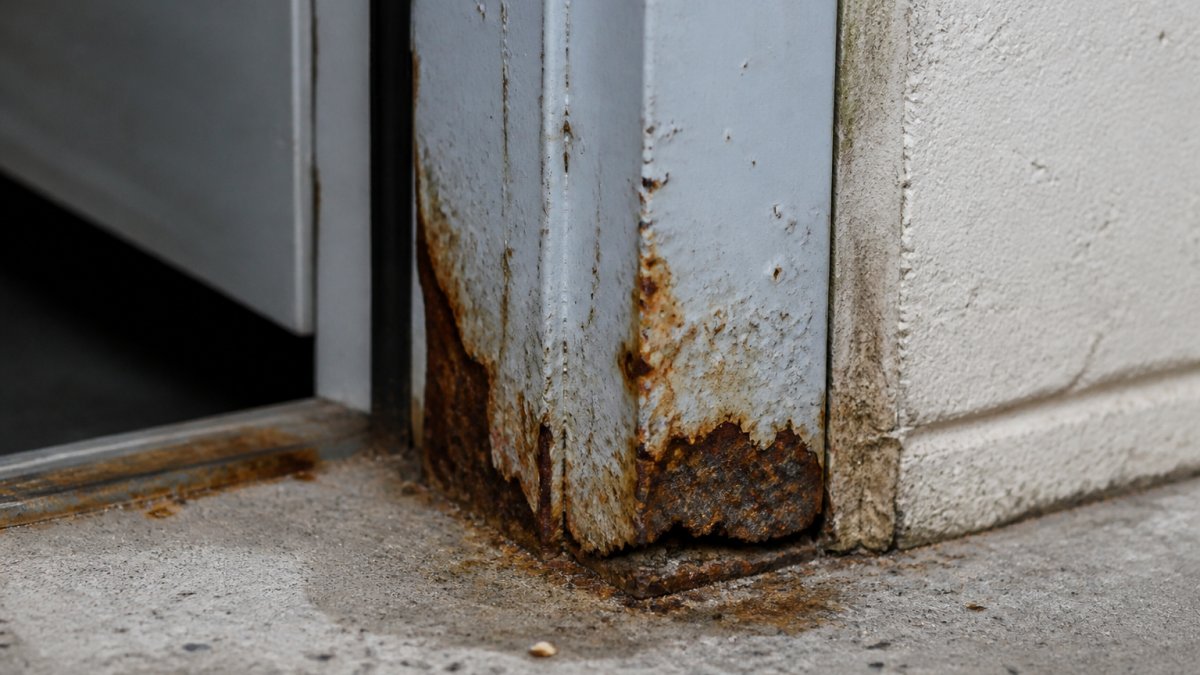
Rust, Corrosion, and Material Breakdown
Steel frames rust when exposed to moisture. Aluminum frames corrode when exposed to salt air or moisture. Both processes weaken the material and create visible damage.
Rust appears as orange-brown discoloration, pitting, or flaking on steel frames. Corrosion on aluminum appears as white powdery deposits or pitting. Both types of damage reduce the material's thickness and strength.
The bottom of the frame corrodes first. This is where moisture pools and sits longest. Rust typically starts at the floor line and spreads upward.
Aluminum frames corrode more slowly than steel but still require attention. Corrosion weakens the frame and can cause it to crack or separate from the wall.
Frame Misalignment, Movement, and Fixing Failures
Frames move when anchoring bolts loosen, the surrounding structure settles, or the building experiences impact or vibration. Movement creates gaps between the frame and door leaf. It also stresses the hinges and hardware.
Common causes of frame movement include:
- Loose or corroded anchor bolts
- Inadequate fixing (too few bolts or bolts spaced too far apart)
- Building settlement or structural movement
- Impact damage from equipment or traffic
- Poor initial installation
When a frame moves, the door no longer closes evenly. One side may close before the other. Gaps appear at the top or sides. The latch may not engage fully. These are all signs that the frame is no longer properly aligned.
Frame fixing failures are common in older buildings. Original installations may not meet current standards. Bolts corrode and weaken. Anchoring points deteriorate. Over time, the frame loses its grip on the surrounding structure.
Fire Door Frame Inspection Checklist for Facility Managers
Regular inspection catches frame damage before it becomes a safety issue. Use this checklist to assess your fire door frames systematically.
Visual Inspection:
- Check for rust or corrosion on the frame surface
- Look for pitting, flaking, or material loss
- Inspect the bottom of the frame for rust accumulation
- Verify the frame is plumb and level using a level tool
- Check for visible gaps between the frame and door leaf
- Examine anchor bolts for corrosion or looseness
- Look for cracks, bending, or deformation in the frame
Alignment and Movement:
- Measure the gap between the frame and door leaf at top, middle, and bottom
- Check that gaps are uniform (within 1/8 inch tolerance)
- Verify the door closes fully without binding
- Test that the latch engages smoothly
- Confirm the door self-closes properly
Hardware and Seals:
- Inspect hinges for corrosion or damage
- Check that hinge bolts are tight
- Examine intumescent and smoke seals for compression and integrity
- Verify seals are not compressed unevenly
- Look for gaps in the seal line
Documentation:
- Record the date of inspection
- Note any defects found and their location
- Take photos of significant damage
- Document corrective actions taken
- Schedule follow-up inspection if needed
This checklist helps you track frame condition over time. Regular documentation creates a maintenance record that supports compliance and safety audits.
Fire Door Gap Requirements and Clearance Control
Clearance control is one of the most critical aspects of fire door frame integrity. Gaps between the frame and door leaf must stay within strict tolerances.
Standard fire door clearances are typically 1/8 inch at the top and sides, and up to 3/4 inch at the bottom.
Frame alignment directly affects clearance control. A frame that's out of plumb or moving will create uneven gaps. One side may be tight while the other is loose.
Measuring gaps requires a straightedge and feeler gauges. Place the straightedge against the frame and use gauges to measure the space between the frame and the straightedge. Document measurements at multiple points.
Jamb Patch - Jamb Anchor Catalogue →
Poor fixing and frame movement are the most common causes of clearance problems. Loose anchor bolts allow the frame to shift. Corroded bolts can't hold the frame in position.
Fire Door Frame Repair vs. Replacement: When to Fix and When to Replace
The decision between repair and replacement depends on the extent of damage, the cost of repair, and the frame's structural integrity. Not every damaged frame needs full replacement.
Repairable Defects and Cost-Effective Solutions
Minor rust, small dents, loose hardware, and misalignment are often repairable. These defects don't compromise the frame's structural integrity.
Common repairable defects include:
- Surface rust without pitting or material loss
- Loose anchor bolts that can be retightened
- Minor dents that don't affect alignment
- Corroded hinges or hardware that can be replaced
- Worn seals that can be replaced
Door Innovation's Jamb Patch solutions address one of the most common repairable defects: rust at the bottom of steel frames. When rust is present but the frame is still structurally sound, a Jamb Patch can restore the frame opening without full replacement. The Strike Side Jamb Patch works for the strike side, while the Left Hand and Right Hand Hinge Jamb Patches address hinge-side damage.

These repair kits are designed for frames with more than 2 inches of rust at the bottom, a condition that would traditionally require full frame replacement.
Repair is cost-effective when:
- Damage is localized to one area
- The frame is still plumb and structurally sound
- The damage doesn't affect seal compression or clearance
- The frame's anchoring system is still functional
Replacement Conditions and Compliance Thresholds
Full replacement is necessary when damage is extensive or the frame's structural integrity is compromised. Replacement is required when:
- Rust or corrosion affects more than 50% of the frame
- The frame is severely bent, cracked, or deformed
- The frame can't be realigned to meet clearance tolerances
- Anchor bolts are severely corroded and can't be retightened
- The frame has failed a fire-rated assembly test
- Local code or building standards require replacement
Replacement also becomes the better option when repair costs approach the cost of replacement. At that point, a new frame is more cost-effective and provides a longer service life.
Building codes and fire safety standards may also require replacement. Some jurisdictions have specific rules about frame condition and repair limitations. Always check local requirements before deciding on repair versus replacement.
Hardware, Seals, and the Complete Door Assembly
Fire door frame integrity doesn't exist in isolation. The frame is part of a complete door assembly that includes the door leaf, hinges, latches, closers, and seals.
Hinges anchor to the frame. If the frame is misaligned or moving, hinges experience stress. Over time, they loosen, bend, or break.
The latch engages with the strike plate, which is mounted on the frame. If the frame is out of alignment, the latch won't engage fully.
Intumescent and smoke seals compress against the frame perimeter. They create a seal that blocks fire and smoke. If the frame is misaligned or moving, seals don't compress evenly.
The door closer is mounted on the frame or door leaf. It controls how fast the door closes and ensures the door closes fully.
This is why frame integrity matters so much. When the frame fails, the entire assembly fails.
Maintenance, Testing, and Documentation for Ongoing Compliance
Ongoing maintenance keeps fire door frames in working condition and ensures compliance with fire codes and safety standards.
Routine Maintenance:
- Inspect frames quarterly for visible damage
- Clean frames to remove dirt and debris
- Retighten loose bolts and hardware
- Replace worn seals and weatherstripping
- Keep the frame and surrounding area dry
Testing:
- Test door closure and latch engagement monthly
- Verify self-closing mechanisms work properly
- Check seal compression visually
- Measure clearances annually
- Document all tests and results
Documentation:
- Keep a maintenance log for each door
- Record inspection dates and findings
- Document any repairs or replacements
- Note seal replacement dates
- Track hardware maintenance and replacement
Regular maintenance and documentation support compliance. They also extend the life of your door assemblies and catch problems before they become safety issues.
Building codes and fire safety standards require documented maintenance. Many jurisdictions require annual inspections by qualified professionals. Documentation proves you're meeting these requirements.
Fire door frame integrity isn't optional, it's fundamental to building safety and code compliance. Damaged frames compromise your entire passive fire protection system. At Door Innovation, we understand that full frame replacement isn't always necessary. For steel and aluminum frames with localized rust damage, our Jamb Patch repair kits restore integrity and keep your facilities safe without the cost and downtime of replacement. Explore our Jamb Patch - Jamb Anchor Catalogue to find the right solution for your facility's needs.

Frequently Asked Questions
Why is fire door frame integrity so important for building safety?
Fire door frame integrity is essential because the frame is a structural component of the fire-rated assembly. When frame alignment, fixing, and condition are compromised, gaps widen, seals fail, and the door cannot close properly or maintain compartmentation. A damaged frame allows fire and smoke to spread beyond the intended compartment, putting occupants at risk and violating building code compliance. The frame, door leaf, hinges, closer, and seals work together as one system; if the frame fails, the entire assembly fails.
What are the most common signs of fire door frame damage I should look for during inspection?
Watch for rust or corrosion on steel frames, especially at the bottom jamb where moisture collects; visible gaps between the door and frame when closed; frame misalignment or bowing; damaged or missing intumescent and smoke seals; loose or rusted hinges and hardware; and cracks or dents in the frame material. Document all findings with photos and measurements for compliance records.
Can a damaged fire door frame be repaired, or does it always need to be replaced?
Many damaged fire door frames can be repaired cost-effectively without full replacement. Rust damage localized to the bottom jamb area can be addressed with specialized repair kits designed for steel and aluminum frames. A qualified inspection determines whether repair or replacement is appropriate for your specific situation.
What gap clearances are required around fire doors, and how do they affect frame integrity?
Fire doors typically require specific gaps around the perimeter to allow smooth operation while maintaining compartmentation. Larger gaps allow smoke and fire to bypass seals; smaller gaps can cause binding and prevent proper closure. Frame misalignment, rust, and deterioration cause gaps to exceed limits, compromising the assembly's fire rating. Regular inspection and maintenance of frame alignment, seals, and hardware keep gaps within code-required tolerances. Accurate measurement of clearances is part of any fire door assembly inspection protocol.