
Can a Rusted Steel Door Frame Be Repaired?
Last Updated: November 14, 2026
Quick Summary
A rusted steel door frame can often be repaired if the rust is limited to the bottom of the jamb. Clean and prime surface rust, or use a jamb patch for rust confined to the bottom 2 inches of a commercial hollow metal frame. Fix any moisture source first, since a patch over a leak will rust again.
- Rust found before it reaches the bottom two inches can often be saved.
- Clean away loose rust and paint, then prime and paint the frame.
- Use a screwdriver to test whether the metal at the base has lost thickness.
- Fix leaks, drainage or incompatible materials before patching the frame.
- Fire-rated or security-rated frames need approved repair methods before any work begins.
Table of Contents
- Why Steel Door Frames Rust and Wear Out Early
- Routine Inspection Schedule and Checklist for Steel Door Frames
- Steel Door Frame Rust Prevention: Cleaning, Priming and Painting
- Diagnosing Rust Damage: Patch, Repair or Replace
- How to Fix a Steel Door Frame with a Jamb Patch
- Commercial Hollow Metal Frame Repair: A Patented Option Most Facilities Overlook
- Tightening Hardware and Adjusting Commercial Metal Doors
- Choosing the Right Repair Kit for Your Next Frame Fix
- Frequently Asked Questions
Why Steel Door Frames Rust and Wear Out Early
Steel door frames are built to last, but moisture, salt, impact and poor finishes work against them.
Rust at the base spreads slowly, pushing paint off and eating into the metal. By the time a door sticks or rattles, damage is well underway.
Most early failures come from a few predictable causes:
- Water sitting at the bottom of the frame from mopping, rain or wash-downs
- Chipped paint from door swings, carts and equipment hitting the jamb
- Salt and cleaning chemicals in hallways and loading areas
Catching these early separates a quick fix from a full replacement. Frames can often be saved if rust is found before it reaches the bottom two inches.
Routine Inspection Schedule and Checklist for Steel Door Frames
Most guides say to inspect steel door frames regularly and stop there. What follows is a repeatable schedule with defined intervals, a pass/fail checklist, and the warning signs that turn a routine check into a repair ticket.
Inspection intervals by exposure
Set the interval by where the door sits, not by a single building-wide rule. A common commercial pattern:
- Monthly quick check: exterior doors, doors near wash-down areas, kitchens, restrooms, loading docks, and any door within about 3 feet of a floor drain or mop sink.
- Quarterly quick check: interior doors in high-traffic corridors, stairwells, and patient or resident areas where carts strike the jamb.
- Twice a year full review: every door in the building, including closets, mechanical rooms, and low-traffic offices. Pair this with the fire-door annual inspection cycle.
The pass/fail checklist
Walk each door in this order so nothing is skipped. Mark each line pass, watch, or fail.
- Bottom 6 inches of both jambs: bubbling paint, orange staining, white powder, or flaking. Any of these is a watch item; bubbling plus soft metal is a fail.
- Bottom 2 inches specifically: press a screwdriver tip firmly against the metal. If it dents easily or penetrates, the section has lost structural thickness, fail.
- Strike side and hinge side: scratches, dents, and paint chips from door swings, carts, and equipment. Chips smaller than a coin are watch; larger or through to bare metal are fail.
Warning signs that escalate to repair
A watch item becomes a repair when any of these appear:
- Rust that has spread more than about 1 inch in any direction since the last inspection.
- Paint that lifts when pressed, revealing wet or soft metal underneath.
- A screwdriver that penetrates the jamb at the base.
- A door that sticks, drags, or fails to latch without being forced.
Record keeping that actually works
Record the date, door identifier, and pass/watch/fail result for each line. Photograph the bottom 6 inches of each jamb at every full review from the same angle to compare spread over time.
Watch out: A checklist that only records "OK" hides the trend. Record watch items too, the second or third consecutive watch on the same door signals it's time to schedule a repair.
Steel Door Frame Rust Prevention: Cleaning, Priming and Painting
Prevention costs far less than repair. Clean dirt, grease and salt off the frame with mild detergent, then dry it completely.
Pay special attention to the base of the frame, where water collects, it needs the thickest coating.
Watch out: Painting over rust without removing it first traps moisture underneath. The rust keeps growing, and the new paint lifts within months.
Diagnosing Rust Damage: Patch, Repair or Replace
Not every rusted frame needs the same fix, and the wrong call wastes money in both directions. The decision comes down to three questions: how deep the rust goes, what caused it, and whether the assembly carries a rating that limits who can repair it.
Step 1: Measure the depth
Use a screwdriver, a pick, and a tape measure. Work from the bottom of the jamb upward and note where the metal stops being sound.
- Surface rust: orange or brown staining on the paint, no pitting, metal firm under a screwdriver tip. Clean, prime, and paint.
- Light pitting: small pits or rough spots, but the screwdriver does not penetrate. Sand, treat, and fill as needed.
- Base rust within the bottom 2 inches: rust and soft metal confined to the lower jamb, with sound metal above. This is where a jamb patch is designed to work.
- Deep rust beyond 2 inches or through the metal: rust climbs above the patch zone, or the screwdriver passes through the jamb. Replacement or a qualified repair is the safer call.
Step 2: Diagnose the cause before you repair
A patch over an unresolved moisture source will rust again. Before committing to any repair, identify which of these is feeding the corrosion:
- Condensation: rust spread evenly across the frame, often on the room side of exterior doors, with no water at the floor. Points to humidity and temperature swing, not a leak.
- Leak or roof water: rust concentrated at the top or one side, with staining running downward. Trace the leak before patching.
- Standing water at the threshold: rust confined to the bottom few inches, with staining or efflorescence on the floor. Points to drainage, slope, or a failed sweep.
- Damaged coating from impact: rust in a defined spot where carts, equipment, or door swings chipped the paint. The fix includes protecting the spot from repeat impact.
If the cause is a leak, a drainage problem, or incompatible materials, fix that first. Otherwise the new patch or coating will fail on the same schedule as the old one.
Step 3: Check the rating before anyone repairs
Fire-rated and security-rated door assemblies carry listings that depend on the frame, door, hardware, and seals being installed as tested. Repairing a rated frame with a method not part of the listing can compromise the rating and create a code problem. Before repairing any rated assembly, confirm with the authority having jurisdiction or the listing documentation whether the method is permitted, and use a qualified installer where the rating requires it.
Step 4: Decide
Use this sequence:
- If the rust is surface or light pitting and the cause is resolved, clean, prime, and paint.
- If the rust is confined to the bottom 2 inches, the metal above is sound, and the frame is a non-rated commercial hollow metal type, a jamb patch is the practical repair.
- If the rust climbs above the patch zone, the metal is penetrated, or the frame is distorted, replacement or a qualified repair is the safer option.
- If the assembly is fire-rated or security-rated, confirm the repair method is permitted before any work begins.
Document the depth, cause, and rating status before you buy anything. That record lets you compare a patch against replacement on equal terms and justify the decision to a supervisor or inspector.
Watch out: A frame that looks repairable from the room side can be rusted through on the back of the jamb, where water sits against the wall. Check both faces of the frame before deciding.
How to Fix a Steel Door Frame with a Jamb Patch
Estimated time: Active work plus cure time for the filler
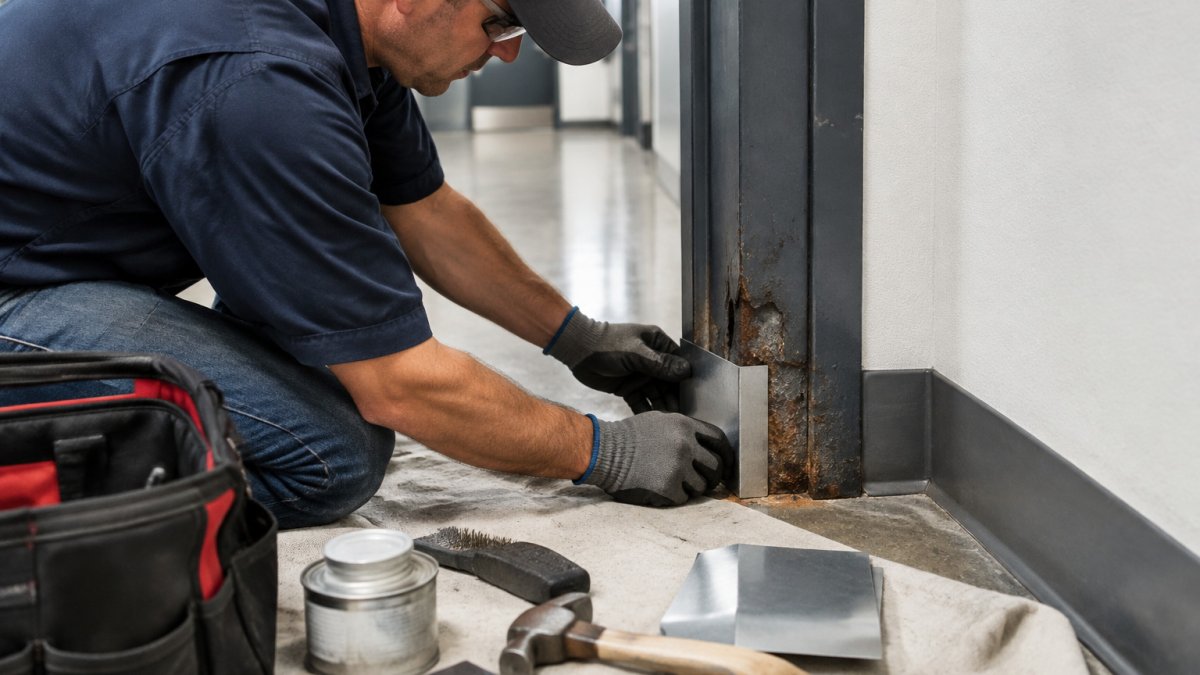
What you will need:
- Jamb patch kit (choose the strike side or hinge side patch, or the 4-inch kit for early rust)
- Drill, screwdriver and hardware from the kit
- Wire brush, sandpaper and degreaser
- Bondo or the kit's recommended filler
Step 1: Clear and clean the area. Remove the door if needed to get access.
Step 2: Measure the damage. If more than 2 inches of rust shows at the bottom, use a Strike Side Jamb Patch or Left or Right Hand Hinge Jamb Patch. For early rust, the Jamb Patch Kit (4") is the better choice.
Step 3: Position the patch. Set the patch against the sound metal above the rust.
Step 4: Attach and fill. Secure the patch with the included hardware.
Step 5: Wait for the filler to cure. This is the slowest part. Follow the Door Frame Patch Kit Installation Guide for the full sequence.
The Jamb Patch Kit (4") is the starting point for early rust repairs.
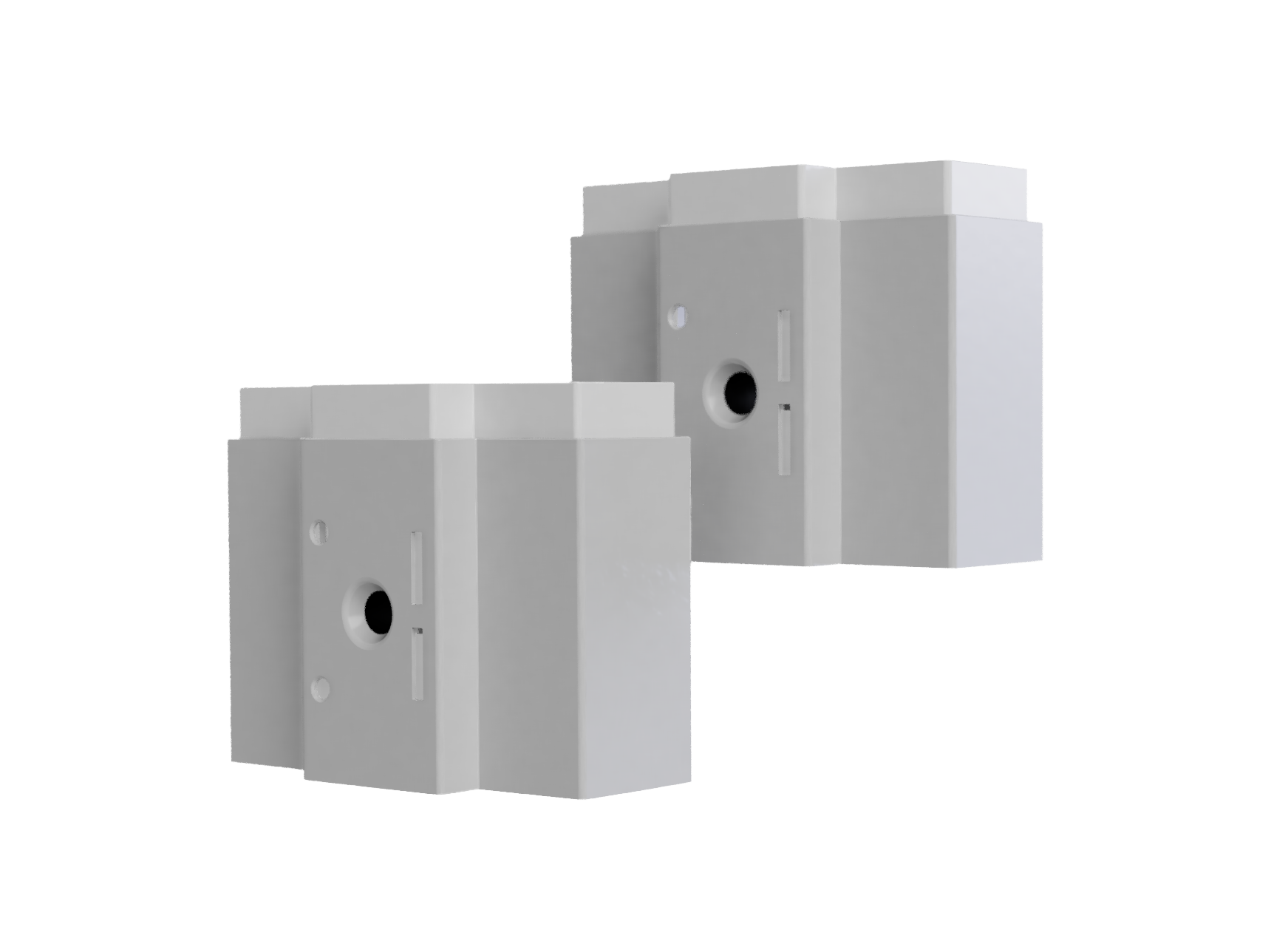
Commercial Hollow Metal Frame Repair: A Patented Option Most Facilities Overlook
Many facility managers do not realize that commercial hollow metal frames can be repaired instead of replaced.
The Door Innovation Jamb Patch is a patented repair made for commercial hollow metal frames. It is built for DIY-minded installers and does not require a professional to install.
Before you buy, confirm the frame is a commercial hollow metal type and that the rust is limited to the bottom of the jamb.
Tightening Hardware and Adjusting Commercial Metal Doors
A frame can look fine and still fail if the hardware is loose. Check every hinge, strike plate and closer. Tighten backed-out screws, and replace stripped holes with longer screws that reach solid metal.
Check the door's alignment in the frame. A door that rubs on the top or latch side wears the paint and speeds up rust. Adjust or tighten the hinges until the gap is even all the way around.
Choosing the Right Repair Kit for Your Next Frame Fix
Pick the kit based on where the rust sits and how far it has spread.
- Jamb Patch Kit (4"): Use at the first sign of rust. Two 4-inch patches cover early damage.
- Strike Side Jamb Patch: Use when more than 2 inches of rust shows on the latch side.
- Left Hand or Right Hand Hinge Jamb Patch: Use when more than 2 inches of rust shows on the hinge side. Match the hand of the door opening.
| Kit | Best Location | Price |
|---|---|---|
| Jamb Patch Kit (4") | Either side | $130.37 |
| Strike Side Jamb Patch | Latch side | $180.91 |
| Left Hand Hinge Jamb Patch | Left hand hinge side | $180.91 |
| Right Hand Hinge Jamb Patch | Right hand hinge side | $180.91 |
Price
Compare these repair costs against replacement before you buy. Browse the kits at Door Innovation and choose the one that matches your door opening.
Frequently Asked Questions
Can a rusted hollow metal door frame be repaired instead of replaced?
In many cases, yes. A rusted commercial hollow metal frame can often be repaired rather than replaced if the damage is confined to the bottom of the frame and the rest of the structure is sound. Door Innovation's Jamb Patch kits are designed for this purpose: the Strike Side and hinge side Jamb Patches are recommended when more than 2 inches of rust is evident at the bottom of the frame, while the Jamb Patch Kit is meant for early signs of rust or corrosion. The patented design is non-handed and installs without a professional, though the Bondo needs time to cure, which is the longest part of the job.
How do you fix a damaged steel door frame?
Start by removing loose rust and checking how far the damage extends up the frame. If more than 2 inches of rust is present at the bottom, a Strike Side Jamb Patch ($180.91) or Left or Right Hand Hinge Jamb Patch ($180.91) is the right choice. For earlier-stage rust, the Jamb Patch Kit ($130.37) includes two 4-inch patches. Install the patch with the included hardware, then allow the Bondo to cure fully before rehanging or testing the door.
How often should commercial steel door frames be inspected?
Logging each finding helps you spot frames that are rusting faster than others. Recording inspections is a sound practice for any maintenance program.
How do you keep a steel door frame from rusting?
Keep the bottom of the frame dry and free of standing water, clean off grime that holds moisture, and repaint any chipped areas promptly with a protective primer and topcoat. Lubricate hinges and tighten loose fasteners so the door does not twist the frame, which can crack finishes and let water in. Catching a small rust spot early is generally less costly than waiting for a larger failure.
