
Door Frame Repair vs. Full Replacement
Table of Contents
- Door Frame Repair vs. Full Replacement: Quick Comparison
- Signs Your Door Frame Needs Attention
- Cost of Replacing a Steel Door Frame
- Repair Costs and Commercial Door Frame Repair Kits
- Door Frame Maintenance Best Practices
- When to Choose Full Frame Replacement
- Making Your Decision: Repair or Replace
- Frequently Asked Questions
Last Updated: September 26, 2026
Door Frame Repair vs. Full Replacement: Quick Comparison
When a door frame starts showing signs of damage, rust creeping up the jamb, a loose casing, or water damage around the threshold, facility managers face a critical decision about door frame repair vs full replacement. Do you repair it or replace the entire frame? The answer isn't always obvious, and the cost difference can be substantial.
Most damaged door frames don't require full replacement. Early intervention with targeted repair kits can extend the life of existing door systems, saving both time and money. But there are situations where replacement is the only viable option.

| Approach | Typical Cost | Timeline | Best For | Longevity |
|---|---|---|---|---|
| Repair with kits | $130-$181 per frame | 1-2 hours installation | Early-stage rust, minor damage | 5-10 years |
| Full replacement | $300-$800+ per frame | 4-8 hours installation | Severe structural damage, extensive rot | 15-25 years |
Signs Your Door Frame Needs Attention
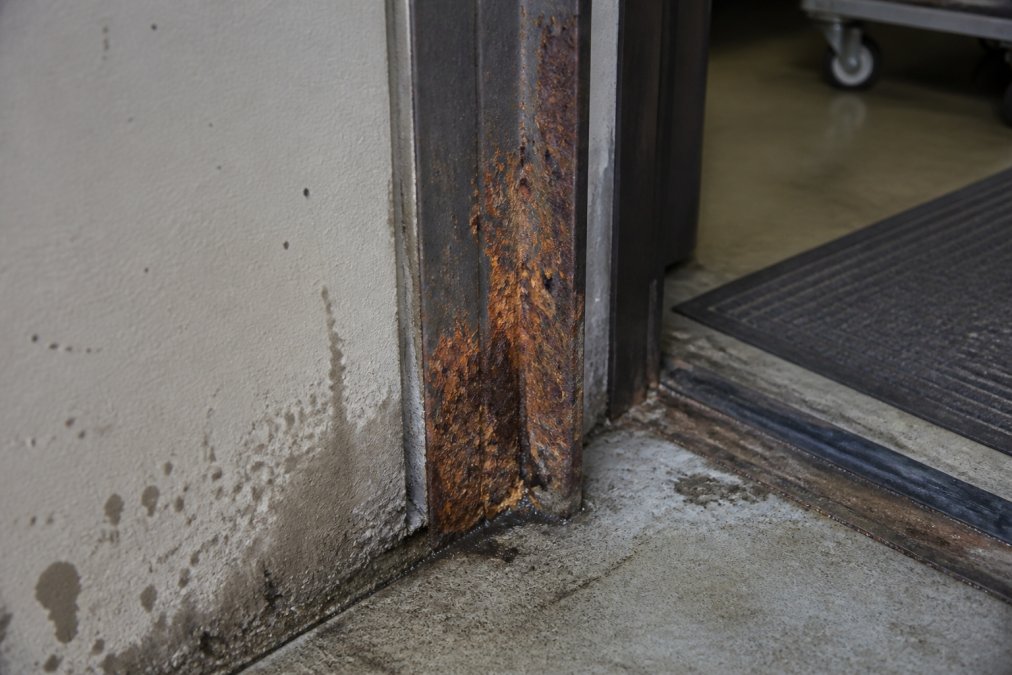
Rust and corrosion are the most common culprits. On steel frames, orange or brown discoloration appears at the bottom where moisture collects. On aluminum frames, look for white powdery corrosion or looseness from repeated impacts or salt exposure. These early-stage problems are exactly what repair kits address.
Misalignment and sticking doors signal frame damage. If a door that once closed smoothly now binds or requires force, the frame may have shifted or warped. A loose or rattling frame indicates failed jamb anchors, common in aluminum frames exposed to corrosion or repeated impacts.
Water infiltration around the threshold or casing suggests failed weatherstripping or frame gaps. Wood rot appears as soft, discolored wood. These warning signs mean repair becomes more difficult and replacement more likely if you wait.
Check the strike plate and hinge areas for rust or gaps, which affect door operation and security.
Cost of Replacing a Steel Door Frame
A complete steel door frame replacement typically runs $300-$800 per opening, plus labor for removal, drywall patching, hardware reinstallation, and door adjustment.
For a 40-door facility, full replacement could exceed $20,000 in materials and labor, a substantial capital expense requiring multi-department approval.
Full replacement takes 4-8 hours per opening, causing extended downtime and operational disruption.
Replacement provides a new frame with modern hardware, updated weatherstripping, and a 15-25 year lifespan. For frames with severe structural damage, replacement is the only safe choice.
Repair Costs and Commercial Door Frame Repair Kits
Specialized repair kits start at $119-$181 per frame. The Jamb Patch Kit addresses early-stage rust on steel frames. The Jamb Anchor Side Jamb Kit re-anchors loose aluminum frames. Strike Side and Hinge Jamb Patches target specific damage zones.

Installation is straightforward: prepare the damaged area, install the patch or anchor, and finish. A maintenance technician with basic carpentry skills can complete the work in 1-2 hours.
For 40 doors with early rust, repair kits cost roughly $5,200-$7,200 in materials versus $12,000-$32,000 for replacement. With labor, total repair cost is $8,000-$10,000, a 60-70% savings.
A properly installed repair kit extends frame life, buying time to plan replacements and align budget cycles.
Door Frame Maintenance Best Practices
Prevention is cheaper than repair, and repair is cheaper than replacement. Structured maintenance extends frame lifespan and directly impacts ROI.
Quarterly maintenance costs $50-$100 annually. A neglected frame costs $300-$800 to replace, plus hidden costs (disruption, emergency labor, secondary damage). Maintenance spending of $50-$100 annually avoids significant total costs.
Material-Specific Maintenance Protocols
Steel Frames Quarterly inspection should focus on the bottom 6 inches for orange or brown discoloration, pitting, or flaking. Treat surface rust early with a wire brush and rust-inhibiting primer. Keep thresholds dry and replace weatherstripping annually. In coastal areas, rinse frames monthly with fresh water to remove corrosive salts, extending frame life.
Aluminum Frames Quarterly inspection should check for white powdery corrosion, loose casing, or rattling. Clean with mild soap and water; avoid steel wool. Tighten fasteners annually. In coastal areas, apply protective coating every 2-3 years to prevent salt exposure.
Wood Frames Quarterly inspection should check for soft spots, discoloration, or mold. Keep frames dry and replace weatherstripping annually. Apply water-repellent finish every 2-3 years. Treat early rot immediately with wood hardener or epoxy filler. In high-moisture environments, plan to replace wood frames with steel or aluminum.
Composite and Fiberglass Frames Quarterly inspection should check for cracks, warping, or seal failure. Clean with mild soap and water; recaulk or replace weatherstripping as needed ($20-$40). These frames rarely require repair and typically last 20+ years with minimal maintenance.
Universal Maintenance Tasks
Jamb Patch - Jamb Anchor Catalogue →
Tighten hinge bolts annually and lubricate with light machine oil. Check strike plates quarterly and replace if corroded. Replace weatherstripping and door sweeps annually, this single task prevents most water-related damage.
Keep records of inspections, repairs, and replacements to identify patterns: which doors fail first, which materials perform best, and which maintenance tasks deliver the best ROI. Use this data to prioritize: increase inspection frequency for problem entrances or budget proactively for high-traffic doors.
When to Choose Full Frame Replacement
Replace the frame if rust or rot has compromised more than 50% of the frame's thickness, or if the frame no longer holds square or level and the door won't close properly despite adjustment.
Replace frames exposed to standing water or with deep wood rot penetrating jambs and head, repair kits cannot stop advanced deterioration.
If the frame is incompatible with repair kits, replacement may be necessary. Repair kits are compatible with major manufacturers like Steelcraft, ASSA Abloy, and Ceco, but specialty or older frames may fall outside these specifications.
Security and safety requirements may dictate replacement. Healthcare facilities and secure buildings may require frames meeting specific standards that patched frames cannot satisfy.
Aesthetic considerations matter in customer-facing spaces. A retail storefront or hotel entrance with a visibly patched frame may not project the image you want. Replacement provides a fresh, finished appearance.
Building code compliance is another factor. If local codes require specific frame materials or construction standards, and your existing frame doesn't meet them, replacement is mandatory.
Making Your Decision: Repair or Replace
The decision between door frame repair vs full replacement hinges on damage severity, frame material, and structural integrity. Rather than a binary choice, think of it as a damage-assessment ladder: the higher your frame sits on the severity scale, the more replacement becomes the only safe option.
Damage Assessment Ladder
Level 1: Surface Corrosion (Repair Candidate) Rust or corrosion visible only on the surface, typically appearing as orange or brown discoloration on steel frames or white powdery deposits on aluminum. The frame remains square and level. The door operates smoothly or with only minor binding.
Material-Specific Considerations
Decision Framework: Three Questions
-
What damage level does your frame occupy? Use the ladder above. If you're between levels, err toward the higher level when in doubt.
-
How long do you plan to keep this entrance in service? If 5+ years, repair is cost-effective at Levels 1-2. At Level 3, calculate: repair cost + expected replacement cost within 5 years versus replacement cost now. If replacement is coming soon anyway, do it now and avoid a second project.
-
Does your frame meet current building codes and security standards? Even if structurally sound, an older frame may not meet current energy efficiency, accessibility, or security requirements. Replacement ensures compliance; repair does not.
The Phased Replacement Strategy
Frequently Asked Questions
Is it cheaper to repair or replace a door frame?
Repair is typically much cheaper upfront. A commercial door frame repair kit costs $119-$181, plus labor. Full frame replacement runs $500-$2,000+ depending on material and installation complexity. For early-stage rust or corrosion, repair saves 50-70% compared to replacement. However, if structural damage is extensive, replacement may be the only safe option.
Can you repair a rusted steel door frame without replacing the whole unit?
Yes, if rust is caught early. Jamb Patch kits address rust at the first sign of corrosion on steel frames. When more than 2 inches of rust is evident at the bottom, Strike Side Jamb Patch or Hinge Jamb Patch kits are designed to repair compromised areas without full replacement. These kits work with major manufacturers including Steelcraft, ASSA Abloy, and Ceco frames.
How long does a professional door frame repair take compared to full replacement?
Repair typically takes 1-3 hours for a single door opening, while full replacement takes 4-8 hours or longer depending on wall removal needs. Repair kits feature a simple three-step installation process, making them faster and less disruptive to facility operations. This speed advantage is especially valuable for facilities managing multiple damaged doors across their property.
What are the signs that a door frame needs to be replaced instead of repaired?
Replace the frame if structural integrity is compromised, rust extends beyond the jamb into the frame header, the frame is severely misaligned, water infiltration has caused dry rot in multiple areas, or hinges and strike plate are damaged beyond adjustment. If the frame cannot close properly or poses a security risk, replacement is safer than repair.
Do commercial door frame repair kits work on both steel and aluminum frames?
Door Innovation offers specialized kits for each material. Jamb Patch kits repair rusted steel frames from manufacturers like Steelcraft and ASSA Abloy. Jamb Anchor Side Jamb Kits repair loose aluminum frames damaged by salt corrosion, water, or equipment impacts. Using the correct kit for your frame material ensures proper fit and long-term durability.