
Repairing Hollow Metal Door Frames With a Jamb Patch
Last Updated: November 19, 2026
Quick Summary
A jamb patch is a patented repair kit that restores rusted steel hollow metal door frames, usually at the bottom of the strike side, without full replacement. It is intended only for commercial hollow metal frames and can be installed by a DIY-minded maintenance person.
- Use a jamb patch only on commercial hollow metal frames, not aluminum or wood frames.
- The Strike Side Jamb Patch is specified for more than 2 inches of visible rust at the frame bottom.
- The patch is non-handed, so it fits the left or right side of the opening.
- Loose aluminum frames need a jamb anchor kit instead of a jamb patch.
- The Bondo cure time is the longest step, so keep the door out of use while it sets.
Table of Contents
- Why Most Facilities Don't Know Hollow Metal Frames Can Be Repaired
- Commercial Hollow Metal Frame Repair: When a Patch Works
- Choosing a Metal Door Jamb Patch Kit From the Catalog
- Jamb Anchor Installation for Loose Frames
- Step-by-Step: Installing a Hollow Metal Door Frame Repair Kit
- Patch Versus Replacement: Comparing Cost, Time and Downtime
- Order Your Jamb Patch and Anchor Catalog Today
- Frequently Asked Questions
Most facility managers assume a rusted commercial door frame means a full replacement. That assumption costs money and downtime. Many maintenance teams simply do not know a repair option exists for commercial hollow metal frames.
Hollow metal frames are the steel frames used in most commercial doorways. Rust usually starts at the bottom of the jamb, where water and cleaning chemicals collect. Left alone, it weakens the frame until the door no longer latches properly.
Why Most Facilities Don't Know Hollow Metal Frames Can Be Repaired
Many facility teams learn about repair options only after they have already priced a replacement, and the door can stay out of service while the decision is made.
A common mistake is treating every rusted frame as a total loss. Rust that is confined to the lower section of a hollow metal jamb is often a candidate for repair rather than replacement. Checking that before ordering anything is the first step.
Commercial Hollow Metal Frame Repair: When a Patch Works
A jamb patch is designed for steel hollow metal frames with rust concentrated at the bottom of the strike side. It is not a fix for every type of frame damage.
A patch is generally a better fit when the frame is structurally sound above the corroded area and the door still sits true in the opening. If rust has eaten through large sections of the frame, replacement may be the safer call.
Checking the Damage Before You Order
Measure the rust before you choose a kit. Start at the floor and measure upward along the door jamb. The product listings specify that the Strike Side Jamb Patch should be used when more than 2 inches of rust is visible at the bottom of the frame. If the corrosion is less than 2 inches high, a different kit or a smaller repair may apply, so confirm the measurement against the catalog specifications before buying.
Check the following before ordering:
- Which side of the opening is corroded (strike side or hinge side)
- Whether the frame material is steel or aluminum
- Whether the frame is hollow metal and not a wood or other type of frame
- Whether the frame is still firmly attached to the wall
Choosing a Metal Door Jamb Patch Kit From the Catalog
The commercial jamb patch and anchor catalog lists repair kits matched to different frame conditions. The Strike Side Jamb Patch comes with one 21-5/8 inch tall, non-handed jamb patch, installation hardware, and instructions.
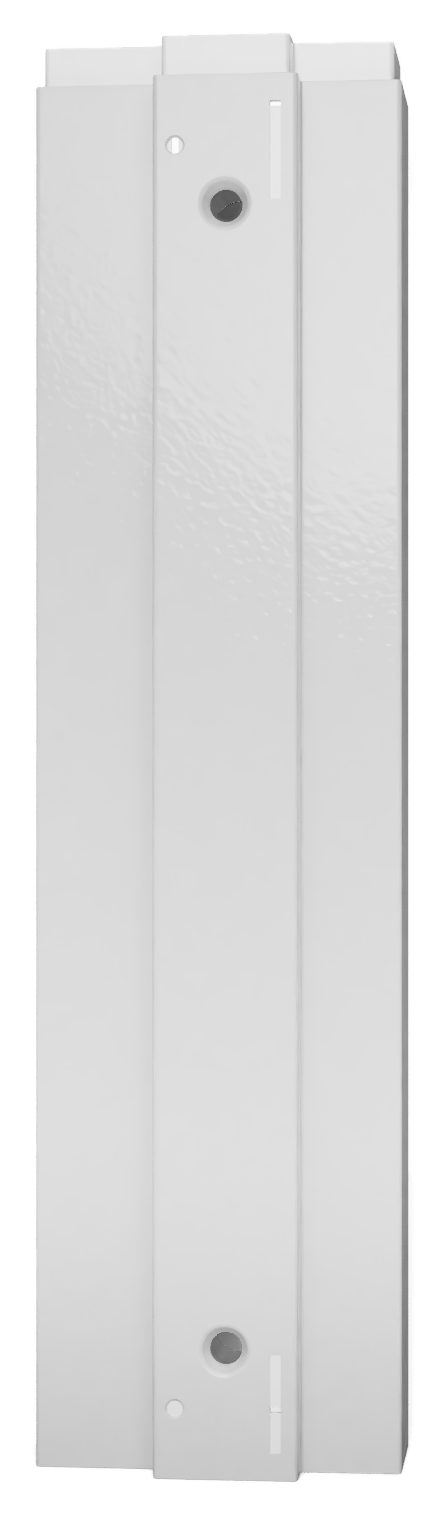
The listing also names a range of commercial frame manufacturers the patch is designed to be compatible with, including Steelcraft, ASSA Abloy, Dean Steel, Ceco, Curries, DCI, Republic, Pioneer and Mesker.
To review the full range, see the Jamb Patch kit collection. The catalog's specifications and installation instructions are the reference for choosing between kits.
Jamb Patch and Anchor Kit Prices
Jamb Anchor Installation for Loose Frames
When a frame has come loose rather than rusted through, a jamb anchor is the relevant product.
Jamb Anchor kits come in side jamb and center jamb versions. The Side Jamb Kit includes one left hand anchor, one right hand anchor, installation hardware, and instructions for outboard jambs.
Installation follows the same logic as the patch: confirm the damage, match the kit to the jamb position, then install with the included hardware. Browse the Jamb Anchor kit collection to compare side and center jamb options.
Step-by-Step: Installing a Hollow Metal Door Frame Repair Kit
The installation is a simple, three-step process that a DIY-oriented maintenance person can complete without a professional. The general sequence is below. Follow the specific instructions packed with your kit, since they govern the exact hardware and fastening for your frame.
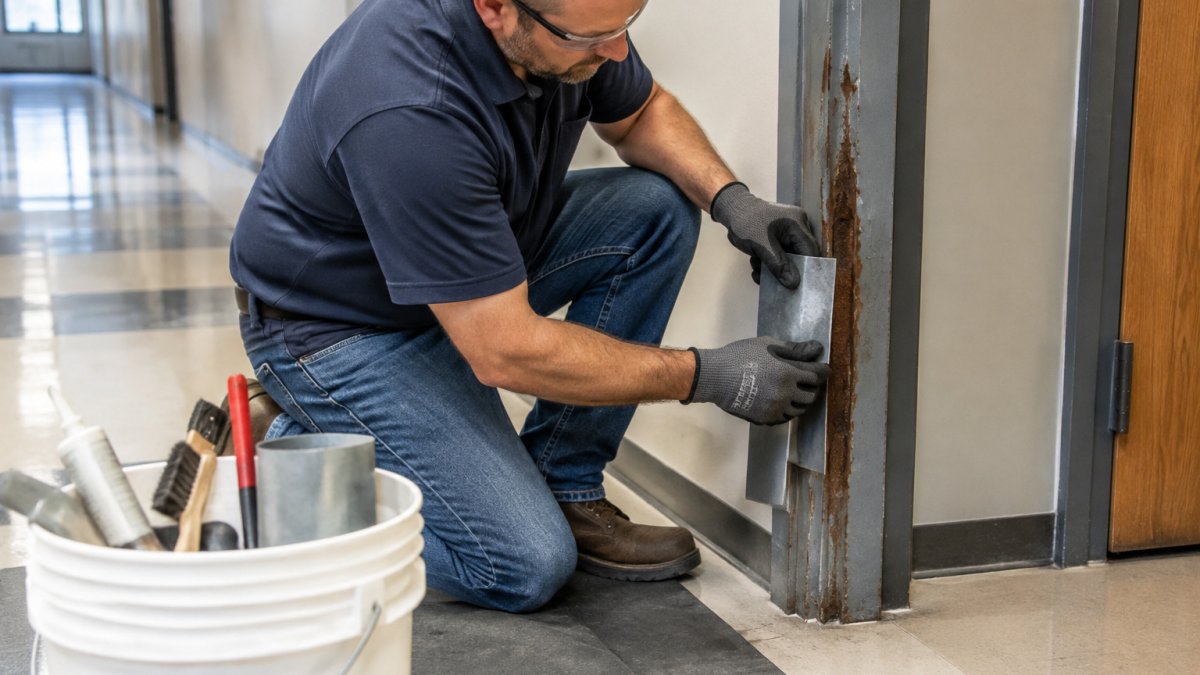
Tools and materials to have on hand
Gather these before you start so the repair is not interrupted mid-step:
- Safety glasses and work gloves
- A wire brush or abrasive pad for loose rust
- A utility knife or scraper for flaking paint and debris
- A vacuum or shop rag to clear dust from the jamb
- The Bondo filler and the installation hardware included with the kit
- A drill or driver sized to the included fasteners, if your kit's instructions call for one
- A level or straightedge to confirm the patch sits flush
Step 1: Clean and expose the damage
Remove loose rust, flaking paint, and debris from the affected section of the jamb so the patch or anchor can seat properly. Work from the floor upward and stop at sound metal.
Watch out: Rust that looks surface-level from the outside can hide thinning on the inside face of the jamb. Probe the area with a screwdriver before you commit to a patch; if the metal gives way over a large section, the frame may be past the patchable range.
Step 2: Position and fasten the repair
Set the patch or anchor in place using the included hardware, aligned to the frame. The Strike Side Jamb Patch is non-handed, so it fits the left or right side of the opening without a separate left- and right-hand part.
Watch out: A patch that is not seated flush will sit proud of the frame and interfere with the door or the strike. Test the door swing before the filler cures, while you can still adjust the fit.
Step 3: Apply the filler and allow it to cure
The repair itself is quick. The step that takes the most time is waiting for the Bondo to cure before the door is used. Mix and apply the filler per the product instructions, shape it to match the jamb profile, and let it set fully.
Watch out: Using the door before the filler has cured can crack the repair and force a redo. Block the opening or post it out of service for the cure window rather than letting traffic through early.
Planning the downtime
Because the hands-on work is short and the cure is the long pole, schedule the repair so the cure window falls outside peak traffic. A single opening can often be back in service the same day if the work starts early. Facilities with several affected doors should sequence them so only one opening is out of service at a time.
Each kit installs in three steps, and the cure time is the part that takes longest.
| Step | What to do | Time or frequency |
|---|---|---|
| 1. Clean and expose the damage | Remove loose rust, flaking paint and debris down to sound metal | Before fitting anything |
| 2. Position and fasten the repair | Set the patch or anchor with included hardware and check the door swing | Before filler cures |
| 3. Apply the filler and allow it to cure | Mix and apply Bondo, shape to the jamb profile, let it set fully | Cure window; keep the door out of use |
Patch Versus Replacement: Comparing Cost, Time and Downtime
The main question for most facility managers is whether a repair is worth doing instead of replacing the frame. The honest answer depends on how much of the frame is damaged, whether the frame is still structurally sound, and how long the opening can be out of service. Use the framework below rather than treating every rusted frame the same way.
A severity-based decision guide
Work through these questions in order:
- Is the frame hollow metal? The patch is designed for commercial hollow metal frames only. Aluminum frames that have separated from the wall call for a jamb anchor instead, and wood or other frame types are outside the repair's scope.
- Where is the damage? Rust concentrated at the bottom of the strike side, above the floor line, is the classic patch candidate. Damage spread up the jamb or across the hinge side is a different conversation.
- How much rust is there? The Strike Side Jamb Patch is specified for more than 2 inches of visible rust at the bottom of the frame. Measure from the floor up before you order.
- Is the frame still attached and square? If the frame is firmly anchored and the door still sits true and latches, a patch is a strong fit. If the frame has pulled away from the wall, a jamb anchor addresses the anchoring problem.
- Has the frame lost structural integrity? Rust that has eaten through large sections, or a frame that no longer holds the door square, points toward replacement.
Downtime comparison
Full replacement generally involves removing the existing frame, ordering a new one, and reinstalling it, which can keep the opening out of service longer than a patch. Compare the costs of a full steel frame replacement before you decide.
Watch out: A repair done on a frame that is already out of square will not hold. Confirm the door still latches cleanly before you choose repair over replacement, or you will spend the labor twice.
Project planning for multiple openings
Facilities with several affected doors should compare the total of multiple kits and labor against the total of multiple replacements, not a single door's numbers. Sequence repairs so only one opening is out of service at a time, and group openings by damage type so you order the right mix of patches and anchors in one pass. Confirm frame manufacturer and jamb position for each opening before ordering, since fit depends on the frame.
When replacement is still the right call
Replacement may be the better answer when rust has spread beyond the patchable area, the frame has lost its structural integrity, or the frame is not a hollow metal type. A repair is the better option when the damage is localized and the frame still holds the door square. Get a replacement quote from your own supplier to compare against the kit cost plus your labor estimate.
Order Your Jamb Patch and Anchor Catalog Today
Repairing a hollow metal frame can be faster and less costly than replacement, but only when the damage fits the repair. Measure the rust, confirm the frame type, and match the kit to the problem. Door Innovation's repair kits are built for that purpose, and the three-step installation keeps the work manageable for in-house maintenance teams.
Review the complete Jamb Patch and Jamb Anchor range and download the catalog for specifications and installation instructions before you order.
Frequently Asked Questions
What is a commercial jamb patch?
A commercial jamb patch is a steel repair piece that reinforces the strike side of a rusted hollow metal door frame. It is installed over the damaged section at the bottom of the frame, where corrosion most often weakens the jamb. Door Innovation's Strike Side Jamb Patch is priced at $180.91 and includes one 21-5/8 inch tall, non-handed patch, installation hardware and instructions. The patch is designed for hollow metal frames that show more than 2 inches of rust at the bottom, and it can go on the left or right side of the opening.
What is the difference between a jamb patch and a jamb anchor?
A jamb patch repairs rust damage on a hollow metal frame, while a jamb anchor re-secures an aluminum frame that has come loose from its wall. Jamb anchors come as side jamb kits at $119.00 or center jamb kits at $119.00, and each includes the anchors, installation hardware and instructions. Patches are for corroded steel jambs, and anchors are for aluminum frames that have pulled away from the wall because of corrosion, impacts from equipment or cleaning solutions.
Can a jamb patch be installed without hiring a professional?
Yes. The patented jamb patch is designed for a do-it-yourself installer, and it does not require a professional to install it. Most of the work is quick. The step that takes the most time is waiting for the Bondo to cure before the door is returned to service.
