
Fire Door Frame Maintenance: Essential Tools and Repair Options
Last Updated: November 18, 2026
Quick Summary
Essential tools for fire door frame maintenance fall into four groups: inspection and measurement, cleaning and preparation, fixing and adjustment, and repair and finishing. A fire door gap gauge, flashlight, and level cover inspection, while wire brushes, scrapers, and filler handle rust removal and repair. Keep a written checklist and records of every inspection.
- Start with a fire door gap gauge, paired with a flashlight or inspection mirror.
- Clean rust to bare metal before applying any filler.
- Commercial hollow metal frames can be repaired instead of fully replaced.
- Allow the Bondo filler to cure fully before testing the door again.
- Keep a written log of every inspection, finding, and date.
Table of Contents
- Why Fire Door Frame Maintenance Matters
- Essential Tools for Fire Door Frame Maintenance
- Building a Fire Door Maintenance Checklist
- Assessing Damage: Rust, Corrosion and Frame Condition
- Repairing a Commercial Hollow Metal Frame
- Building Your Repair Kit and Tool Plan
- Booking Your Next Frame Repair with Door Innovation
- Frequently Asked Questions
Why Fire Door Frame Maintenance Matters
A fire door frame does more than hold a door in place. Read the complete guide to fire door frame integrity to see why it matters for fire safety. It keeps the door square, lets the door latch and close fully, and helps the whole assembly do its job during a fire. When the frame loosens, rusts or bends, the door can stop closing properly, and that gap is exactly where smoke and flame move.
At Door Innovation, we see the same problem across many commercial buildings. Frames that look fine from across the hall often have rust hidden at the bottom, where water and cleaning chemicals collect. Catching that early is far cheaper than replacing the whole frame.
Maintenance is not only about repair. Regular checks show you which doors are drifting out of tolerance before they fail an inspection. A short, repeatable routine works better than a once-a-year scramble.
Essential Tools for Fire Door Frame Maintenance
You do not need a truck full of equipment to inspect and maintain fire door frames, but you do need the right tool for each job. The most common mistake is buying a single "inspection kit" and assuming it covers everything. In practice, frame maintenance breaks into four task families, and each one calls for a different set of tools.
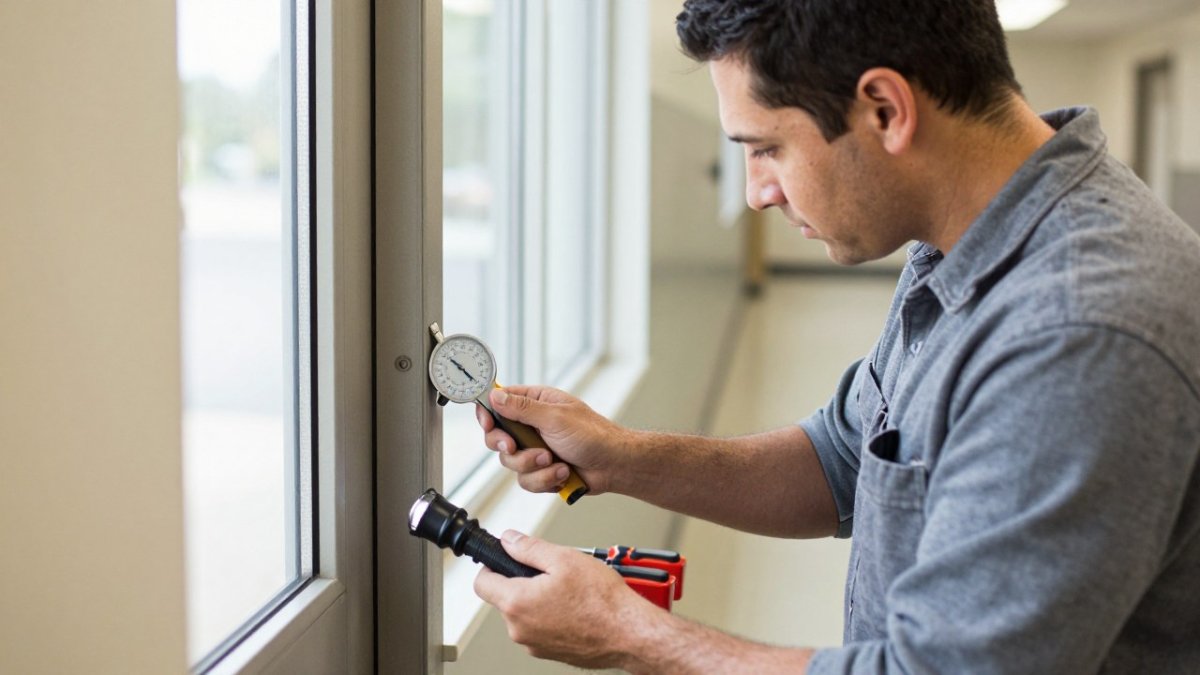
Inspection and measurement tools. A fire door gap gauge is the starting point. Pair it with a flashlight or a compact inspection mirror for looking into the bottom of the frame, a 6-inch ruler or feeler gauge for spot checks, and a small level for confirming the frame is plumb. A digital angle finder is useful on head sections where the frame may have twisted.
Cleaning and preparation tools. Rust and old sealant have to come off before any repair. Keep a wire brush, a scraper, and a utility knife for cutting away old mastic. A cordless oscillating tool with a scraping blade speeds up removal of foam and packers without gouging the frame.
Fixing and adjustment tools. Socket and wrench sets for hinge bolts and strike plates, hex keys for closer adjustments, a pry bar for checking frame movement, and an impact driver for reseating loose screws. Use the correct bit size every time; stripped screw holes cause more trouble than most people expect.
Repair and finishing tools. For hollow metal frame repairs, you need a mixing stick and container for the filler, a putty knife or spreader, sandpaper in a couple of grits, and a clean rag. A small dead-blow mallet helps seat patches without distorting the metal.
Documentation tools. A notepad or tablet, a camera or phone for photographing damage, and a simple log sheet. Records matter as much as the tools themselves when an inspector asks what you checked and when.
Tool selection also depends on the frame material. Steel frames with rust at the base need wire brushes, scrapers, and filler, while aluminum frames with loose anchors call for wrenches, hex keys, and a level.
A complete inspection tool kit keeps every item in one place, so nothing gets forgotten between doors. Build the kit around the tasks you actually perform, not around a generic list.
Building a Fire Door Maintenance Checklist
A written checklist turns maintenance from a guess into a routine. Keep it simple enough that anyone on your team can follow it.
- Check the gap between door and frame at every edge
- Inspect intumescent seals and smoke seals for damage or missing sections
- Test hinges, locks, handles and flush bolts for smooth operation
- Confirm the door closes and latches on its own
- Look for rust, corrosion and cracked welds at the frame base
- Check screws, fixings and strike plates for looseness
- Lubricate moving parts as the manufacturer recommends
- Record every finding and the date of the inspection
Keep the records. Read the five best practices for fire door maintenance to round out your checklist. When an inspector asks what you checked and when, a clean log answers the question fast.
Assessing Damage: Rust, Corrosion and Frame Condition
Rust is the most common frame problem in commercial buildings, and it often starts where you cannot see it. Water and salts collect at the bottom of the frame, where the metal rots from the inside out.
Look for these warning signs:
- Bubbling paint near the floor line
- Orange or brown staining on the frame
- A frame that moves when you push on it
- Gaps that grow larger toward the bottom
- Soft or flaking metal when you press with a screwdriver
Measure how much rust sits at the base. Small surface rust can often be cleaned and treated. Deep corrosion that has eaten through the metal needs a structural repair.
Repairing a Commercial Hollow Metal Frame
Many building owners do not know that commercial hollow metal frames can be repaired instead of replaced. Replacing a full frame means removing the door, the hardware and the wall anchors, then rebuilding the opening. A targeted repair restores the frame without that disruption.
Our repair kits are designed for this job. The Jamb Patch Kit bundles the materials you need to complete the repair. The patented Jamb Patch system is designed to be installed by a DIY-minded installer and does not require a professional to install it. You can review the Jamb Patch Kit (4") and the Jamb Anchor Side Jamb Kit to see what each one covers.
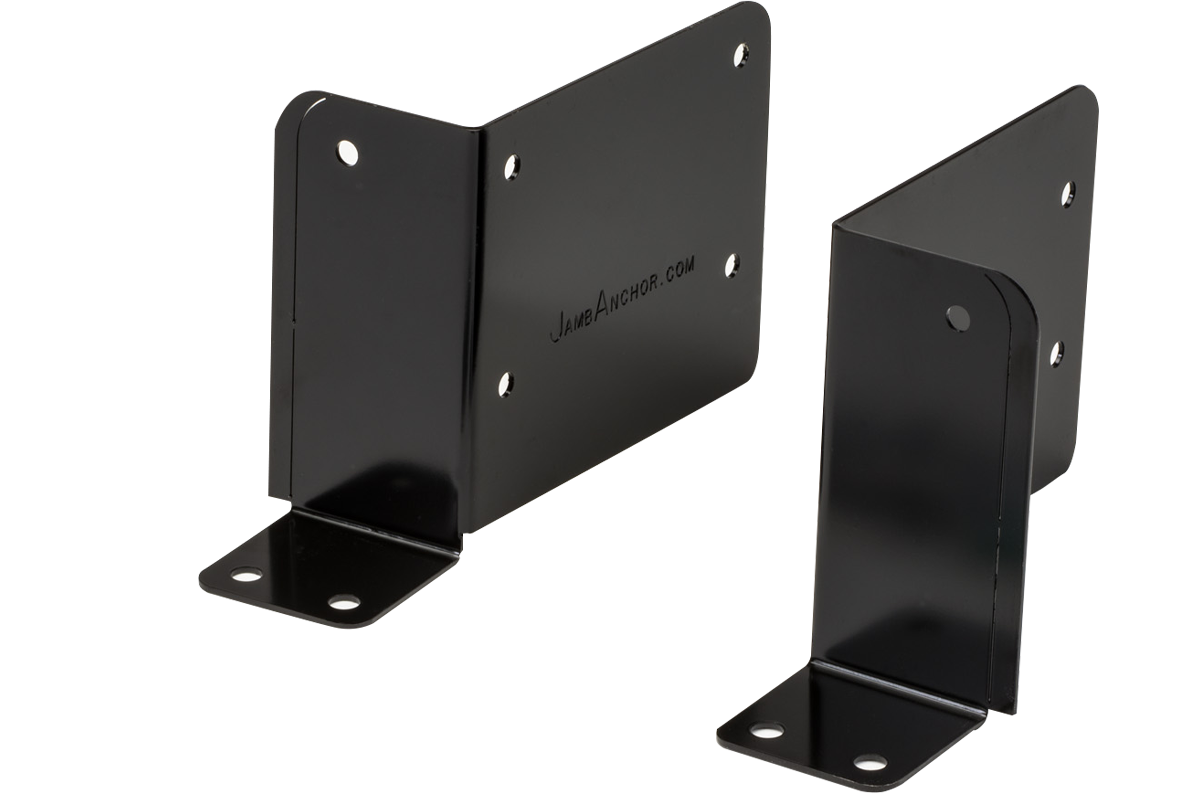
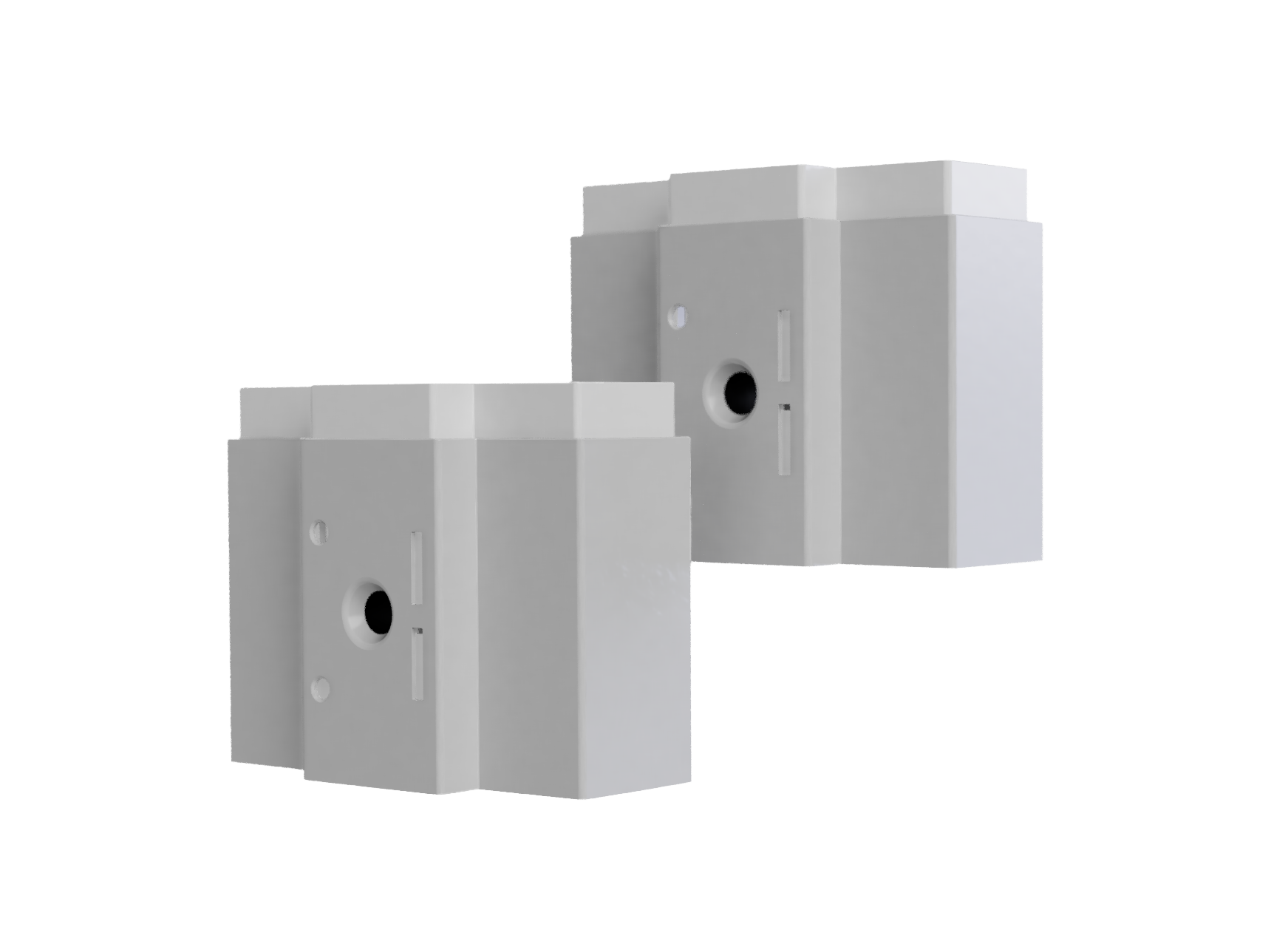
The basic workflow is simple:
- Clean the rust and loose debris from the frame base with a wire brush and scraper.
- Check how far the damage extends up the frame using a flashlight and a ruler.
- Choose the patch or anchor that matches the repair.
- Fit the patch and secure it with the included hardware.
- Apply the filler and let it cure.
Safe repair boundaries. A patch is appropriate when rust has eaten into the bottom of the frame but the rest of the frame is still solid. Browse the Jamb Patch options to compare the patch choices available. If the frame is badly bent, the hollow section has collapsed, or the damage extends above the bottom few inches, a patch will not restore it. Those frames need a professional assessment before any repair. Similarly, if the door no longer latches or the gap exceeds the manufacturer's tolerance after adjustment, the issue may be beyond frame maintenance.
Material matters. This repair method is for commercial hollow metal frames only. Frames of other materials have different failure modes and may require different approaches.
Cure time. The repair itself goes quickly. Most of the time goes to waiting for the Bondo filler to cure. Rushing this step causes cracks and weak spots later. Plan your schedule around the cure time, keep the door out of service or propped open while the filler sets, and keep traffic away from the repaired frame. Check the product instructions for the exact cure window, since temperature and humidity change it.
Once the filler is fully hard, test the door by closing it several times and checking the gap again with your gauge.
Watch out: applying filler over rust that has not been fully removed traps moisture and causes the repair to fail. Clean to bare metal before mixing the filler.
The article outlines the main repair choices for a commercial hollow metal frame, along with the key points to check before choosing one.
| Repair point | What the article says | Note |
|---|---|---|
| Frame material | Commercial hollow metal only | Other frame types need different approaches |
| Installation | DIY-minded installer, no professional required | Patented product |
| Repair speed | Repair itself is quick | Filler cure time takes most of the time |
| Patch suitability | Rust at the bottom, rest of frame solid | Bent or collapsed frames need assessment |
| Filler application | Clean to bare metal first | Rust left under filler causes failure |
Building Your Repair Kit and Tool Plan
Before you order materials, match your kit to your building. Count how many doors need work, note the frame material on each, and sort them by damage level. This gives you a clear shopping list and avoids duplicate purchases.
A simple plan works well:
- Inspect every door and record the frame material
- Flag rust, looseness and gap problems
- Group repairs by kit type
- Schedule repairs around the cure time for each filler
Keep a spare set of fixings and a small amount of filler on hand for quick fixes.
Booking Your Next Frame Repair with Door Innovation
Fire door frames are easy to neglect until something goes wrong. A steady maintenance routine, the right tools and a repair option that avoids full replacement will keep your openings safe and working.
Door Innovation supplies the repair kits that make this practical. Start with a full inspection, note every frame that needs attention, and order the Jamb Patch and Jamb Anchor kits that match your findings.
Frequently Asked Questions
What are the maintenance requirements for fire doors?
Fire doors need regular checks to confirm they close and latch fully, that gaps around the frame stay within the allowed clearances, and that seals, hinges, closers and hardware work as intended. Inspect the frame for rust, corrosion or loose anchoring, and keep a written record of each inspection and any repair. In the United States, inspection frequency and documentation are usually set by the local authority having jurisdiction and by NFPA 80, so confirm the schedule your building must follow before you set your own.
Can a damaged commercial hollow metal fire door frame be repaired?
Yes, in many cases. Door Innovation's Jamb Patch kits are made to repair rusted steel commercial hollow metal frames, and the Jamb Anchor kits re-anchor loose aluminum frames. The Jamb Patch line is designed for the DIY installer and does not require a professional to install it. The main waiting time is the Bondo cure. Check the product's installation instructions and the frame's condition before starting, and confirm the repair meets your building's requirements.
What is a fire door gap gauge used for?
A fire door gap gauge measures the clearance between the door edge and the frame, along the hinge side, latch side and head. Taking these readings tells you whether the door fits the frame within the tolerances the fire door must meet. Record each reading during the inspection so you can compare it against the next inspection and spot frame movement or settling before it affects how the door closes and latches.
How do you check a fire door frame for damage?
Start at the bottom of each jamb, where rust and corrosion most often collect, and look for bubbling paint, flaking metal or soft spots that you can press with a screwdriver. Check that the frame is firmly anchored to the wall and that the strike plate and hinge screws are tight. Measure any gaps with a gap gauge. Where more than 2 inches of rust is evident at the bottom of a steel frame, plan a larger repair such as a Strike Side or Hinge Jamb Patch rather than the smaller Jamb Patch Kit.
