
Step by Step Guide to Installing Jamb Anchors
Last Updated: November 16, 2026
Quick Summary
Installing jamb anchors means marking anchor points on a clean, sound commercial hollow metal frame, drilling straight holes sized to the supplied fasteners, and tightening the plates evenly so they sit flush. Pack the area with Bondo, then sand, prime, and paint once cured. The install is quick; the Bondo cure time sets the schedule.
- Confirm the frame is a commercial hollow metal frame and the wall behind it is solid before drilling.
- Drill straight and perpendicular to the jamb face, then clear chips so each anchor seats fully.
- Tighten fasteners evenly in sequence rather than driving one fully before starting the next.
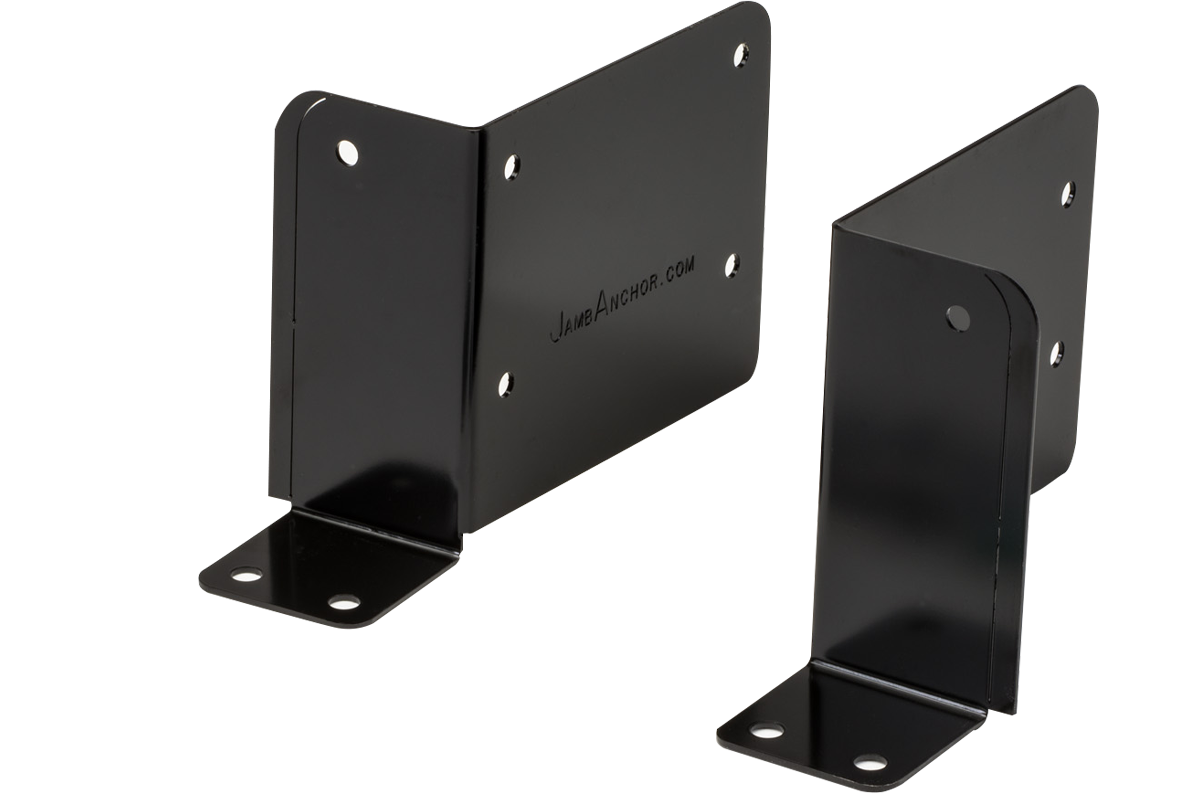
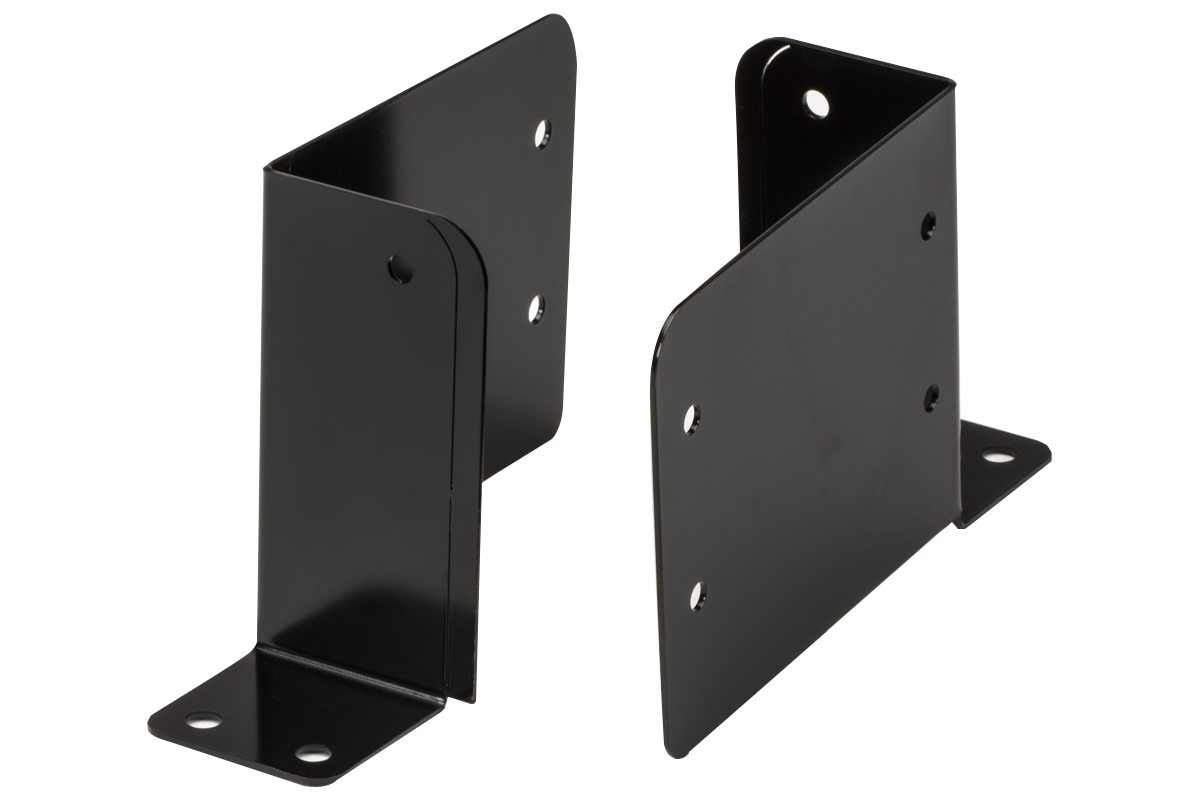
- The side jamb kit has one left-hand and one right-hand anchor; the center jamb kit has two of the same hand.
- After the filler cures, check the full door swing, plumb, and an even gap around the slab.
Table of Contents
- Why Jamb Anchors Are the Smart Fix for Loose Commercial Frames
- Tools and Materials You Need Before You Start
- Jamb Anchor Installation Instructions: A Step-by-Step Walkthrough
- Commercial Hollow Metal Door Frame Repair: What Makes These Kits Different
- Bondo Cure Time for Door Frame Repair: What to Expect
- Door Frame Repair vs Replacement: Making the Right Call
- Troubleshooting Common Installation Issues
- Order Your Jamb Anchor Kit and Restore Your Frames
- Frequently Asked Questions
Why Jamb Anchors Are the Smart Fix for Loose Commercial Frames
A step by step guide to installing jamb anchors starts with one fact many facility managers may not realize: a loose commercial hollow metal frame often does not need to be replaced. Door Innovation offers jamb anchor kits as a repair option for this situation.
The symptom is familiar. A door drags, the frame rocks when you push it, and the gap around the door slab changes from week to week. A jamb anchor kit restores the connection between frame and wall as an alternative to a full tear-out and replacement.
The repair is designed to be installed by a DIY-type installer and does not require a professional. You will need a drill, a few hand tools, and patience while the Bondo cures.
Tools and Materials You Need Before You Start
Gather everything before you touch the frame. A common mistake is starting the job and then hunting for a bit while the frame is already marked and half-drilled.
Tools and materials checklist
- Cordless drill with bits suited to metal and to your wall material
- The jamb anchor kit itself, including supplied fasteners
- Bondo or a comparable two-part filler, plus a spreader
- Sandpaper or a sanding block
- Level, tape measure, and a marker
- Safety glasses and gloves
- Shims for checking the frame position
- A vacuum or brush for clearing drill debris
Preparation checks that matter more than the tool list
First, confirm the frame is a commercial hollow metal frame; this repair is only for commercial hollow metal frames. Second, inspect the full opening.
Anchor selection by substrate and opening condition
The right fastener depends on what is behind the jamb. For concrete and masonry, the anchor needs to expand or wedge into the masonry; a fastener sized for wood will spin and pull out.
Opening condition matters too.
Safety and load limitations
Wear safety glasses when drilling overhead or into masonry, and gloves when handling cut metal. Jamb anchors are repair hardware, not rated fall-protection or overhead-lifting anchors; do not use them to hang loads or as tie-off points.
Jamb Anchor Installation Instructions: A Step-by-Step Walkthrough
The install follows three stages: prepare the frame, anchor it, then fill and finish. Most of the hands-on work is quick. The cure time is what sets the schedule. What follows walks through how to mark, drill, set, and verify each anchor so the repair holds.
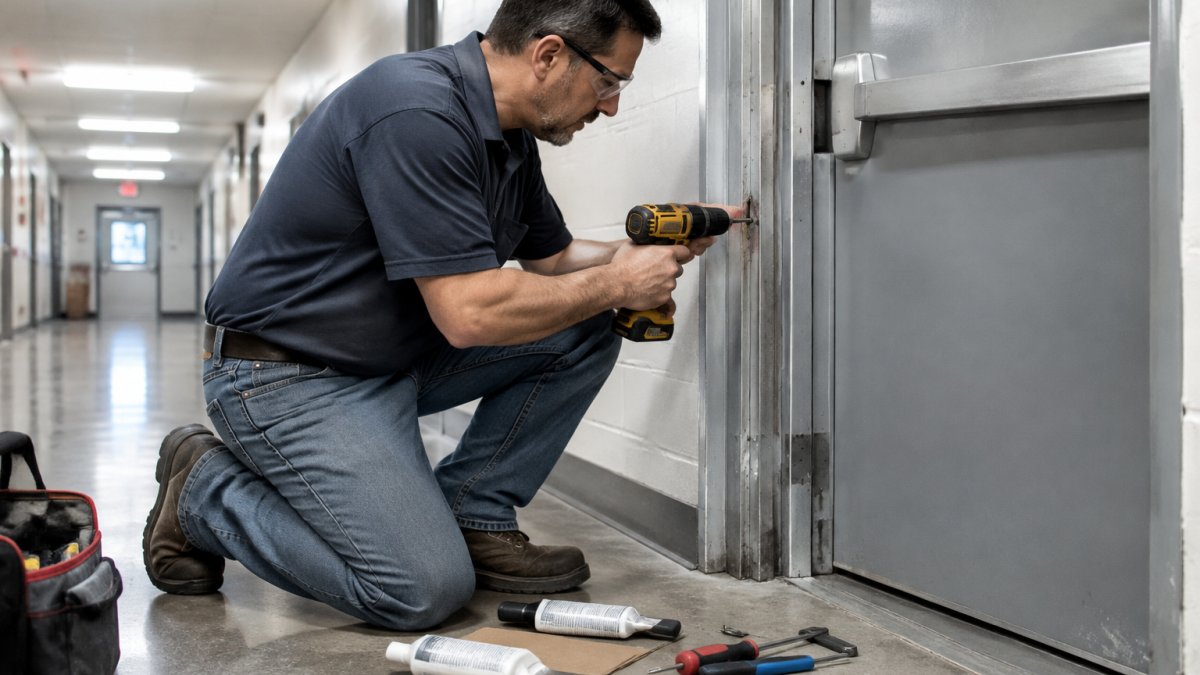
Step 1: Inspect and Prepare the Frame
Clean and assess before you drill. Remove loose paint, corrosion, and debris from the jamb surface where the anchor will sit. Check that the frame is straight and that the opening dimensions still match the door slab; if the frame has twisted, address that before anchoring or you will lock the problem in place.
Mark your anchor points on the jamb. Keep them clear of hinges, strikes, and closers so the hardware still functions. Wipe the surface dry. Adhesive and filler do not bond to a wet or greasy frame.
Before marking, confirm the substrate behind the jamb. A commercial hollow metal frame is typically set into a masonry or concrete wall, a wood- or steel-stud wall, or a combination. The anchor has to bite into something solid.
Step 2: Position and Secure the Anchors
Set the anchor plate against the jamb, align it to your marks, and confirm it sits flush. A plate that rocks on the jamb will cock when tightened and pull the frame out of plumb.
Drill at the marked points through the frame and into the wall material.
Fasten with the supplied hardware. Tighten evenly rather than driving one fastener fully before starting the next, which keeps the plate from cocking. A common pattern is to snug each fastener in sequence, then return and torque them in the same order.
Check the anchor after tightening. Push and pull the frame at the anchor point. Any movement means the fastener is not biting; relocate to solid material rather than reaming the same hole.
Match the kit to the jamb you are repairing. The Jamb Anchor side jamb kit covers outboard jambs with one left-hand and one right-hand anchor, while the Jamb Anchor center jamb kit handles inboard jambs with a matched pair for center conditions. For a deeper walkthrough of the fastening sequence, our heavy duty door frame anchor installation guide covers the details.
Step 3: Apply Bondo and Finish the Repair
Mix the filler per the product label, then pack it into the repaired area and shape it to match the frame profile. Once cured, sand smooth, prime, and paint to match.
Watch out: overfilling the repair area creates extra sanding work and can block the door slab or hardware. Build up in thin layers instead of one thick mound.
Step 4: Verify the Repair Before You Close the Ticket
Verification is an important final step. After the filler cures, open and close the door through its full swing. The slab should not rub the jamb, the frame should not rock when you push it, and the gap around the slab should stay even from top to bottom. Recheck plumb on the hinge side and the strike side. If the door drags or the gap changes, the frame moved during anchoring; correct it before the repair is considered complete.
Commercial Hollow Metal Door Frame Repair: What Makes These Kits Different
The Jamb Anchor kits are intended for a specific failure: a frame that has lost its grip on the wall but is otherwise sound.
Each kit ships complete with the anchors, installation hardware, and instructions. The side jamb kit contains one left-hand and one right-hand anchor; the center jamb kit contains two anchors of the same hand. Both are listed at $119.00.
The same anchors also work beyond doors. They can secure equipment, control cabinets, and some configurations of commercial fence posts. If you are weighing this against other repair approaches, our commercial door frame repair kits guide lays out how jamb anchors fit among the options.
Bondo Cure Time for Door Frame Repair: What to Expect
Bondo cure time for door frame repair depends on the product, the temperature, and how thick you apply it. The catalyst ratio on the label is not a suggestion; too little hardener and the filler stays tacky, too much and it sets before you can shape it.
Plan the job around the cure, not the drilling. The anchor install itself is fast. The filler is what stretches the timeline, and rushing it is the single most common way this repair goes wrong. Cool conditions slow the reaction, so a cold corridor can add time.
Sand only when the filler is fully hard. Sanding a partially cured patch smears it and ruins the surface you are trying to blend.
Door Frame Repair vs Replacement: Making the Right Call
Door frame repair wins when the frame is structurally sound and the failure is at the anchor points. Replacement wins when the frame is bent, the wall behind it is failing, or the opening no longer meets the building's needs.
Ask three questions:
| Question | Repair | Replace |
|---|---|---|
| Is the frame straight and undamaged? | Yes | No |
| Is the wall solid behind the jamb? | Yes | No |
| Is the failure limited to loose anchors or corrosion? | Yes | No |
If you answer yes to all three, a jamb anchor repair is the lower-disruption route. It avoids a tear-out, keeps the opening in service, and preserves the existing door slab and hardware. Our door frame repair vs replacement breakdown walks through the decision in more detail.
Troubleshooting Common Installation Issues
Anchor won't tighten? The hole is likely oversized or the wall material is too soft for the fastener. Step up to a fastener suited to the substrate, or relocate the anchor to solid material.
Frame still moves after anchoring? Check that you anchored both sides and that the wall behind the jamb is intact. A single anchor on a rocking frame will not hold.
Filler cracking or shrinking? That usually signals too thick an application or a contaminated surface. Grind it out, clean, and reapply in thin layers.
Door rubbing after the repair? Recheck plumb and the gap around the slab. Anchoring a frame that was out of alignment locks the misalignment in.
Order Your Jamb Anchor Kit and Restore Your Frames
Loose frames are a maintenance problem with a straightforward fix, and the fix does not require a specialist. If you manage a facility with corroded or impact-damaged openings, jamb anchors can let your own team make the repair.
Door Innovation offers kits for this job: a patented repair designed for commercial hollow metal frames, with a three-step install and hardware included. The kits are an alternative to full frame replacement and are intended to extend the life of existing door systems.
Get started with Door Innovation and put your loose frames back to work.
Frequently Asked Questions
How do you install jamb anchors in a hollow metal door frame?
Start by inspecting the frame and cleaning any corrosion or debris from the mounting area. Position the left and right anchors according to the included instructions, then drill and fasten them with the supplied hardware. Apply Bondo to cover the anchor and blend it into the frame, then sand and paint once cured. The process is designed for DIY installation.
What tools and materials are needed to install jamb anchors?
You will need a drill with the correct bit size, a screwdriver or nut driver for the supplied fasteners, a clean rag for surface prep, Bondo or a similar filler, sandpaper, and paint to match the frame. The Jamb Anchor kit includes the anchors, installation hardware, and written instructions. No specialized training or professional tools are required, which is why facility maintenance staff can handle the job themselves.
Can you install jamb anchors yourself?
Yes. Jamb Anchor kits are designed for DIY installation by maintenance staff or anyone comfortable with basic tools. The kit comes with installation instructions and all the hardware you need. If you can drill a hole and apply filler, you can complete the repair.
How long should Bondo cure before finishing a jamb anchor repair?
Full cure depends on the product, temperature, humidity, and how thick you apply it. Wait until the filler is hard and no longer tacky before sanding. In cool or damp conditions, allow extra time. Rushing the cure leads to poor adhesion and a finish that will not hold up. Check the product label for the manufacturer's recommended cure window.
Can jamb anchors be used on residential wood door frames?
No. Jamb Anchor kits are made for commercial hollow metal frames, specifically aluminum door frames that have loosened due to corrosion, water, cleaning solutions, or impact damage. Wood residential frames have different structure and fastening needs. Using a metal-frame anchor on wood will not give you a secure repair. Stick to the product's intended application for safe, lasting results.
When should a hollow metal door frame be replaced instead of repaired?
Repair is usually the better choice when the frame is structurally sound but has come loose at the anchors, or shows surface corrosion at the base. Replacement makes sense if the frame is bent, crushed, or rusted through in load-bearing areas. A jamb anchor repair restores stability to a frame, but it cannot fix a frame that has lost its structural integrity.
